
- Manager: Rick Bair
Category: Logansport Century Career Center (IN)



Instructor II course following 9th edition of Fire and Emergency Services Instructor
This is a 5-day course: 32 hours of instruction and 8 hours of certification evaluation. The course prepares the student to become certified as a Fire Instructor I.
After completing the course, the student will have met the sections required for a Fire Instructor I in the NFPA 1041, 2018 edition, Standard for Fire Service Instructor Professional Qualifications.
The required text for the course is IFSTA’s Fire and Emergency Services Instructor, Ninth edition.
This is the first course in the Fire Officer series, addressing the job performance requirements of
Supervisory Fire Officer as defined in NFPA 1021, Standard for Fire Officer Professional Qualifications. This
course includes topics such as the company officer’s duties and responsibilities, leadership and
supervision, human resources management, communications, administrative functions, and health and
safety issues. Also included in this course are topics including company level training, community
relations, pre-incident surveys, and the delivery of emergency services.
This course has been created to define, present, and validate core competency requirements for NFPA 1001 – Standard for Fire Fighter Professional Qualifications, 2019 Edition. In addition, this course has been developed to comply with and exceed the objectives and skills assessments in accordance with the State Firefighters’ and Fire Marshals’ Association of Texas (SFFMA) Firefighter Certification program, January 1, 2015 edition and the Texas Commission on Fire Protection (TCFP) Basic Fire Suppression curriculum, January 1, 2014. Furthermore, sections of this course have been created to define, present, and validate core competency requirements in NFPA 1006 - Standard for Technical Rescue Personnel Professional Qualifications, 2013 Edition for Chapters 5 and 10; NFPA 1072 - Standard for Competence of Responders to Hazardous Materials/Weapons of Mass Destruction Incidents, 2017 Edition and OSHA 29 CFR 1910.120 - Hazardous Waste Operations and Emergency Response, February 2013 Edition. This fire academy course has been created and customized for Emergency Services Training Cooperative by the Course Coordinator. Duration of the course is expected to be approximately +/- 350 hours in duration, involving classroom, online coursework, outside projects, and hands-on activities. After the completion of this course, you will be eligible to apply for and sit for the SFFMA Firefighter I and Firefighter II Certification Exam, SFFMA Rescue Apprentice Certification, SFFMA Vehicle Rescuer I Certification, and be eligible to challenge the Texas Commission on Fire Protection – Basic Structural Firefighter written and skills exam. This syllabus will be effective for the duration of the program to include the individualized courses of Hazardous Materials Awareness, Hazardous Materials Operations, Rescue Apprentice, and Vehicle Rescuer I course.
Program Broken into Sections:
· NFPA 1001 (Chapter 6) Firefighter I Course
· NFPA 1001 (Chapter 6) Firefighter II Course
· NFPA 1006 (Chapter 5) Rescue Apprentice Course
· NFPA 1006 (Chapter 10) Vehicle Rescuer I Course
· NFPA 1072 (Chapter 4) Hazardous Materials Awareness Course
· NFPA 1072 (Chapter 5 and 6) Hazardous Material Operations Course
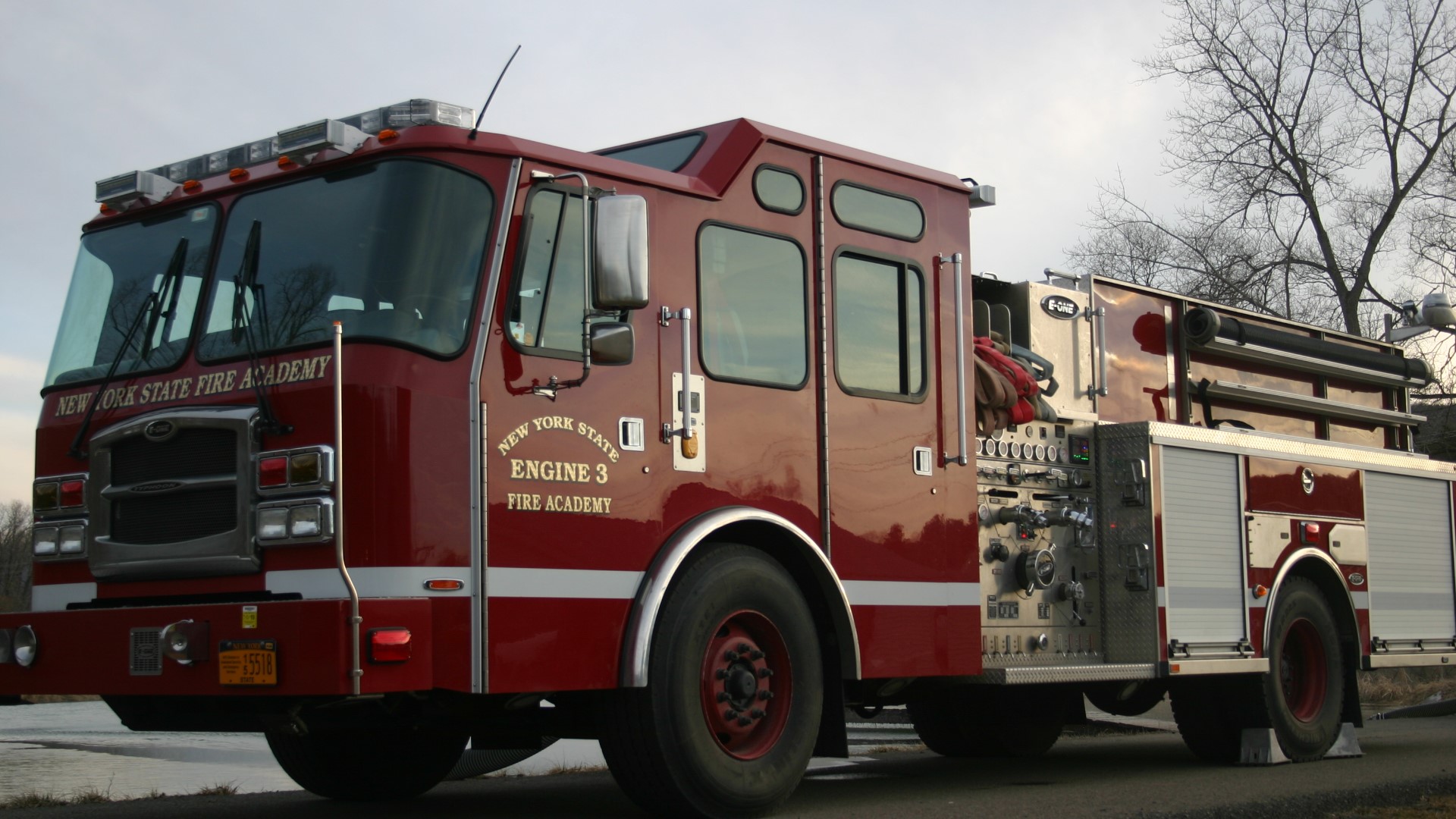
New York Office of Fire Prevention & Control - Fire Officer I
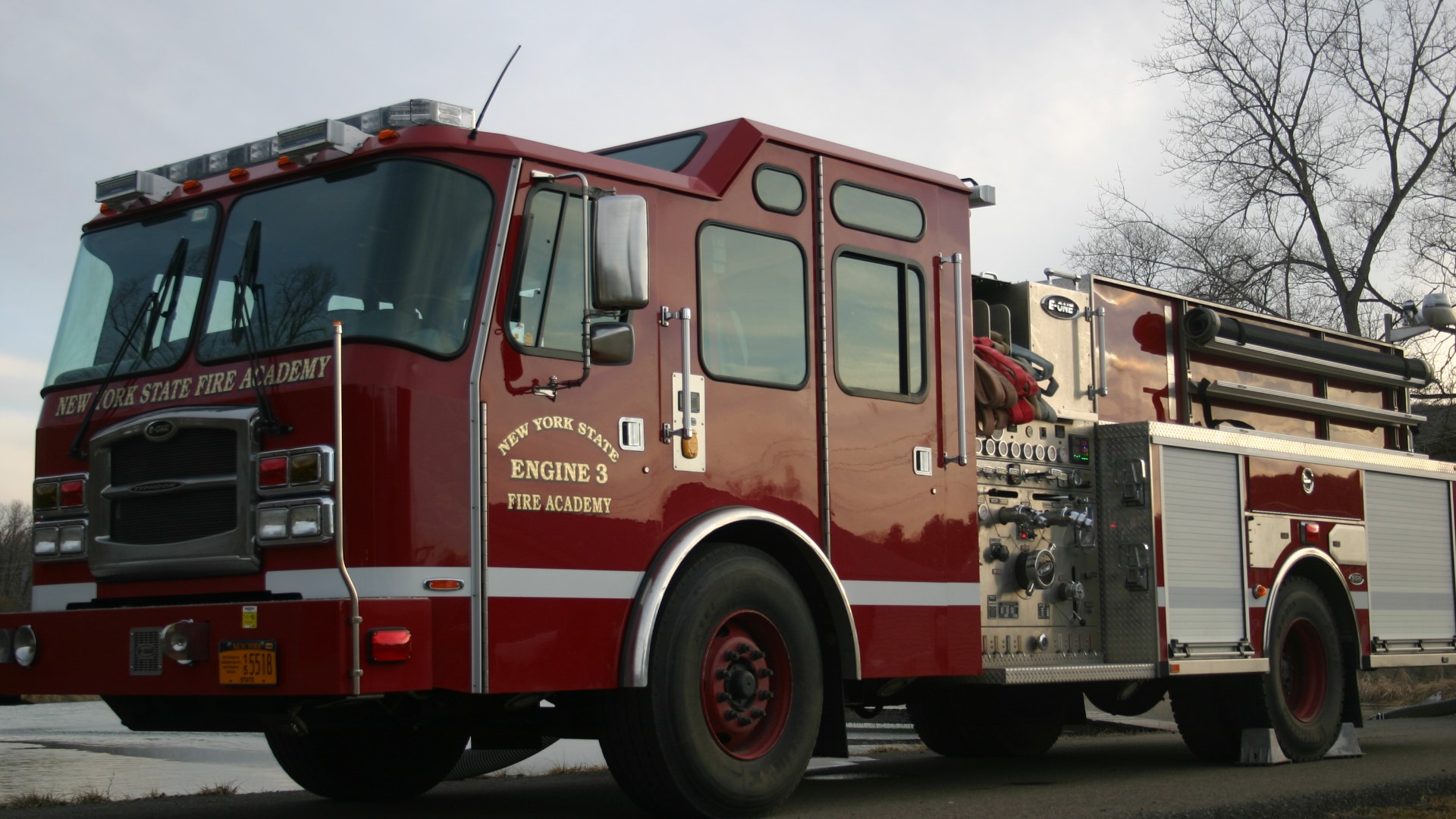
New York Office of Fire Prevention & Control - Fire Officer I
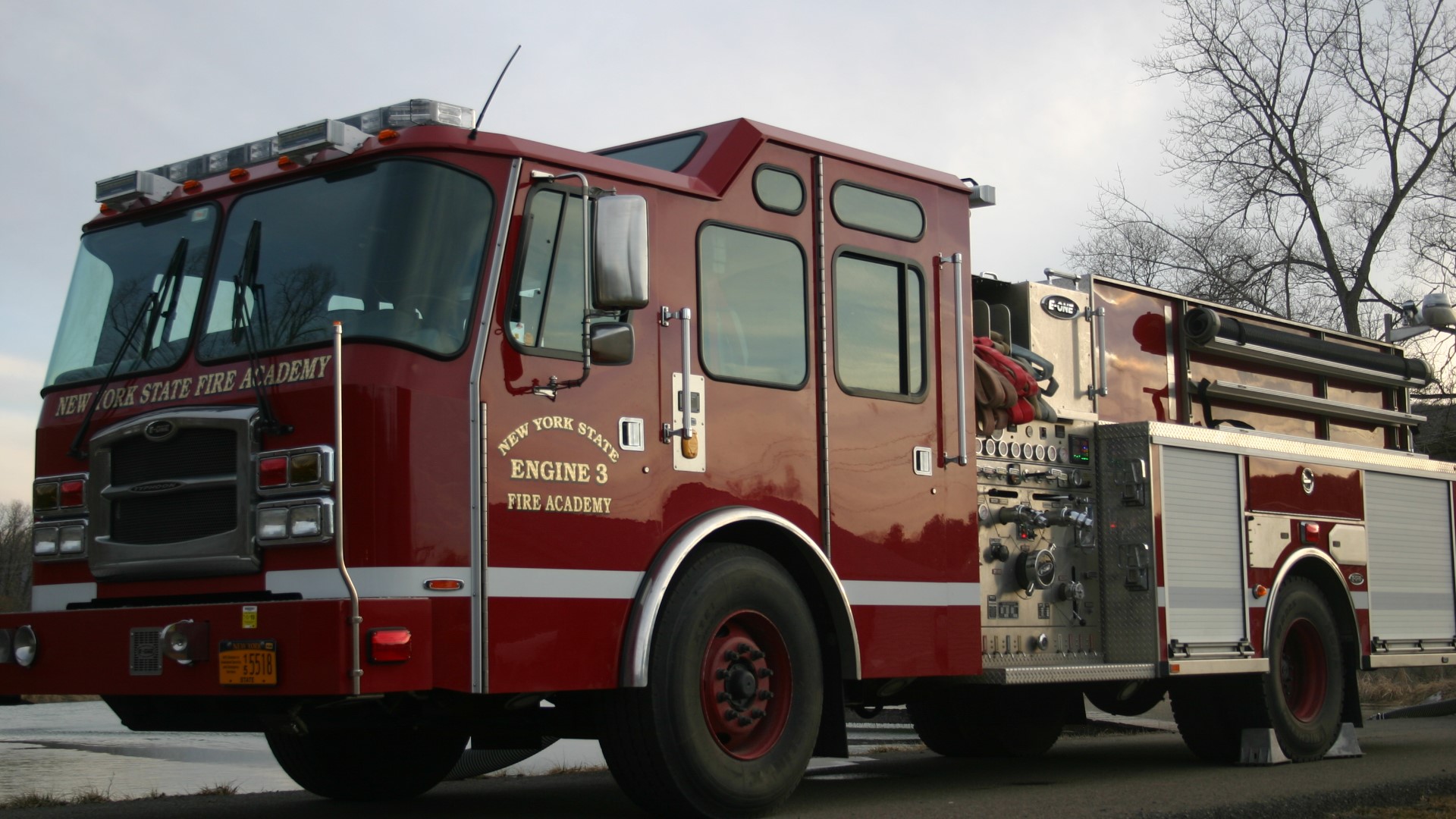
New York Office of Fire Prevention & Control - Fire Officer I
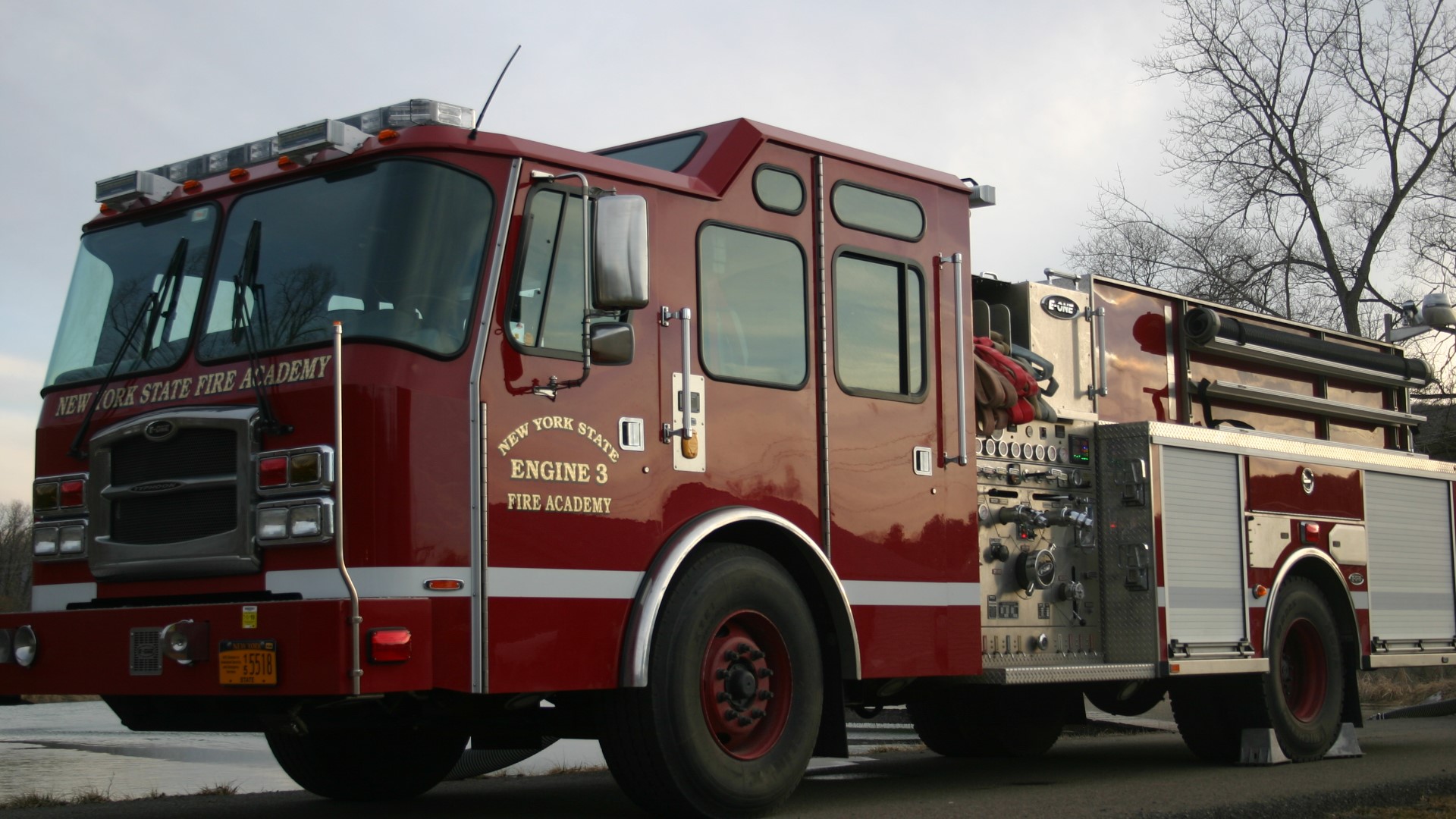
New York Office of Fire Prevention & Control - Fire Officer I
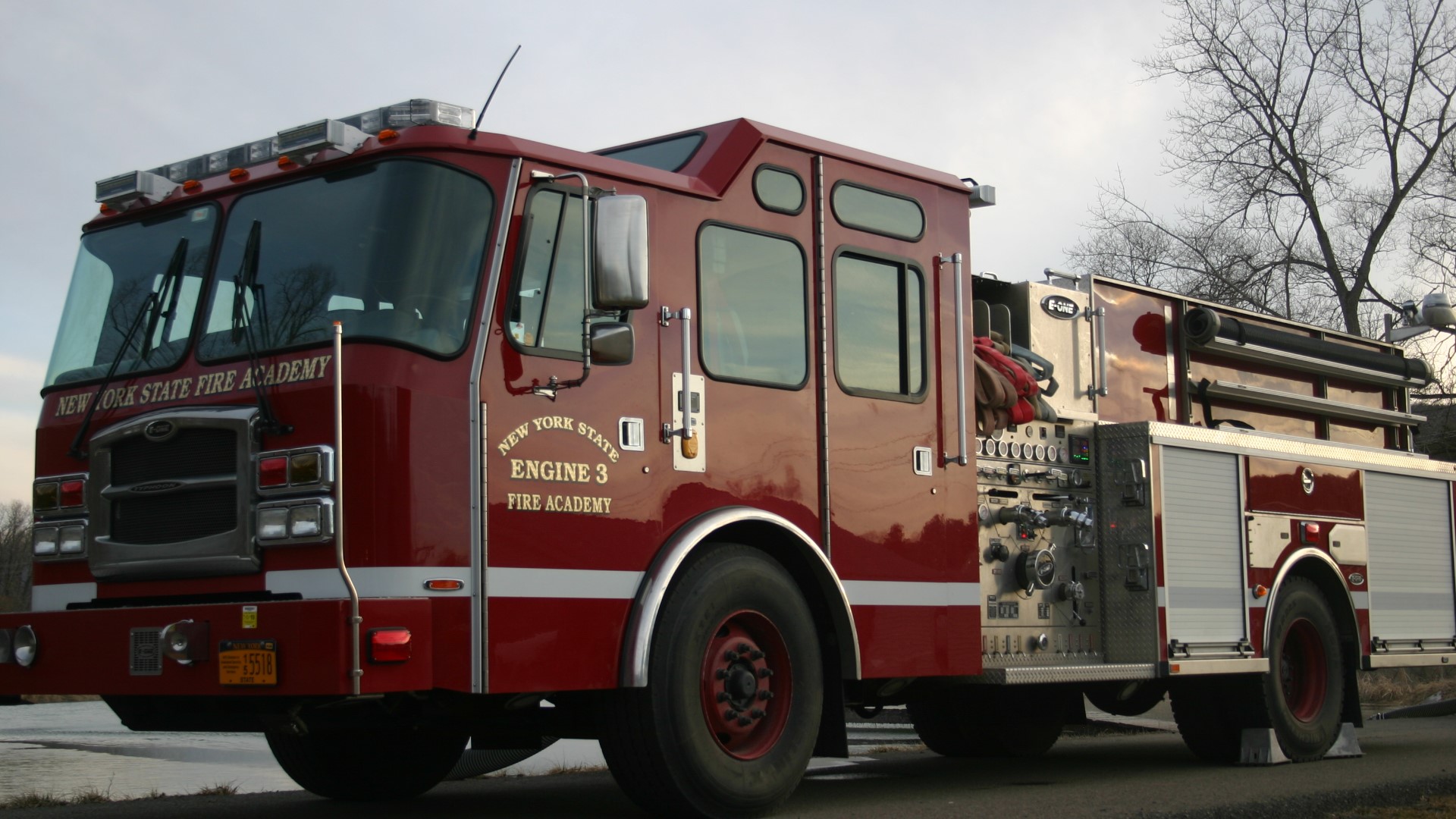
New York Office of Fire Prevention & Control - Fire Officer I
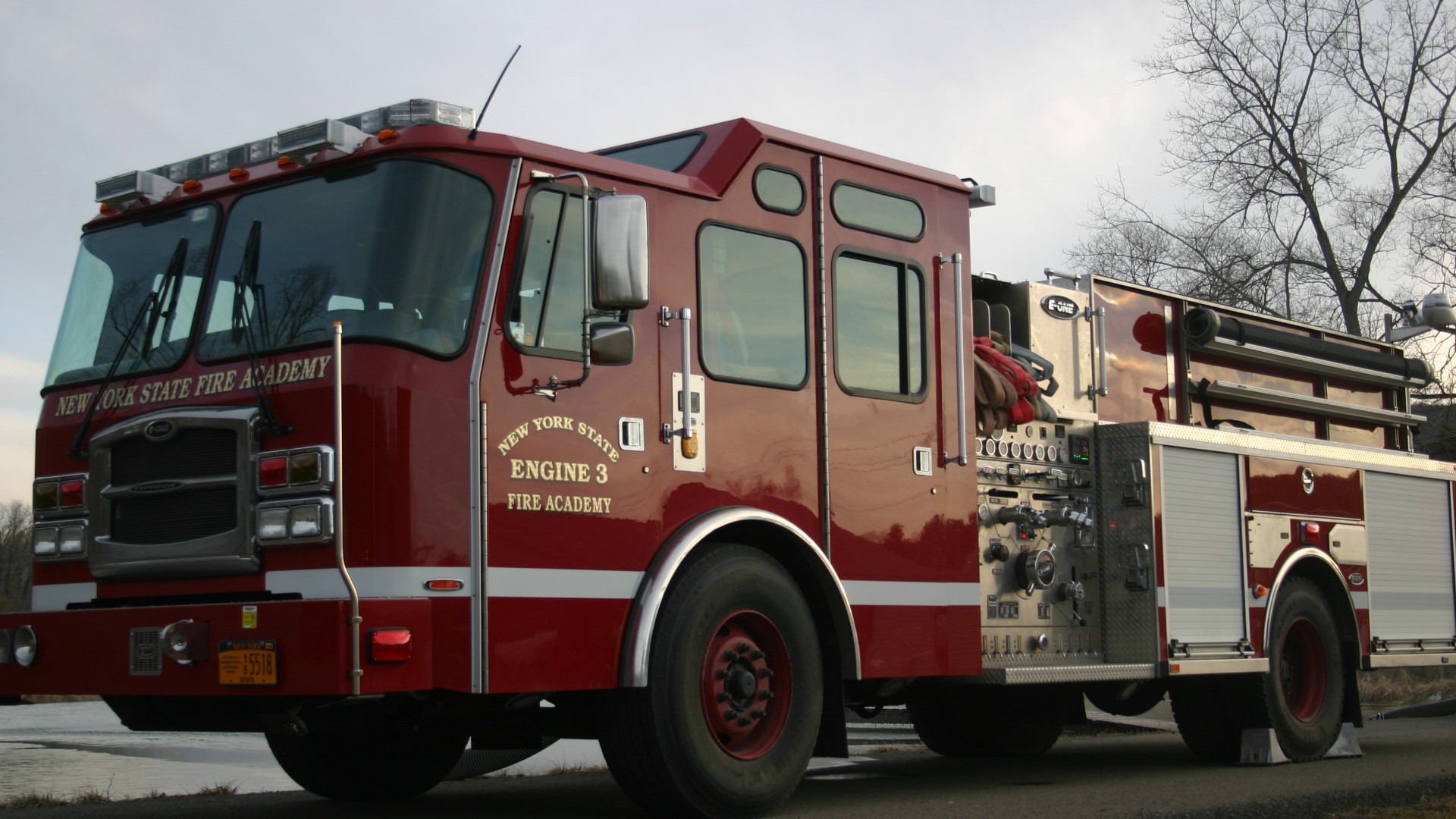
New York Office of Fire Prevention & Control - Fire Officer I
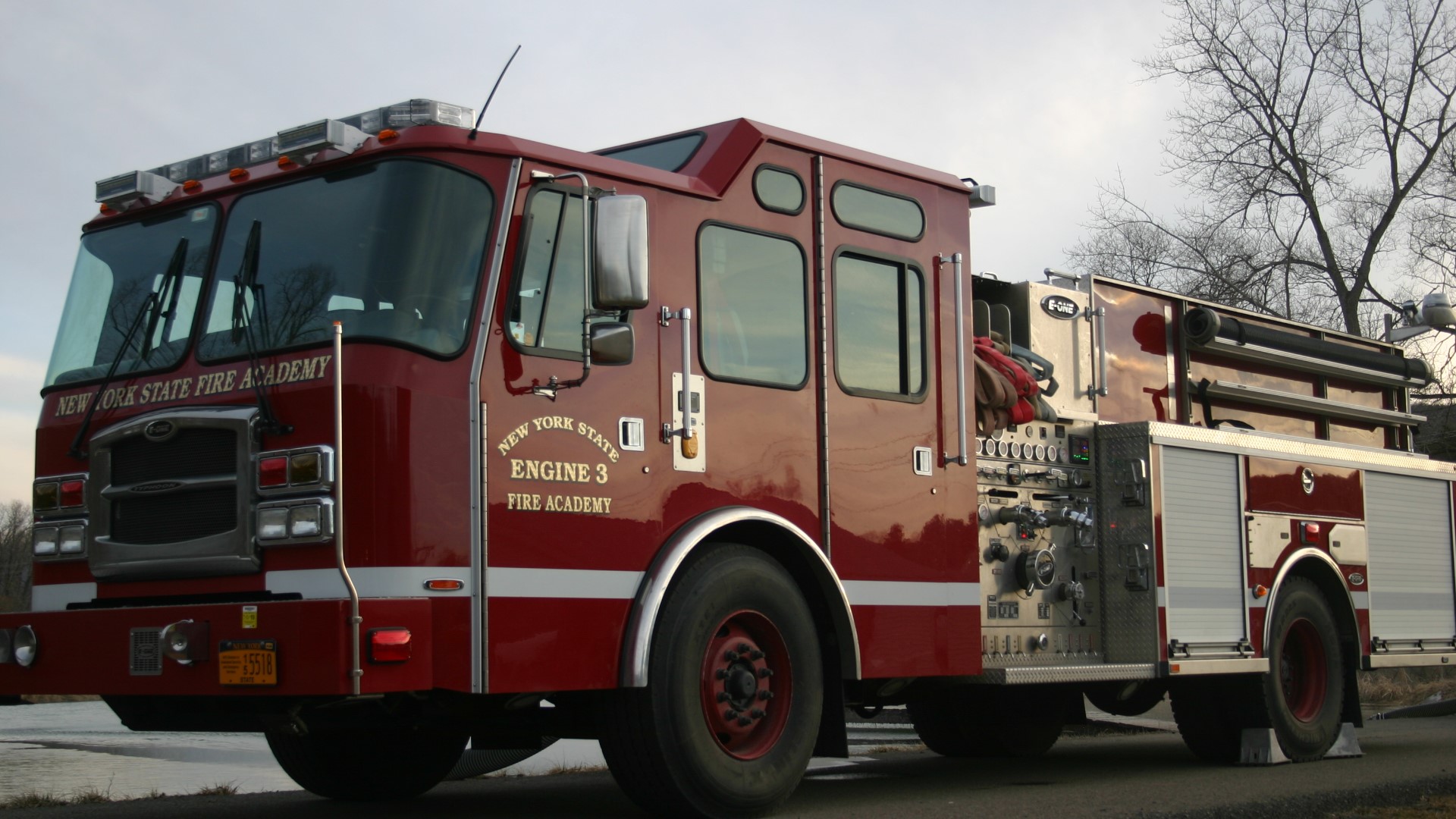
New York Office of Fire Prevention & Control - Fire Officer I
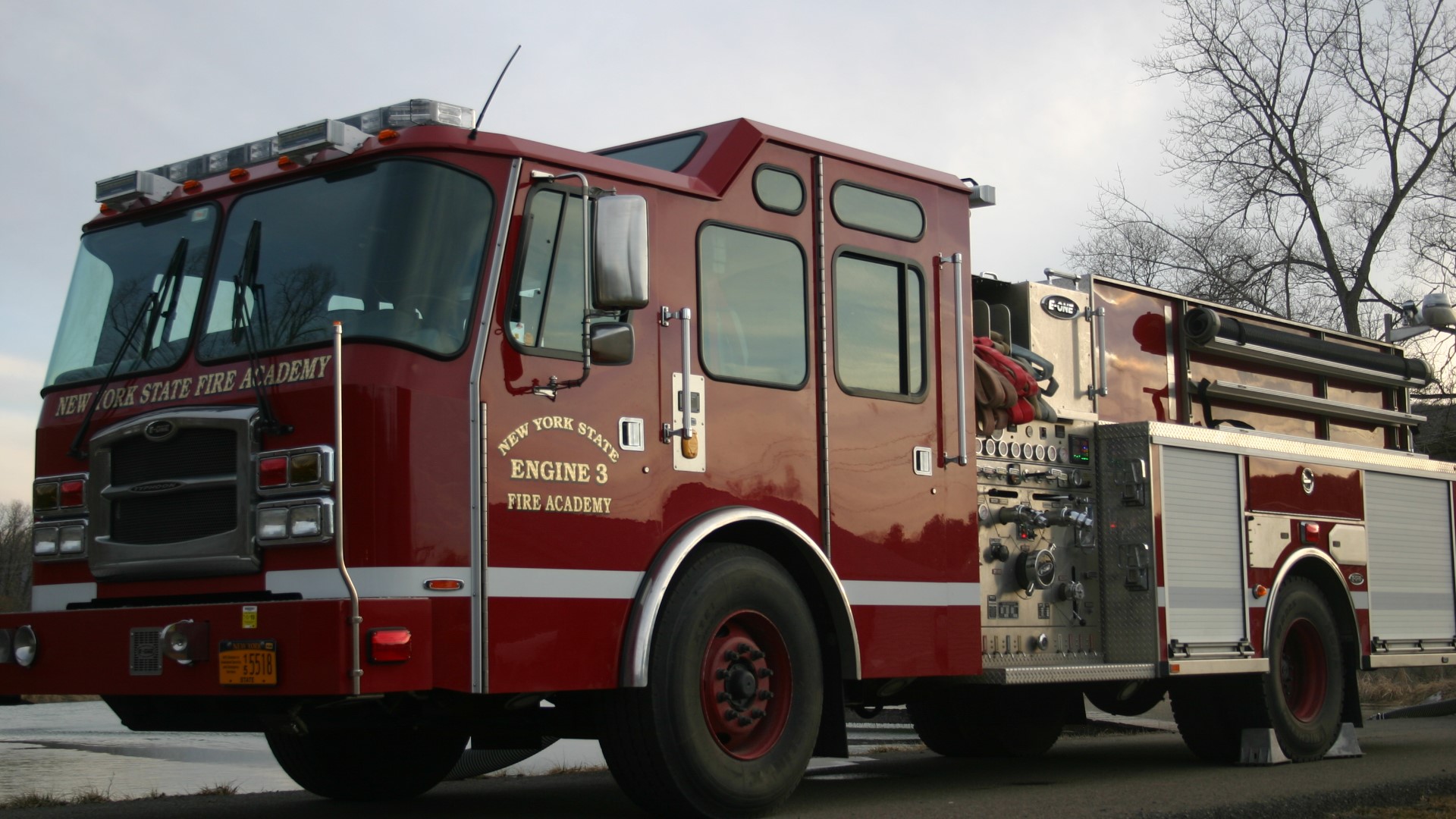
New York Office of Fire Prevention & Control - Fire Officer I
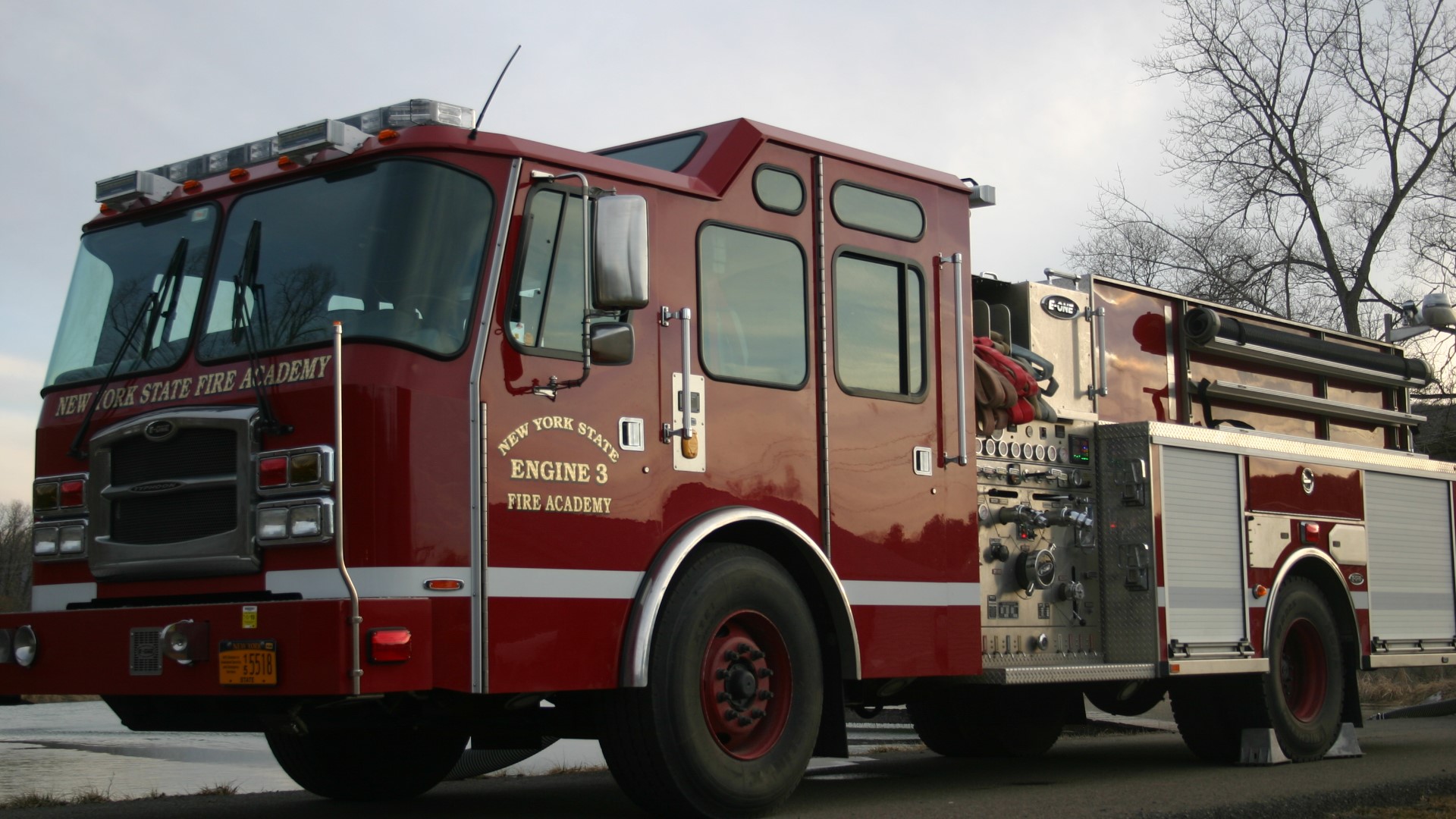
New York Office of Fire Prevention & Control - Fire Officer I
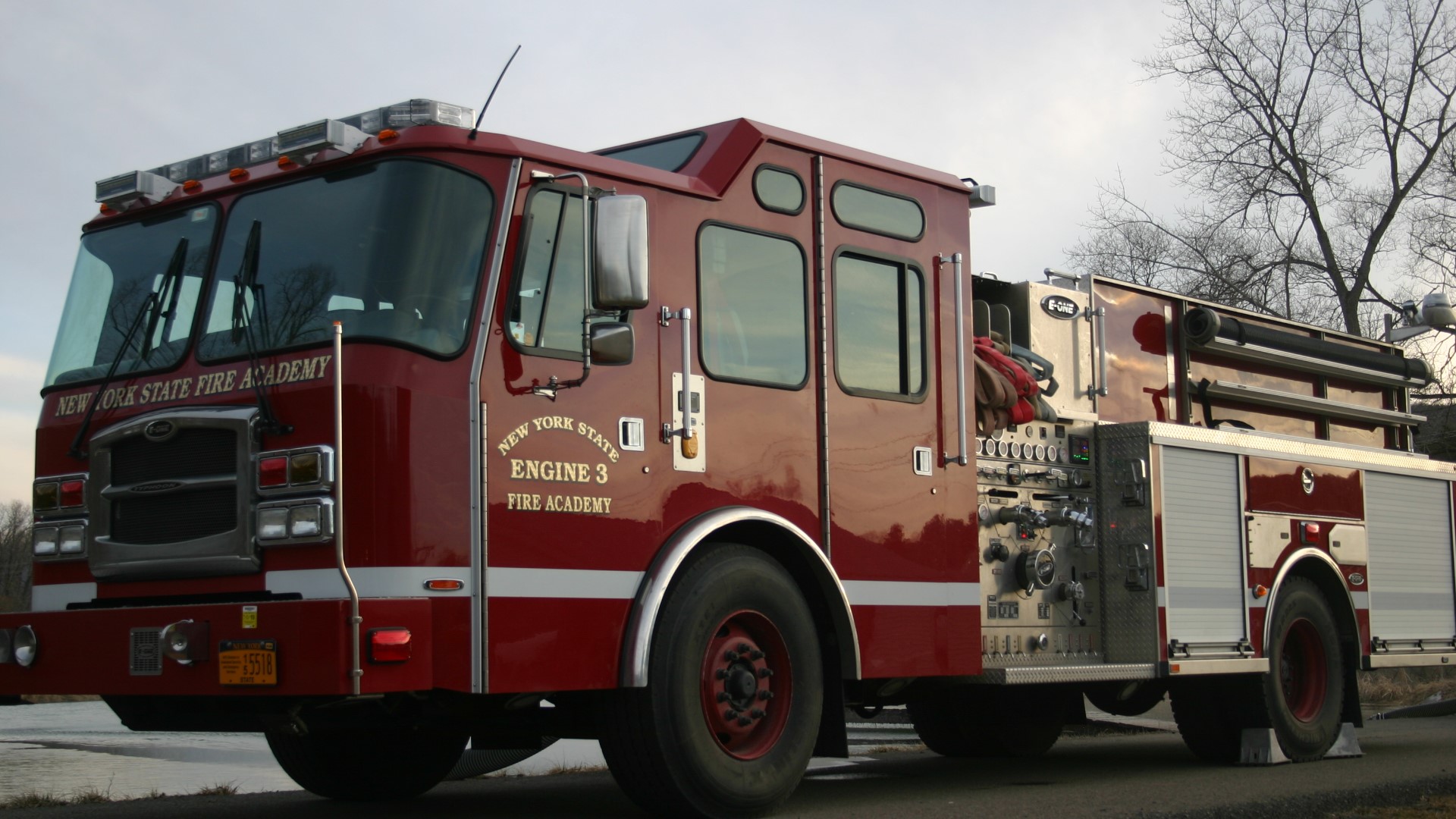
New York Office of Fire Prevention & Control - Fire Officer I
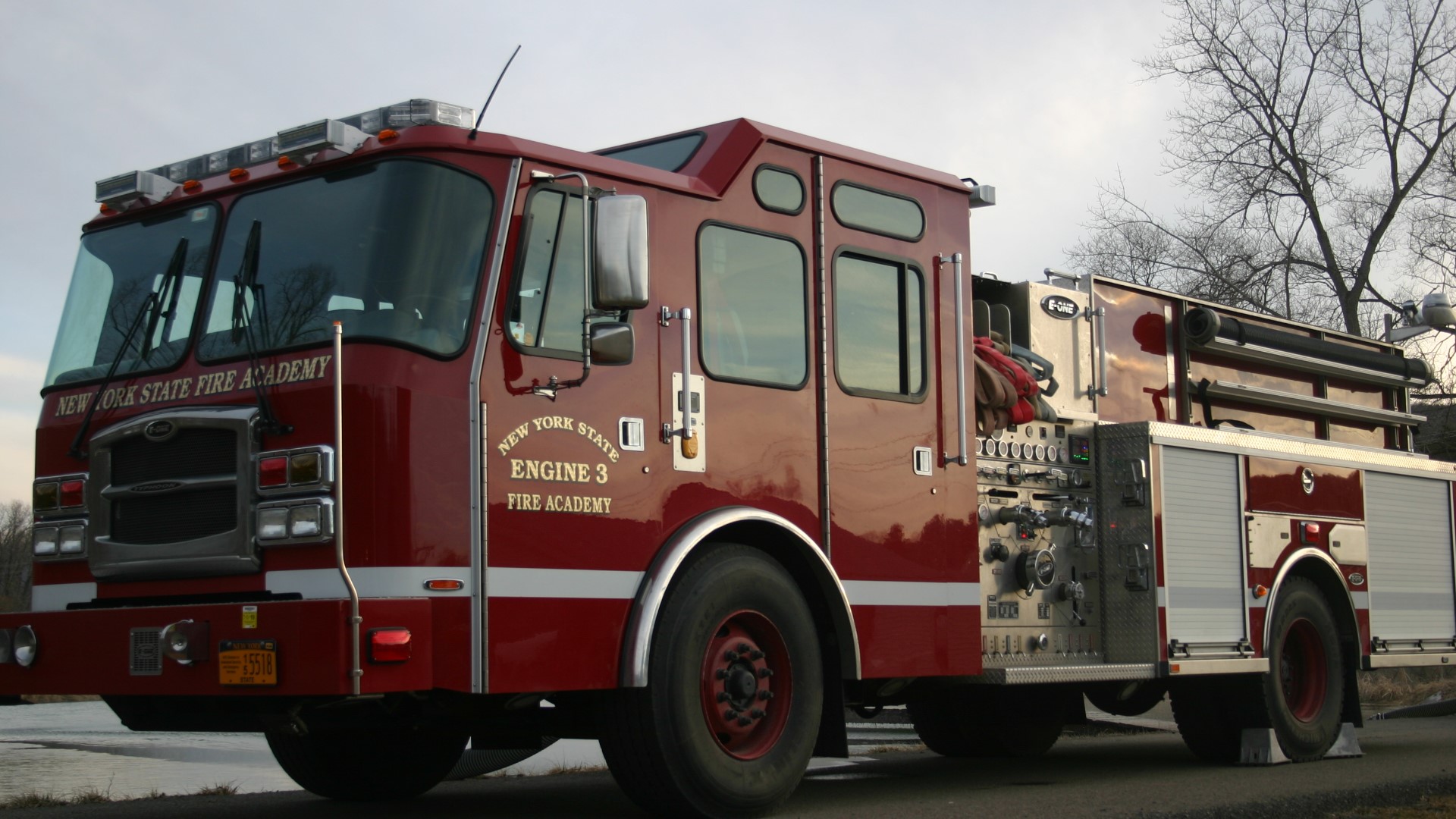
New York Office of Fire Prevention & Control - Fire Officer I
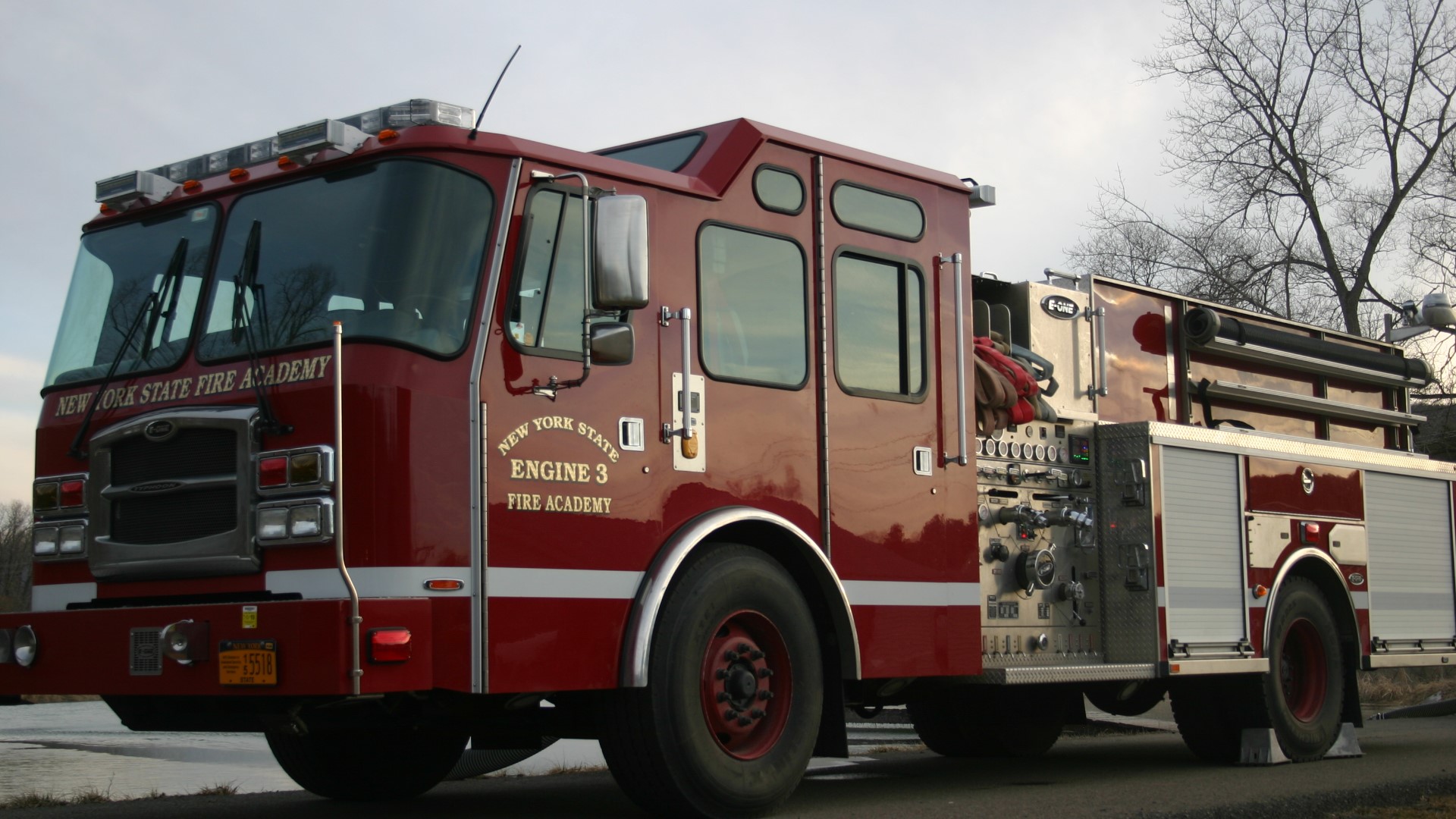
New York Office of Fire Prevention & Control - Fire Officer I
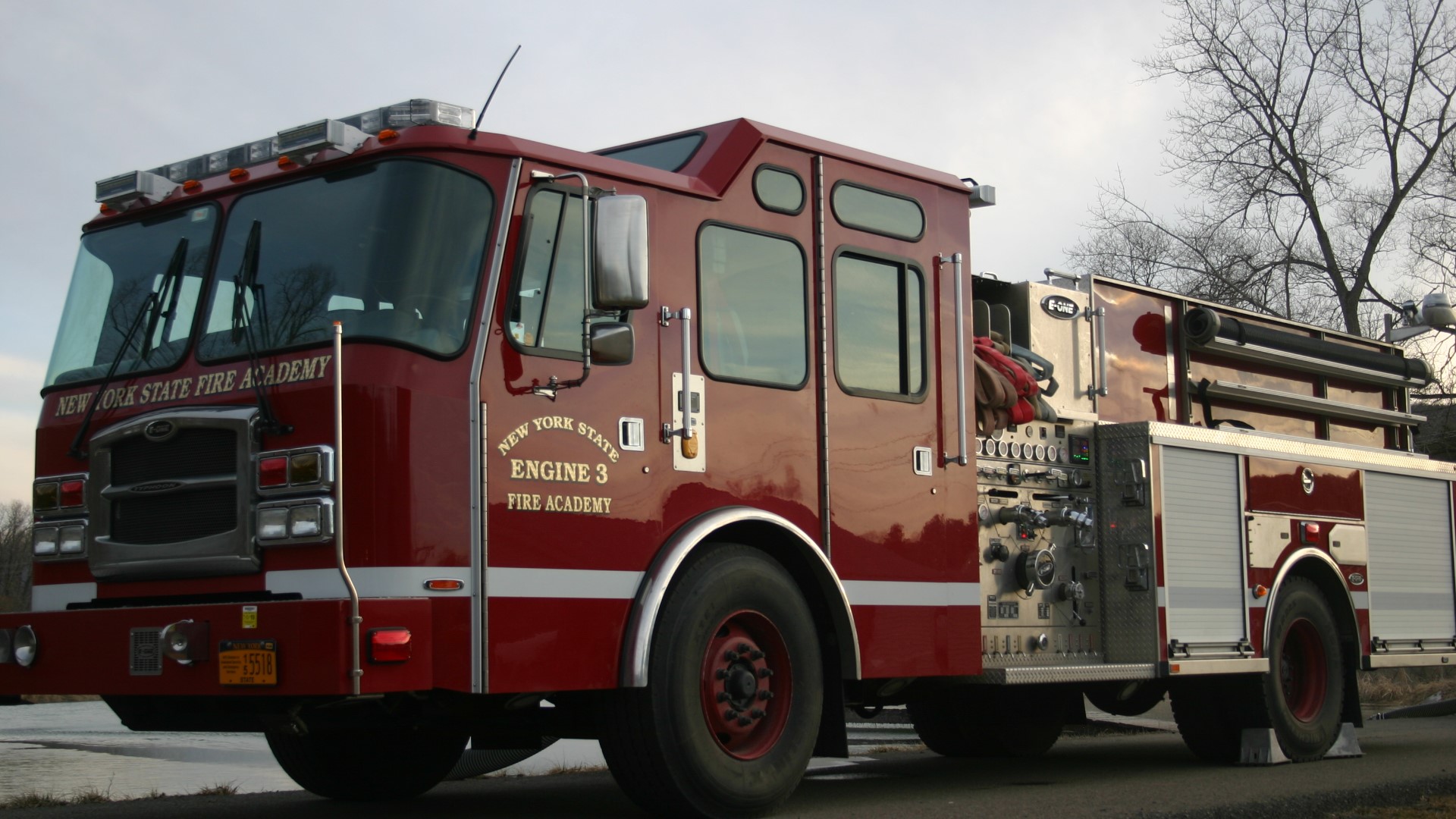
New York Office of Fire Prevention & Control - Fire Officer I
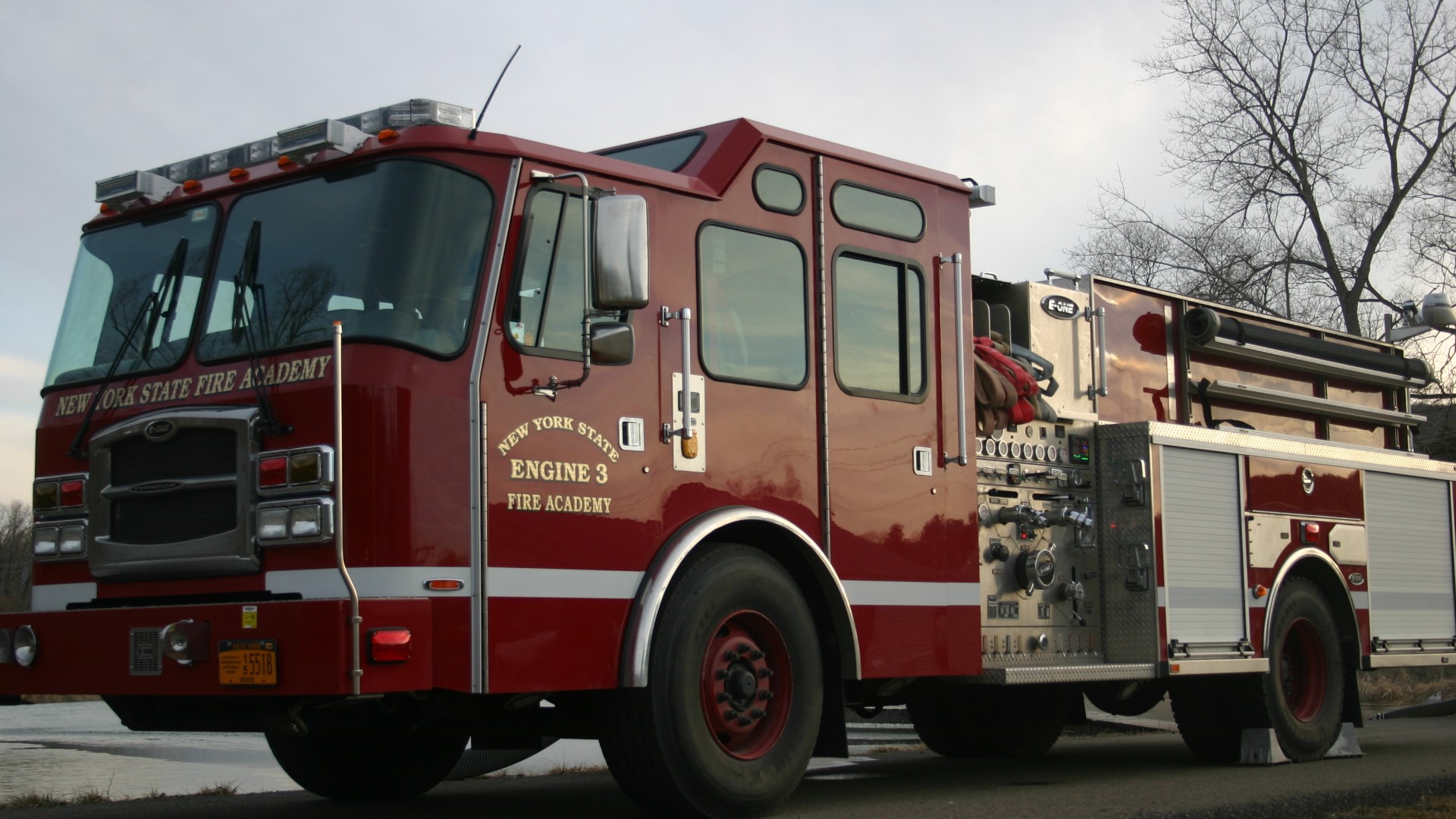
New York Office of Fire Prevention & Control - Fire Officer I
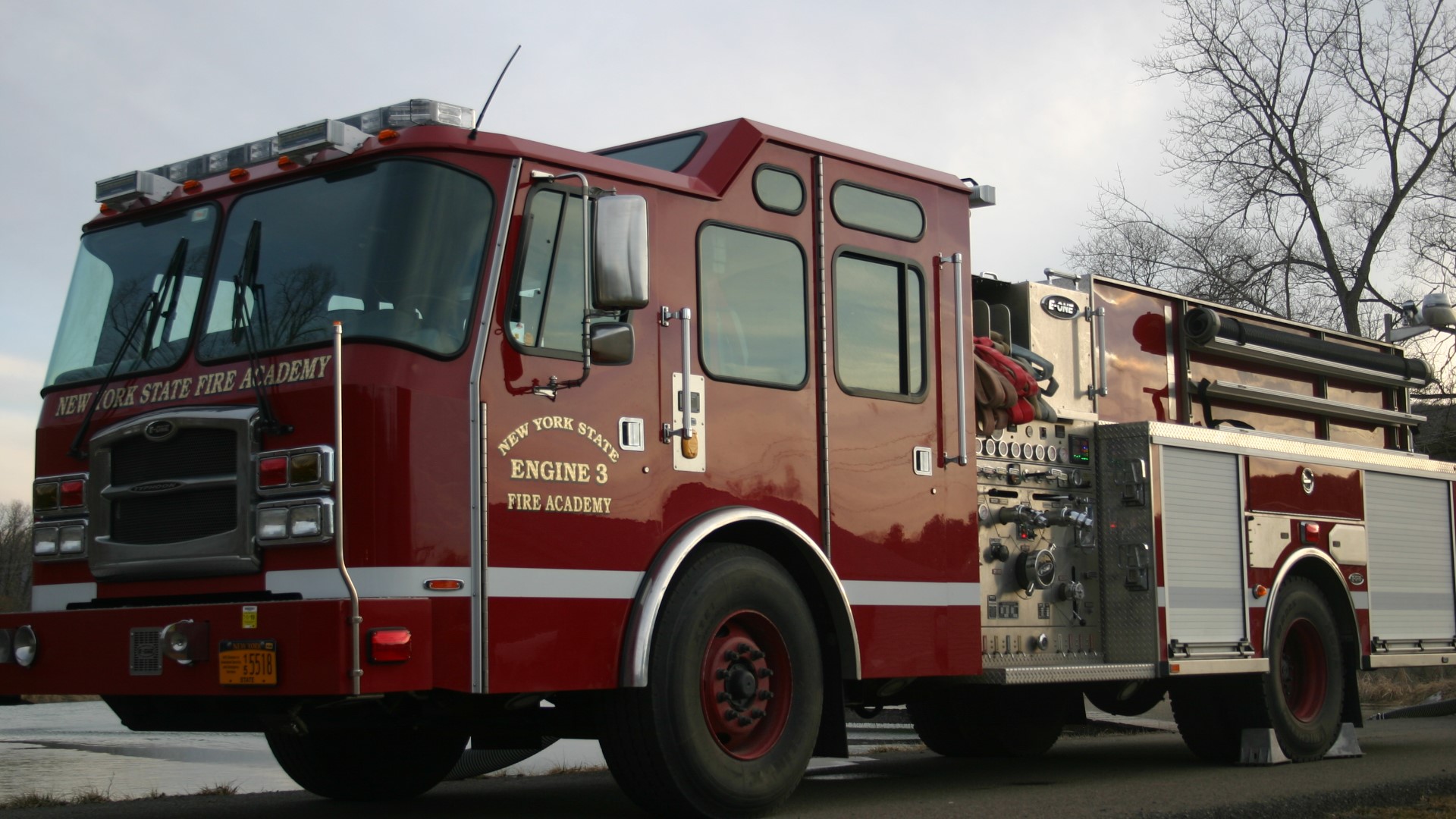
New York Office of Fire Prevention & Control - Fire Officer I
Fireground Strategies and Tactics for First Arriving Companies
Designed for the first arriving officer at any incident. The primary focus of this course is structural firefighting but the lessons learned are applicable for any emergency scene. Elements of this course include scene sizeup, decision making, determining incident strategies, and making tactical assignments. Also included are lessons on building construction, fire behavior and growth as well lessons for operating at common non-fire incidents such as motor vehicle accidents, propane and natural gas emergencies, and other typical non-fire emergencies. In addition to lecture and classroom activities this course utilizes scenarios to allow participants to employ their newly learned skills in real time.
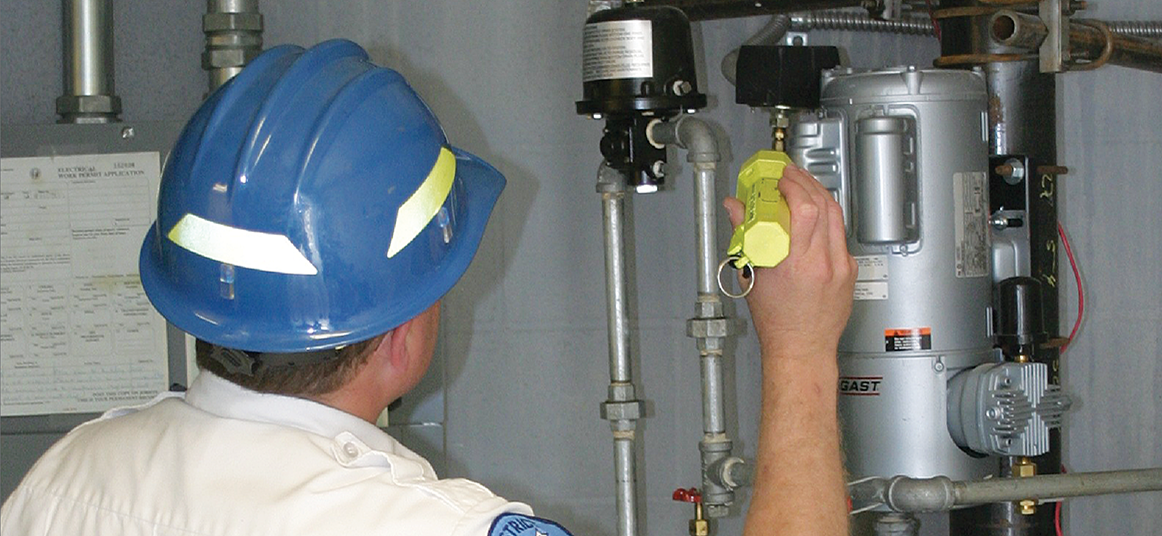
The Fire Inspector curriculum is designed to provide clear guidance that ensures adequate presentation of the information required to meet the Job Performance Requirements (JPRs) of the National Fire Protection Association (NFPA) 1031, Standard for Professional Qualifications for Fire Inspector and Plan Examiner, 2014 Edition. The Fire Inspector curriculum is chapter 4 of the Texas Commission on Fire Protection (TCFP) Curriculum Manual.
To qualify for the Fire Inspector certification, the Fire Inspector I and II curricula must be completed.
Reference List:
-Emergency Response Guidebook, (current edition). U.S. Department of Transportation
-Fire Inspection and Code Enforcement (8th ed.) (2016). Stillwater, OK: Fire Protection Publications. International Fire Service Training Association.
-Hazardous Materials for First Responders (5th Ed.) (2017). Stillwater, OK: Fire Protection. Publications. International Fire Service Training Association.
-Local Codes and Standards.
-NFPA 1031: Standard for Professional Qualifications for Fire Inspector and Plan Examiner (2014 ed.). Quincy, MA: National Fire Protection Association. NFPA Publications.
-NFPA 472: Standard for Competence of Responders to Hazardous Materials/Weapons of Mass Destruction Incidents (2013 ed.). Quincy, MA: National Fire Protection Association. NFPA Publications.
-Standards Manual for Fire Protection Personnel. Austin, TX: Texas Commission on Fire Protection.


This course is intended to get the Alamosa Airport Fire Rescue Crew the knowledge and training to pass the Colorado State Firefighter 1 testing and to serve the Alamosa Airport properly in time of emergency.
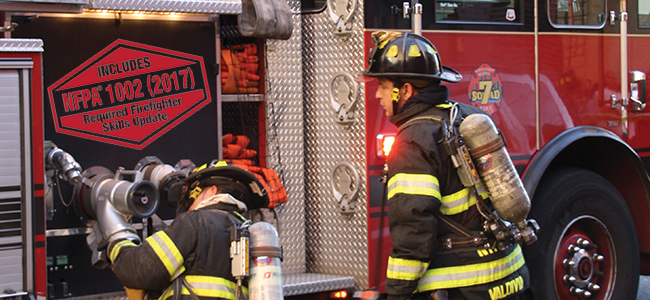
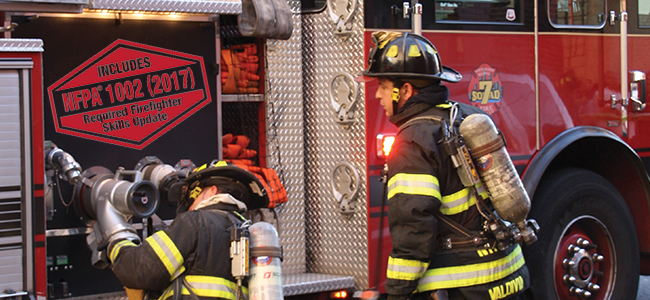

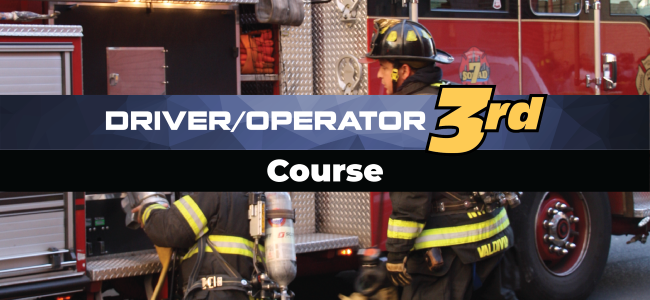
The curriculum for the class was developed for Indian River Shores Public Safety Department but meets and exceeds the standards for ATPC 1302 - Fire Apparatus Operations and is the second class of the two part series to test for Florida Pump Operator certification. The curriculum covers the laws, rules and driving techniques for emergency vehicles, as well as a review of fire service hydraulics. Fire ground evolutions and a driving course make up the practical part of the course. The evolution portion of the course includes the use of pre-connected lines, tandem pumping, drafting, relays and master streams. The student should have a basic understanding of fire stream hydraulics prior to entering this course. Students must bring gloves and proper attire for water pumping exercises.

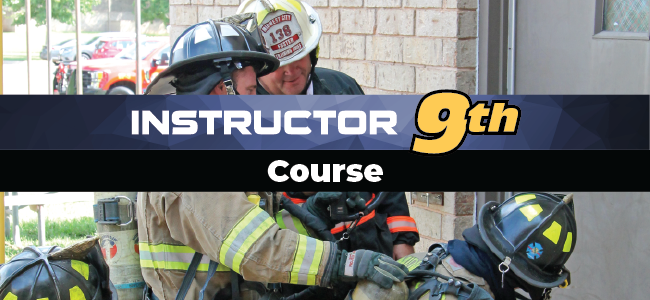


The Fire and Emergency Services Officer I course lays the foundation for the company
officer. The course meets and/or exceeds the job performance requirements for the
National Fire Protection Association (NFPA) 1021 and the Texas Commission on Fire
Protection. By obtaining this certification you will become a stronger leader on the fire
ground and in the fire station. The course highlights key points such as organizational skills,
diversity in the work place, fire ground safety and Incident Command System.
The Driver Operator Pumper course is designed for fire department personnel to safely operate a fire apparatus during an emergency situation. This course meets or/exceeds the job performance requirements for the National Fire Protection Association (NFPA) 1002 and the Texas Commission on Fire Protection. By obtaining this certification you will strengthen your ability to safely and effectively operate a fire apparatus on the fire ground. The course highlights key points such as fire apparatus maintenance/inspection, safely operating a fire apparatus, effectively pumping, driver safety maneuvers and strategies and tactics with a pumper.
This is a six week course which will begin August 15-September 26, 2018 through the IFSTA ResourceOne training platform. Students will receive login instructions to the IFSTA RescourceOne program via email one day before the course begins. Students are expected to cover 2-3 chapters a week with quizzes and tests reviewing each chapter and must maintain a GPA of a 70.





Canaan Career Center,
Canaan Fire and Emergency Services Career and Technical Education Firefighter I Program
This course is designed for the first-line company officer/supervisor and satisfies the requirements of the National Fire Protection Association (NFPA) 1021 Standard for Fire Officer Professional Qualifications, Chapter four "Fire Officer I". This portion of the program has been designed to improve your abilities to manage a single fire company. This course will cover the following chapters of the Fire and Emergency Services Company Officer, 6th Edition Textbook:
The CFRC splits this program into two parts, the online portion which you are currently enrolled in, and the practical portion which is to be taken after the completion of the online program. Once both portions have been successfully completed, the student will be eligible to take the Pro-Board Certification exam and practical evaluation.
Students are reminded to thoroughly read through all relevant textbook materials and complete chapter questions before attempting chapter quizzes and tests. There are limited attempts for these quizzes and tests.
Feel free to post any questions about the program or its contents on the course questions forum, or contact your instructor directly.
This course is designed for the first-line company officer/supervisor and satisfies the requirements of the National Fire Protection Association (NFPA) 1021 Standard for Fire Officer Professional Qualifications, Chapter five "Fire Officer II". This portion of the program has been designed to improve your abilities to manage multiple fire companies. This course will cover the following chapters of the Fire and Emergency Services Company Officer, 6th Edition Textbook:
12. The Company Officer II
13. Human Resources Management and Administrative Responsibilities II
14. Origin and Cause Determination
15. Delivery of Emergency Services II
16. Safety Investigations and Analyses
The CFRC splits this program into two parts, the online portion which you are currently enrolled in, and the practical portion which is to be taken after the completion of the online program. Once both portions have been successfully completed, the student will be eligible to take the Pro-Board Certification exam and practical evaluation.
Students are reminded to thoroughly read through all relevant textbook materials and complete chapter questions before attempting chapter quizzes and tests. There are limited attempts for these quizzes and tests.
Feel free to post any questions about the program or its contents on the course questions forum, or contact your instructor directly.
This online firefighter education program provides students with the knowledge needed to become professional firefighters. The course features interactive learning material that helps students understand content better and it can be completed at the students pace. Students are permitted to take up to one year to complete the online learning program, however the program can usually be completed within three to six months. Experienced Fire Service Instructors are available through the Moodle learning platform to assist students regularly. There are four National Fire Protection Association (NFPA) levels covered in this content, they are:
The online program consists of the following 27 chapters in an interactive learning format:
In order to receive the opportunity to be tested by the Pro Board® students must complete the practical learning component on site in addition to the successful completion of the online learning program. The on-site training required for accreditation is not included in this course and students must register for it separately.
For further information regarding the Pro Board®, visit www.theproboard.org
This course is designed to meet the needs of entry-level fire and emergency service instructors by meeting or exceeding the job performance requirements in National Fire Protection Association (NFPA) 1041, Standard for Fire Service Instructor Professional Qualifications, Chapter 4 "Fire Instructor I". This course will cover the following chapters of the Fire and Emergency Services Instructor, 9th Edition Textbook:
The CFRC splits this program into two parts, the online portion which you are currently enrolled in, and the practical portion which is to be taken after the completion of the online program. Once both portions have been successfully completed, the student will be eligible to take the Pro-Board Certification exam and practical evaluation.
Students are reminded to thoroughly read through all relevant textbook materials and complete chapter questions before attempting chapter quizzes and tests. There are limited attempts for these quizzes and tests.
Feel free to post any questions about the program or its contents on the course questions forum, or contact your instructor directly.
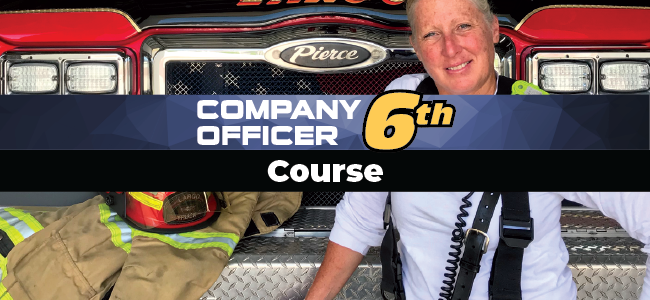
This class will satisfy the State of WY class requirement for obtaining a Fire Officer II Certification. It will cover Chapters 12 - 16 in the IFSTA Fire and Emergency Services Company Officer textbook and prepare you to take the State Of Wyo Fire Officer II written test. The class will start on on December 29th and complete Feb 8th.
The Live Fire Instructor shall meet the requirements of Firefighter II as defined in NFPA 1010 and the requirements of Fire and Emergency Services Instructor I as defined in Chapter 4 and the job requirements defined in 7.2 through 7.3
A Live Fire Instructor shall demonstrate competency in knowledge and skills in applicable subjects, methods, and equipment being taught and the objectives contained in NFPA 1403
A Fire and Emergency Services Instructor I is someone who,
As a Fire and Emergency Services Instructor, you will train personnel on the skills they need to perform safely and effectively while completing job related tasks. You will be partly responsible for their classroom success and fully responsible for their safety during training.
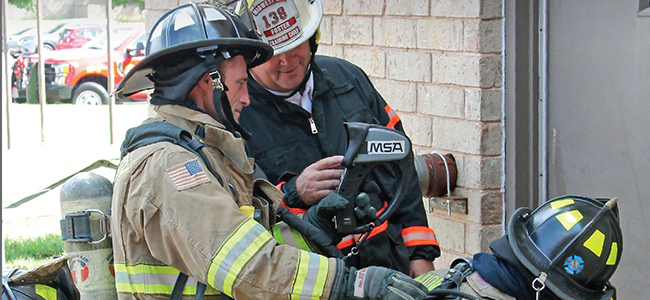
This course focuses on skills necessary to become a Fire Instructor for the fire service. It is designed to provide emergency responders with an understanding of the instructional process. This course addresses the job performance requirements of the National Fire Protection Agency, 1041 Standard for Fire & Emergency Services Instructor Professional Qualifications at the Fire Instructor I level.
This course opens on Tuesday, October 15th and covers chapters 1 through 11 in the IFSTA Fire and Emergency Services Company Officer, 6th Edition textbook. All chapter tests must be successfully completed with a 70 percent or higher grade before 10pm on Sunday, December 15th. Each participant has up to 2 chances on each test to achieve the 70 percent.
On Monday, December 16th, class participants will meet at 08:30 to begin work on the practical skills required of this course. The group will meet on December 16th, December 17th, and December 18th from 08:30 to 16:00. (Depending on practical skill work progress, class sessions may be shortened)
This course provides the skills and knowledge needed for the entry-level firefighter, career or volunteer, to perform his/her duties safely, effectively, and competently. The curriculum is based on the NFPA 1001 Standard for Fire Fighter Professional Qualifications, the NFPA 1051 Standard for Wildland Fire Fighter Professional Qualifications, and the NFPA 472 Standard for Competence of Responders to Hazardous Materials/Weapons of Mass Destruction Incidents. The seven overarching themes of the California State Fire Fighter I curriculum are: general knowledge germane to the profession, fire department communications, fireground operations, rescue operations, preparedness and maintenance, wildland suppression activities, and hazardous materials/WMD. The course emphasizes the requirements of the California State Board of Fire Services Certified Firefighter I training, International Fire Service Accreditation Congress (IFSAC) standards, Professional Qualifications (ProBoard) requirements, and Cal Fire Wildland Firefighter-Basic training. This course, combined with Firefighter I Academy Skills Review and Certification, satisfies all training requirements for the IFSAC Firefighter I certification. Certificates of Completion for Fire Fire Fighter I Academy and Cal Fire Basic Firefighter issued with a grade of "C" or better.
Prerequisite: FT 89 (completed with a grade of "P" or higher), and FT 50, FT 51W, and FT 88A (completed with a grade of "C" or higher). Emergency Medical Responder (EMS 1) is the minimum medical training requirement, but EMT or Paramedic is the preferred emergency medical training for local area employment.


This course meets the training requirements for NFPA 1003: Standard for Airport Fire Fighter Professional Qualifications. The course will provide students with the proper knowledge and skills to effectively respond and mitigate to an aircraft emergency such as airport familiarization, PPE, tactics, incident command, airfield communications, safety planning, operation of apparatus and equipment, and much more. Additionally, students will become efficient in extinguishing wheel, engine, interior cabin, and compartment fires.
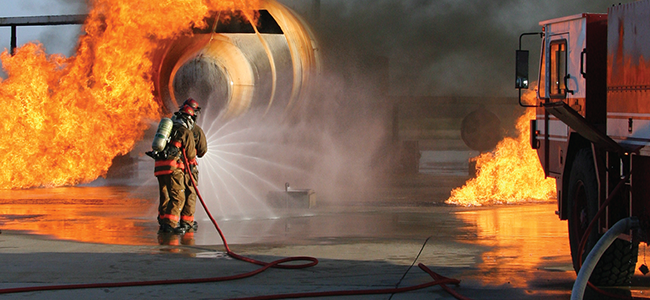
This course meets the training requirements for NFPA 1003: Standard for Airport Fire Fighter Professional Qualifications. The course will provide students with the proper knowledge and skills to effectively respond and mitigate to an aircraft emergency such as airport familiarization, PPE, tactics, incident command, airfield communications, safety planning, operation of apparatus and equipment, and much more. Additionally, students will become familiar in extinguishing wheel, engine, interior cabin, and compartment fires.


Hazardous Materials for First Responders
This course uses the IFSTA manual Hazardous Materials for First Responders, 6th Edition.
You are strongly encouraged to use the reading assignments in this manual to supplement your learning. Additional study materials are available for purchase on our website www.ifsta.org to help ensure your success when taking the certification exam.
Chapters 1 - 3 are Awareness Level chapters. At the conclusion of chapter 3, you are required to complete and submit three Activities, Complete the Awareness Final Exam
Chapters 4 - 9 are Operations Level chapters.
Chapters 10-16 are Operations and Mission-Specific Chapters.
At the conclusion of chapter 13, you are required to complete the Operations Final Exam, then go to the course completion and then download your end-of-course completion certificate. which much be sent to the email below.
Chapters 14-16 are Mission-Specific chapters. These are not tested but required for study review. These Chapter may appear on state testing.
If you have any questions, please contact Instructor Chris Carbajal
( Carbajal@clarkcountynv.gov ).
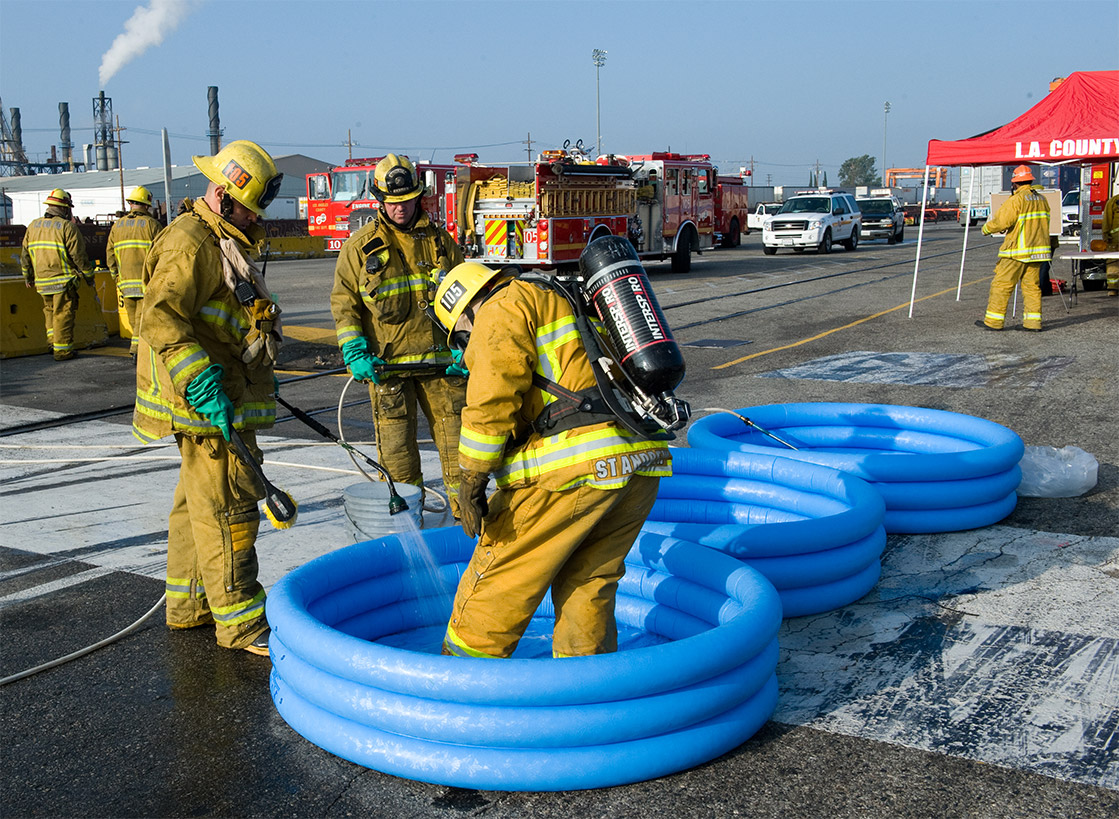
he Hazardous Materials Awareness & Operations/WMD course is an advanced, collegiate-level training program designed for CCFD Rural Volunteer responders. This comprehensive curriculum provides a progressive learning path, starting with Hazardous Materials Awareness and advancing into Hazardous Materials Operations and Weapons of Mass Destruction (WMD) response.
Participants will develop a deep understanding of hazardous materials identification, risk assessment, and defensive response techniques, ensuring they are well-prepared to handle hazmat incidents safely and effectively. The curriculum blends theoretical knowledge with practical applications, equipping responders with the skills needed to manage hazardous substance releases, mitigate threats, and protect both themselves and the public.
🔹 Hazardous Materials Awareness:
🔹 Hazardous Materials Operations/WMD:
The course incorporates critical thinking exercises, case studies, and interactive simulations to reinforce real-world response scenarios.
Upon successful completion of the knowledge and skills assessments, participants will be eligible to challenge both the State HazMat Awareness and Operations/WMD certification exams, marking a significant achievement in their emergency response training.
The Hazardous Materials Awareness & Operations/WMD course is more than just an educational program—it is a crucial training experience that empowers CCFD Rural Volunteer responders with the expertise and confidence to effectively mitigate hazardous material threats and enhance community safety.
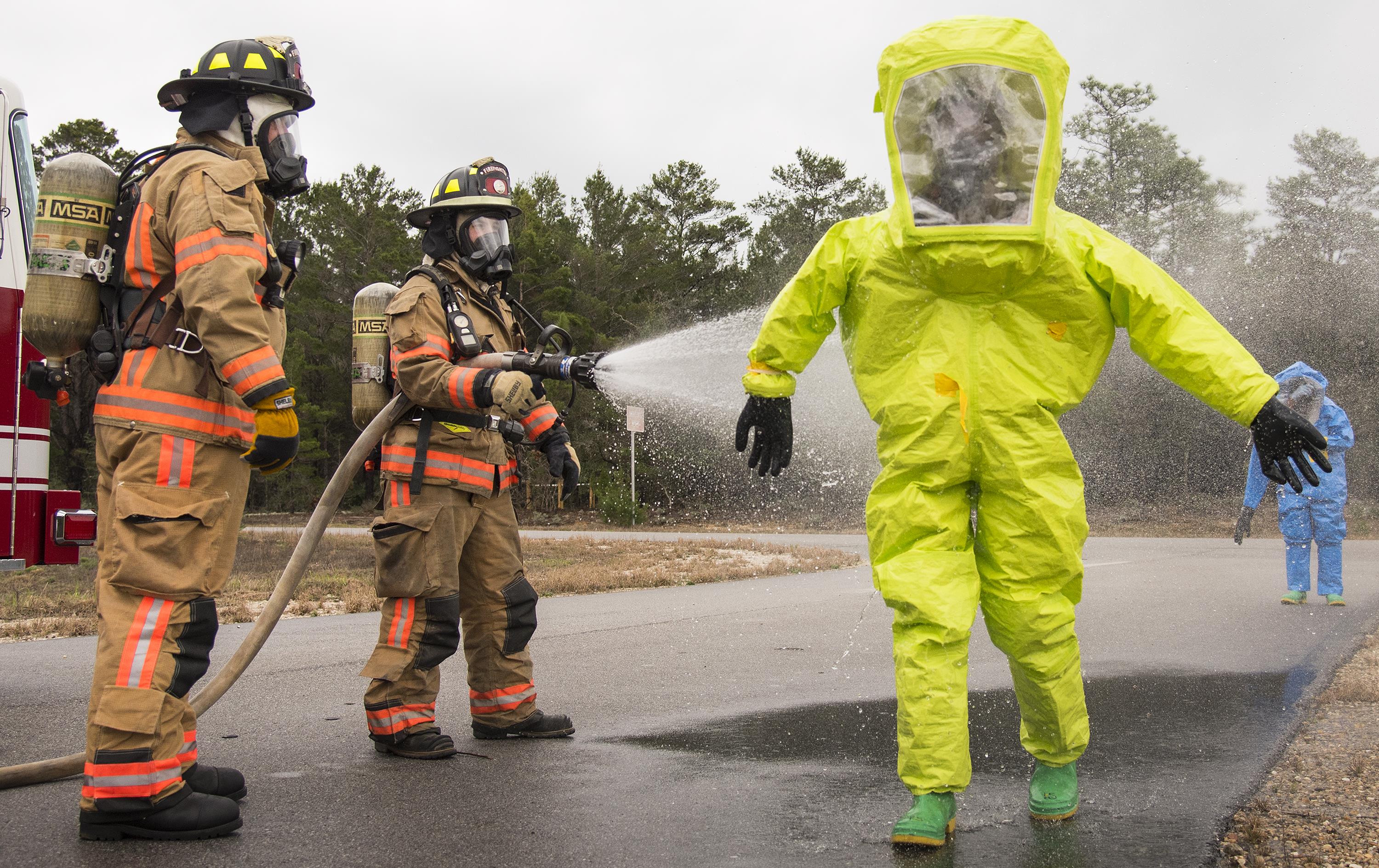
The Hazardous Materials Operations course is an advanced, collegiate-level program tailored for CCFD Rural Volunteer responders. This online curriculum builds upon the foundational knowledge of Hazardous Materials Awareness, focusing on the critical skills, strategies, and decision-making processes necessary for effectively responding to hazardous materials incidents.
This comprehensive training equips participants with the knowledge required to recognize, assess, and implement defensive control measures to mitigate hazmat threats safely. The curriculum integrates theoretical principles with hands-on applications, ensuring responders develop a proficient understanding of hazardous material behavior, risk assessment, and operational response strategies.
Key topics covered include:
✅ Identifying hazardous materials and assessing potential threats
✅ Understanding chemical properties, exposure risks, and personal protective equipment (PPE)
✅ Implementing defensive control measures, such as containment, confinement, and vapor suppression
✅ Utilizing emergency decontamination procedures to prevent secondary exposure
✅ Coordinating with specialized hazmat response teams and ensuring scene safety
Participants will engage in critical thinking exercises, case studies, and interactive simulations, reinforcing real-world application of response protocols in hazardous materials emergencies.
Upon successful completion of knowledge and skills assessments, participants will be eligible to challenge the state HazMat Operations certification exam, further advancing their qualifications in the emergency response field.
The Hazardous Materials Operations course is more than just training—it is a vital stepping stone for CCFD Rural Volunteer responders, providing them with the expertise, confidence, and practical skills needed to effectively respond to hazardous materials incidents and enhance community safety.
PCC Materials

This class is for firefighters and driver/operators who aspire to the position of company officer; for company officers determined to remain versed in essential and innovative management, leadership, and human relations concepts; and for training officers responsible for teaching and developing officers and officer candidates. The class will discuss what it means to assume the role of company officer, along with how it relates to the department and community, and what liability and legal responsibilities attach to the position. Also discussed are some of the classic and contemporary theories of human resource management. Discussions of labor relations, budgeting, information management, and fire department communications are included. Company-level inspections, investigations, and trainings are discussed along with emergency service delivery. The company officer’s responsibilities relating to firefighter safety and health are discussed.
This is a "hybrid" type course with most of the course work beginning on March 8, 2024 and ending on April 26/30, 2024. Participants will complete the work on their own and at their own pace, under the following guidelines:
The chapter quizzes and tests for chapters 1 through 5 must be completed by 08:00 on April 1.
The chapter quizzes and tests for chapters 6 through 10 must be completed by 08:00 on April 26.
Participants must score a 70 percent or higher on each quiz and test to move on to the next chapter quiz or test. Participants have 2 chances to successfully complete each quiz or test.
Chapter quizzes are not timed, so participants are encouraged to use their textbook if they are unsure of an answer while completing the quizzes.
Chapter tests are timed, with the time allowed for each test proportional to the number of questions in the test. For chapter tests, the total time allowed accounts for an average of 90 seconds per question.
There will be activities assigned during the course, which the participants will submit to the instructor on or before the last day of the course. Plenty of notice will be given to participants
Half of the class will meet at 09:00 on Friday, April 26 to complete the last activities. The other half will meet on Tuesday, April 30 to complete the last activities.
On the two days listed in item number 7, participants will each present on a topic to the other participants there in that session. Details of that activity will be distributed by March 29th.
This course is going to be run like an adult learning course in which each participant is responsible for setting aside time to work through the course materials. As listed above, the first five chapters must be completed by April 1. That is so that you don’t procrastinate too long. My suggestion for you is to set a goal of completing two chapters per week, so that you have all ten completed by the weekend of April 12th. That would give you two weeks of cushion time.
Once the course activities have been completed and everyone has successfully completed required course testing, a date will be set up for MO Division of Fire Safety certification testing. That will likely take place at the Cottleville FPD in our training room. The state’s certification test for Instructor 1 certification consists of 100 multiple choice questions from their testing bank.
Note: Anything and everything listed in chapters 1 through 10 in the IFSTA Fire and Emergency Services Instructor 9th Edition textbook is fair game for their test. So, taking the time to read the chapters, reviewing the lesson outlines, and reviewing the powerpoint presentations on the IFSTA ResourceOne site is all highly suggested.
In addition to the DFS certification test, once the course has been successfully completed, participants will receive a "task book" from the Division of Fire Safety that they will have to complete within 365 days. We will review that packet on the first day of class, and again on the last day of class as needed.
Throughout this class or course, participants are welcome and encouraged to reach out to the instructor for guidance or clarification on course work. I want all of you to be successful, so please reach out to me if you need assistance.
Fire Service Instructor I Offered by Crowder College
Covers the presentation skills needed by new instructors. Topics include lesson plan preparation, presentation skill, using audiovisual equipment, identifying learning objectives, questions, tests, evaluation instruments, scheduling training sessions, and the supervision/coordination of the activities of other instructors. Meets NFPA 1041 standards. Curriculum used will be the latest version of IFSTA Fire and Emergency Services Instructor.
Online course content: Begins March 30, 2020 All online content must be completed by May 8, 2020 Practical skills practice and evaluation: May 9, 2020 Location: Crowder College 4020 Main St. Cassville, MO 65625 Cost:
Free Call (417) 489-4554 or email f_14@hotmail.com if you have questions.
Successful completion of this course enables students to apply for Fire Instructor I certification testing with the Missouri Division of Fire Safety under IFSAC and Pro Board accreditation.
"This free training opportunity is provided by the Missouri Division of Fire Safety - Fire Education/Advisory Commission."
Fire Service Instructor I Offered by Crowder College
Covers the presentation skills needed by new instructors. Topics include lesson plan preparation, presentation skill, using audiovisual equipment, identifying learning objectives, questions, tests, evaluation instruments, scheduling training sessions, and the supervision/coordination of the activities of other instructors. Meets NFPA 1041 standards. Curriculum used will be the latest version of IFSTA Fire and Emergency Services Instructor.
Online course content: Begins March 30, 2020 All online content must be completed by May 8, 2020 Practical skills practice and evaluation: May 9, 2020 Location: Crowder College 4020 Main St. Cassville, MO 65625 Cost:
Free Call (417) 489-4554 or email f_14@hotmail.com if you have questions.
Successful completion of this course enables students to apply for Fire Instructor I certification testing with the Missouri Division of Fire Safety under IFSAC and Pro Board accreditation.
"This free training opportunity is provided by the Missouri Division of Fire Safety - Fire Education/Advisory Commission."
Fire Service Instructor I Offered by Crowder College
Covers the presentation skills needed by new instructors. Topics include lesson plan preparation, presentation skill, using audiovisual equipment, identifying learning objectives, questions, tests, evaluation instruments, scheduling training sessions, and the supervision/coordination of the activities of other instructors. Meets NFPA 1041 standards. Curriculum used will be the latest version of IFSTA Fire and Emergency Services Instructor.
Online course content: Begins September 1, 2021 All online content must be completed by October 29, 2021 Practical skills practice and evaluation: October 30, 2021 Location: Nevada Fire Department 316 W. Cherry Nevada, MO 64772 Cost: There is no cost for this course.
Free Call (417) 489-4554 or email f_14@hotmail.com if you have questions.
Successful completion of this course enables students to apply for Fire Instructor I certification testing with the Missouri Division of Fire Safety under IFSAC and Pro Board accreditation.
"This free training opportunity is provided by the Missouri Division of Fire Safety - Fire Education/Advisory Commission."
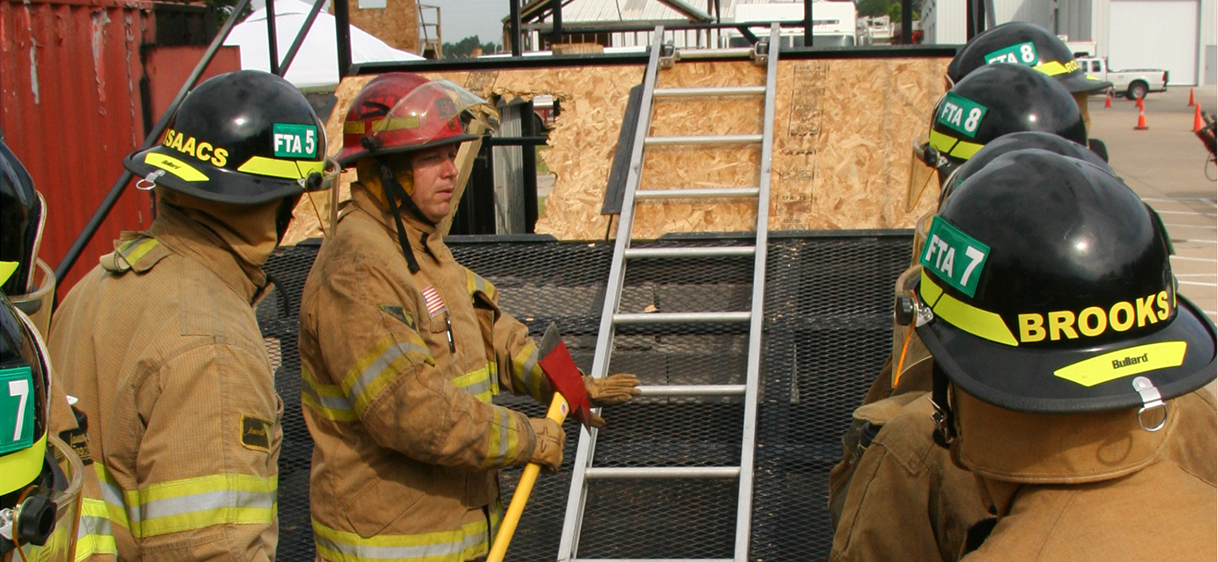
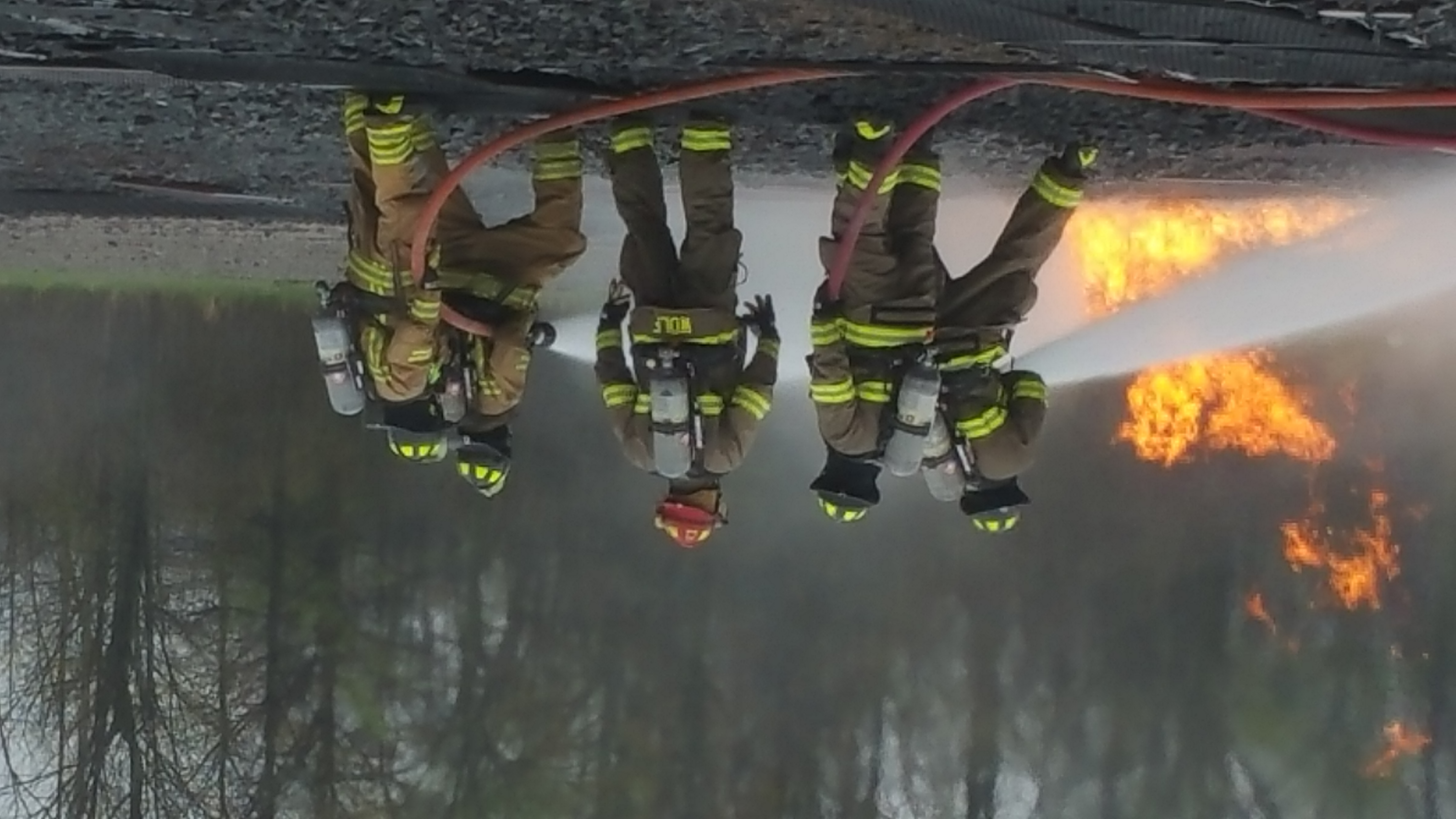
This is a 40-hour Basic ARFF Course that will instruct the students on basic Aircraft Rescue Fire Fighting skills as required by the FAA. By completing this course, the student will meet the basic requirements of FAR 139. 319 (i) / AC No: 150/5210-17C as required by the FAA & NFPA 1003 - Qualifications of an Aircraft Rescue Firefighter. This course will have both lecture and some hands-on instruction. Each day of class and will have 2 instructors for the course. This Course will be held 8 hours each day for 5 days. Students and / or sponsoring agency are responsible for textbooks and electronic software used for the course. Class will be using newest Aircraft Rescue Firefighting editions and curriculum, currently the IFSTA Aircraft Rescue and Firefighting 6th Edition Book but may change due to newer editions and curriculum. The requesting agency will be notified of any changes of book and curriculum changes by the lead instructor.
Goals: The goal of this course is that upon completion the student will have sufficient basic knowledge to apply skills and successfully perform basic Aircraft Rescue firefighting. Meeting these goals will accumulate into achieving the basic qualifications to meet the basic requirements for an aircraft rescue firefighter as set for by NFPA 1003 and FAR 139. 319 (i) / AC No: 150/5210-17C. The goal is to provide sufficient training and instruction such that firefighters can function well as part of a team.
Objectives: Initial training provided by each chapter will enable personnel to identify and interpret advanced theories, facts, concepts, principles, requirements, procedures, equipment, and components of ARFF. Trainees must also be able to apply these principles to the aircraft serving the airport and demonstrate all required tasks safely and accurately and in accordance with established procedures.
Completion of this course will provide the students with the fundamental knowledge and skills necessary to effectively manage and mitigate an aircraft emergency. Knowledge will be tested daily with quizzes on the chapters covered followed by a final exam on the final day of class. Students must pass the final exam by 70% to receive certificate.
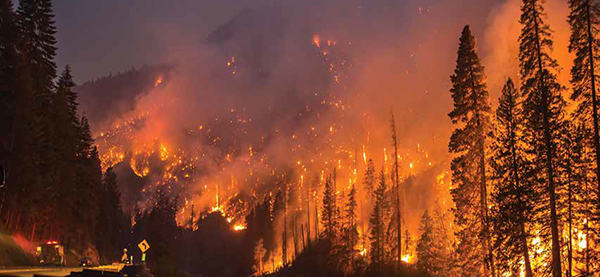
IN Firefighter Driver Operator General and Pumper
May 2024 at Rensselaer FD
Course Description
Indiana Driver Operator General and Pumper: This class is designed prepare the firefighter for certification testing through classroom learning and hands on training. The student will be expected to read the assigned material before class. We will be handing out quizzes to be completed before class or using IFSTA Moodle. Although there will be classroom presentation, it will focus on information that can’t be covered out in the field. If you don’t understand something you read, the class will begin with a questions and answers session to try and answer those questions. Then there will be an opportunity to go over the quiz that was assigned. We will then discuss certain topics from the book as to how they may apply. The bulk of the time will concentrate on the skills, understanding what is expected, how to obtain the information, applying knowledge learned from the book and evaluating your work. You must attend all classes to be eligible to take the test. If you must miss a day, it is up to you to make up the material. It will be your responsibility to schedule time between you and an instructor to catch up.
Course Logistics
This class is based on the recently updated curriculum for Indiana Driver Operator certification. The book we will use is IFSTA Pumping and Aerial Apparatus Driver/Operator Handbook 3rd ed. You should be able to access an E book from your IFSTA account, so there will not be any hard copies available. Individuals or Fire Departments now may apply for free IFSTA eLibrary subscriptions via https://on.in.gov/ifsta-library-request. Each user must have an IFSTA ResourceOne account to access these publications. ResourceOne accounts can be created via https://moodle.ifsta.org/. Questions regarding the IFSTA eLibrary should be directed to Shelly Elliott.
We will be doing all the driving and such in and around Rensselaer. If several members attend from one department, you will be expected to provide a fire engine from your department. This will allow you to familiarize yourself with your own equipment and give us more than one piece of apparatus to use. Everyone will need to show a valid driver’s license prior to being allowed to participate in the hands-on portion.
Prerequisites
Driver’s licensee and Driver Operator General (for Driver Operator Pumper)
Dates All Times CST
May 1, 8, 15 - 6:00 pm to 10:00 pm
May 4, 5, 11, 12, 18, 19 - 9:00 am to 6:00 pm
Written test TBD
Instructors Evaluator
Fabian Martinez (219) 689-7118 Rob Grady (219) 644-9331
Will Sonntag (219) 712-0803
Matt Kodicek (219) 808-4230
George Humphrey (219) 608-4665
Driver Operator General
Weekday | 18:00-22:00 | Ch. 1- Types of Apparatus equipped with a pump | IFSTA Pumping and Aerial Apparatus Driver Operator pgs 10-25, 26-75 |
Weekday | 18:00-22:00 | Ch. 3- Apparatus Safety and Operating Emergency Vehicles | IFSTA Pumping and Aerial Apparatus Driver Operator pgs 76-131, 512-536 |
Weekend | 08:00-16:00 | Driving Course Skills/Written Test | Hands on Skills Days |
Driver Operator Pumper
Weeknight | 1800-2200 | Ch. 4- Positioning Apparatus |
Weeknight | 1800-2200 | Ch. 7- Theoretical Pressure |
Weekend | 800-1600 | Ch. 9- Fire Pump Theory |
Weeknight | 1800-2200 | Ch. 12- Relay Pumping Operations |
May 1, 8, 15 - 6:00 pm to 10:00 pm are lecture days
May 4, 5, 11, 12, 18, 19 - 9:00 am to 6:00 pm are skills days
May 4
Skills 2-1 to 2-9 and hopefully start some of the skill 3’s
May 5
Skills 3-1 to 3-5
15-1 to 15-5
May 11
Eval and start DOP skills
May 12
Skills 4-1 to 4-5 and 7-1
May 18
Skills 10-1 to 10-7
May 19 eval
IN FF DOG SKILLS
Skill # 2-1 | NFPA JPR# & Edition: 2014/2017 | Task: Clean the interior and wash and wax the exterior of a fire department apparatus |
Skill # 2-2 | NFPA JPR# & Edition: 2014/2017 4.2.1,4.2.2 | Task: Perform a routine walk-around maintenance inspection |
Skill # 2-3 | NFPA JPR# & Edition: 2014/2017 4.2.1,4.2.2, 4.3.7 | Task: Perform an in-cab operational inspection |
Skill # 2-4 | NFPA JPR# & Edition: 2014/2017 4.2.1 | Task: Test apparatus road and parking brakes |
Skill # 2-5 | NFPA JPR# & Edition: 2014/2017 4.2.1, 4.2.2 | Task: Perform engine compartment inspection and routine preventive maintenance |
Skill # 2-6 | NFPA JPR# & Edition: 2014/2017 4.2.1 | Task: Charge an apparatus battery. |
Skill # 2-7 | NFPA JPR# & Edition: 1002 2014/2017 4.2.1, 4.2.2, 5.1.1, 5.1.2 | Task: Perform daily inspections for apparatus equipped with a fire pump. |
Skill # 2-8 | NFPA JPR# & Edition: NFPA 1002, 2014 — 4.2.1, 4.2.2, 5.1.1; NFPA 1002, 2017 — 4.2.1, 4.2.2, 5.1.2 | Task: Perform weekly inspections for apparatus equipped with a fire pump. |
Skill # 2-9 | NFPA JPR# & Edition: NFPA 1002, 2014 — 4.2.2, 5.1.1; NFPA 1002, 2017 — 4.2.2, 5.1.2] | Task: Perform a hard intake hose service test. |
Skill # 3-1 | NFPA JPR# & Edition: NFPA 1002, 2014 and 2017 — 4.3.1 | Task: Start, idle, and shut down a fire service apparatus |
Skill # 3-2 | NFPA JPR# & Edition: NFPA 1002, 2014 and 2017 — 4.3.1, 4.3.6, 6.2.1, 7.2.2, 7.2.3 | Task: Drive a fire service apparatus |
Skill # 3-3 | NFPA JPR# & Edition: NFPA 1002, 2014 and 2017 — 4.3.2, 4.3.3, 4.3.4, 4.3.5, 6.2.1, 7.2.1, 7.2.3 | Task: Back apparatus using mirrors |
Skill # 3-4 | NFPA JPR# & Edition: NFPA 1002, 2014 and 2017 — 4.3.2, 4.3.3, 4.3.4, 4.3.5, 4.3.6, 6.2.1, 7.2.1, 7.2.3 | Task: Perform various driving exercises |
Skill # 3-5 | NFPA JPR# & Edition: NFPA 1002, 2014 and 2017 — 4.3.1, 7.2.2 | Task: Perform various road tests in a fire service apparatus |
Skill # 15-1 | NFPA JPR# & Edition: NFPA 1002, 2014 — 4.2.2, 5.1.1; NFPA 1002, 2017 — 4.2.2, 5.1.2 | Task: Perform an engine speed test |
Skill # 15-2 | NFPA JPR# & Edition: NFPA 1002, 2014 — 4.2.2, 5.1.1; NFPA 1002, 2017 — 4.2.2, 5.1.2 | Task: Perform a vacuum test |
Skill # 15-3 | NFPA JPR# & Edition: NFPA 1002, 2014 — 4.2.2, 5.1.1; NFPA 1002, 2017 — 4.2.2, 5.1.2 | Task Prepare the pumper and complete a performance test of a fire pump including the priming system, pumping overload, and pressure control tests |
Skill # 15-4 | NFPA JPR# & Edition: NFPA 1002, 2014 — 4.2.2, 5.1.1; NFPA 1002, 2017 — 4.2.2, 5.1.2 | Task Perform discharge gauge and flowmeter operational tests. |
Skill # 15-5 | NFPA JPR# & Edition: NFPA 1002, 2014 — 4.2.2, 5.1.1; NFPA 1002, 2017 — 4.2.2, 5.1.2 | Task Perform a tank-to-pump flow test |
IN DOP SKILLS
Skill # 4-1 | NFPA JPR# & Edition: NFPA 1002, 2014 — 5.2.1, 5.2.2, 5.2.4; NFPA 1002, 2017 — 5.2.4, 5.2.5, 5.2.7 | Task: Position pumper and make large diameter intake hose connections |
Skill # 4-2 | NFPA JPR# & Edition: NFPA 1002, 2014 — 5.2.1, 5.2.2, 5.2.4; NFPA 1002, 2017 — 5.2.4, 5.2.5, 5.2.7 | Task: Position pumper and connect to 2½-inch (65 mm) hydrant outlets. |
Skill # 4-3 | NFPA JPR# & Edition: NFPA 1002, 2014 — 5.2.1, 5.2.2, 5.2.4; NFPA 1002, 2017 — 5.2.4, 5.2.5, 5.2.7 | Task: Position pumper and make multiple intake connections from a hydrant. |
Skill # 4-4 | NFPA JPR# & Edition: NFPA 1002, 2014 — 5.2.1, 5.2.2, 5.2.4; NFPA 1002, 2017 — 5.2.4, 5.2.5, 5.2.7 | Task: Position pumper and make connections for a dual pumping operation. |
Skill # 4-5 | NFPA JPR# & Edition: NFPA 1002, 2014 — 5.2.1, 5.2.2, 5.2.4; NFPA 1002, 2017 — 5.2.4, 5.2.5, 5.2.7 | Task: Position pumper and make connections for a tandem pumping operation. |
Skill # 7-1 | NFPA JPR# & Edition: NFPA 1002, 2014 — 5.1.1, 5.2.1, 5.2.2; NFPA 1002, 2017 — 5.1.2, 5.2.4, 5.2.5 | Task: Test hose carried on fire department apparatus to determine friction loss. |
Skill # 10-1 | NFPA JPR# & Edition: NFPA 1002, 2014 — 5.2.1, 5.2.2, 5.2.4; NFPA 1002, 2017 — 5.2.4, 5.2.5, 5.2.7 | Task: Engage and disengage a power take-off (PTO).. |
Skill # 10-2 | NFPA JPR# & Edition: NFPA 1002, 2014 — 5.2.1, 5.2.2, 5.2.4; NFPA 1002, 2017 — 5.2.4, 5.2.5, 5.2.7 | Task: Engage and disengage a pump |
Skill # 10-3 | NFPA JPR# & Edition: NFPA 1002, 2014 — 5.2.1,; NFPA 1002, 2017 — 5.2.4 | Task: Perform pump operations from the apparatus water tank |
Skill # 10-4 | NFPA JPR# & Edition: NFPA 1002, 2014 — 5.2.1; NFPA 1002, 2017 — 5.2.4 | Task: Make the transition from the apparatus water tank to an external pressurized water supply |
Skill # 10-5 | NFPA JPR# & Edition: NFPA 1002, 2014 — 5.2.1; NFPA 1002, 2017 — 5.2.4 | Task: Operate from a pressurized water source |
Skill # 10-6 | NFPA JPR# & Edition: [NFPA 1002, 2014 — 5.2.1, 5.2.2, 5.2.4; NFPA 1002, 2017 — 5.2.3, 5.2.4, 5.2.5, 5.2.7] | Task: Draft from a static water supply |
Skill # 10-7 | NFPA JPR# & Edition: [NFPA 1002, 2014 — 5.2.4; NFPA 1002, 2017 — 5.2.7]
| Task: Supply water to a sprinkler/standpipe system |
Indiana Fire District 8
Instructor II
Fall 2024
Lead Instructor: David Calvin Instructor: Ryan Fipps
Lead Evaluator: Tim Deckard Evaluator: Nick Kelp
Proctor: Jon Ramsey
Course Prerequisites: Instructor I and at least 20 hours of instructional or evaluation hours. In addition to the previous requirements, each student is expected to read text materials prior to the beginning of each class meeting as a quiz is always a possibility with a score at or above 70% will be expected.
Goal: The goal of this class is to provide Instructor II candidates with the knowledge and practical skills needed to obtain the State of Indiana Instructor II certification.
Objectives: Objectives are printed on the first page of each chapter within the IFSTA Fire and Emergency Services Instructor, 9th edition manual. Knowledge of each objective is the key component of obtaining information and competency to help in passing the State of Indiana Instructor II written and practical's.
Required Text: The required text for the course is IFSTA’s Fire and Emergency Services Instructor, 9th edition. While not required, the IFSTA’s Fire and Emergency Services
Instructor Study Guide is a valuable tool to help prepare for each lesson in the course and for the certification exam. Study guide is available in electronic copy.
Course Description & Purpose: After completing the course the student will have met the sections required for Fire Instructor II in the National Fire Protection Association® (NFPA®) 1041, 2018 edition, professional qualifications standard. Students who successfully complete the certification process including demonstration of all practical skills and achieving a written examination score of 70% or more will be certified as Instructor II by the Board of Firefighting Personnel Standards and Education.
Course Length: 48 hours recommended: 30 hours classroom, 8 hours practical demonstration, 7 hours practical skills evaluation, and 3 hours for final state written exam.
Preparation for Skill Sessions: Instructor II candidates are expected to come to each classroom well prepared. Reading of course material is essential in the success of this course.
Assignments: There will be assigned reading from the course online handbook each class period. You are expected to read class material PRIOR to the next class and possibly quizzed on material.
Quizzes: Quizzes will use multiple-choice, true-false, short answer, and essay questions, and possibly case studies. Occasionally quizzes are developed by the instructor for the class and geared towards helping student knowledge of class and practical material.
Written Exam: The State of Indiana exams are multiple-choice and a limited number of true-false questions. Occasionally there will be review sessions offered to help in preparation for the exam.
The teaching and learning processes during this course include lecture and discussion, practical skill sessions, and scenarios. Both in and out of classroom experiences are used to further enhance instructor experience. This course is based on a community-learning environment, where everyone participates and takes responsibility for the success of both individuals and the class as a whole.
Class participants shall complete the following presentations, quizzes and practice exams from the IFSTA Resource One website by the end of the week posted below.
Class Time: Wednesday(s) 1830-2200 hours and/or Saturdays 0830-1700 hours.
Date | Chapter | Chapter Title | Text Reference | Skill Sheets |
August 14 (Wednesday) | Class orientation and Resource One refresher | |||
11 | Lesson Plan Development | pp. 213-245 | 11-1 to 11-11 | |
August 24 (Saturday) | DUE Skills 11-1 thru 11-6 | |||
15 | Instructor & Class Evaluations | pp. 319-328 | 15-1 and 15-2 | |
12 | Training Evolution Supervision | pp. 247-261 | 12-1 | |
September 7 (Saturday) | DUE Skills 11-7 thru 11-11, and 15-1 | |||
Record | Present skill 11-11 and complete skill 15-1 | |||
13 | Test Item Construction | pp. 263-289 | 13-1 to 13-2 | |
September 21 (Saturday) | DUE Skills 13-1, 13-2 and 15-2 | |||
14 | Supervisory & Administrative Duties | pp. 291-318 | 14-1 to 14-3 | |
Prep for increased hazard exposure training | ||||
October 5 (Saturday) | DUE Skill 12-1 | |||
Increased hazard exposure training | ||||
DUE Skills 14-1 thru 14-3 presentations and findings | ||||
October 9 (Wednesday) | State Practical Exam and course/instructor evaluations | |||
Demarcation of Training vs Testing for the Skills Portfolio: The entity shall demonstrate that credit is not given for skills accomplished during training, class work, or other means outside the testing mode. Testing can be accomplished during the same time period as training if there is a distinct line between the training mode and the testing mode of that time period.
Code of Ethics: The personal code of ethics is a public statement by fire service educators and instructors that establishes clear expectations and principles to guide practice and inspire professional excellence. It is the belief of fire service instructors that commonly held set of moral principles and values can assist in the individual exercise of professional judgement.
Those moral principles and values are the core values of the teaching profession as well as the fire service. The individual instructor should integrate these values into the professional and private lives to ensure the equity of their actions and decisions.
Skills: There are 19 skill sheets in the course. The skill applications are designed to apply the concepts and skills in chapters 11-15. The skill applications may be stations where an instructor provides coaching and demonstration, and an individual skill is performed. The skill applications are described below.
Skill Sheet 11-1: Create a lesson plan.
Skill Sheet 11-2: Write a learning objective.
Skill Sheet 11-3: Create a lesson outline.
Skill Sheet 11-4: Create an information sheet (handout).
Skill Sheet 11-5: Create a skill sheet.
Skill Sheet 11-6: Create a worksheet.
Skill Sheet 11-7: Create a study sheet.
Skill Sheet 11-8: Create an assignment sheet.
Skill Sheet 11-9: Create a lesson plan evaluation.
Skill Sheet 11-10: Evaluate and revise a prepared lesson plan.
Skill Sheet 11-11: Conduct a class using a lesson plan created by the Level II Instructor candidate.
Skill Sheet 12-1: Supervise multiple instructors and candidates during an increased hazard exposure training.
Skill Sheet 13-1: Develop test items.
Skill Sheet 13-2: Develop a performance skills evaluation.
Skill Sheet 14-1: Select resources, staff and facilities for specific instructional sessions.
Skill Sheet 14-2: Perform a needs analysis for training resources
Skill Sheet 14-3: Maintain and secure accurate training records so that all agency and legal requirements are met.
Skill Sheet 15-1: Administer a Level I instructor performance evaluation
Skill Sheet 15-2: Develop class evaluation forms.
Practical Skills Competency Profile
Instructor II Topics for Presentation: The instructor II candidates will choose a topic related to fire department training for its crew and officers. It is important to avoid having presentations of the same topics presented in the same course. Your training topic might be part of a progression such as small engines, ladders that leads to ventilation training. Your topic will be one part of that sequential training should you choose. Remember there is a 15-minute classroom presentation with a skill demonstration and evaluation.
Have at least a couple ideas for the first evening of the class. We will take time to discuss and decide on topics that evening. If we have topics that could be part of a sequential training, we will get together in small groups for 15 minutes to discuss ideas. Realize, you have to complete your own work.
As a Fire Service Instructor, you shall:
• Place safety and learning of the student above all other concerns.
• Nurture the intellectual, physical, emotional, social, and civic potential of each student.
• Create support, and maintain a challenging learning environment for all students.
• Apply your professional knowledge and skills to promote student learning at all times.
• Establish and maintain a clear set of standards for behavior and civility within the learning environment.
• Be a positive role model by displaying those habits of mind and work necessary to develop and apply knowledge while simultaneously displaying a courtesy and enthusiasm for learning.
• Strive to affirm the importance and the honor of the profession.
• Conduct both personal and official business in a manner that will inspire confidence and respect of others.
• Never be disrespectful of others in public and private.
• Be committed to your own learning and professional growth in order to further develop in the teaching profession and the fire service.
• Collaborate with colleagues and other professionals in the interest of student learning.
• Recognize cultural and linguistic heritage, gender, family, community, ethnicity, and race and their influences on experience and learning.
• Make decisions and take all actions based on the moral and ethical values of this state and this organization.

After completing the course, the student will have met the sections required for a Fire Instructor I in the NFPA 1041, (2018 edition,) Standard for Fire Service Instructor Professional Qualifications and will be certified as Fire Instructor I.

This course has been created to define, present, and validate core competency requirements for NFPA 1001 – Standard for Fire Fighter Professional Qualifications, 2019 Edition. In addition, this course has been developed to comply with and exceed the objectives and skills assessments in accordance with the State Firefighters’ and Fire Marshals’ Association of Texas (SFFMA) Firefighter Certification program, January 1, 2015 edition and the Texas Commission on Fire Protection (TCFP) Basic Fire Suppression curriculum, January 1, 2014. Furthermore, sections of this course have been created to define, present, and validate core competency requirements in NFPA 1006 - Standard for Technical Rescue Personnel Professional Qualifications, 2013 Edition for Chapters 5 and 10; NFPA 1072 - Standard for Competence of Responders to Hazardous Materials/Weapons of Mass Destruction Incidents, 2017 Edition and OSHA 29 CFR 1910.120 - Hazardous Waste Operations and Emergency Response, February 2013 Edition. This fire academy course has been created and customized for Emergency Services Training Cooperative by the Course Coordinator. Duration of the course is expected to be approximately +/- 350 hours in duration, involving classroom, online coursework, outside projects, and hands-on activities. After the completion of this course, you will be eligible to apply for and sit for the SFFMA Firefighter I and Firefighter II Certification Exam, SFFMA Rescue Apprentice Certification, SFFMA Vehicle Rescuer I Certification, and be eligible to challenge the Texas Commission on Fire Protection – Basic Structural Firefighter written and skills exam. This syllabus will be effective for the duration of the program to include the individualized courses of Hazardous Materials Awareness, Hazardous Materials Operations, Rescue Apprentice, and Vehicle Rescuer I course.
Program Broken into Sections:
· NFPA 1001 (Chapter 6) Firefighter I Course
· NFPA 1001 (Chapter 6) Firefighter II Course
· NFPA 1006 (Chapter 5) Rescue Apprentice Course
· NFPA 1006 (Chapter 10) Vehicle Rescuer I Course
· NFPA 1072 (Chapter 4) Hazardous Materials Awareness Course
· NFPA 1072 (Chapter 5 and 6) Hazardous Material Operations Course
The IFSAC Hazardous Materials Awareness Online course provides students with knowledge and practical understanding at the awareness-level. This course provides students with the competencies as defined by NFPA® 1072: Standard for Hazardous Materials/Weapons of Mass Destruction Emergency Response Personnel Professional Qualifications and NFPA 472: Standard for Competence of Responders to Hazardous Materials/Weapons of Mass Destruction Incidents.
The course provides training in identifying hazardous, utilizing the U.S. Department of Transportation’s Emergency Response Guidebook to identify hazardous materials risks and protective actions at the awareness-level.
The course is an online course that is completed through the Resource One platform and will be managed by SFMD instructors. The course will be open for a two-week period and certification testing will be offered at the SFMD the week following the last day of the course. Certification testing will also be available through the student’s agency and will have to be requested by their training division. Course announcements will be sent out with course information and testing dates.

Fern Creek Fire & EMT Recruit Class 25-01
|
Instructors |
Office location & hours |
|
FCFD Staff Fire Commission Staff Various Instructors |
Station 71, Fire Training Facility Offsite training TBA 0700-1500 Monday thru Friday |
This course is designed to prepare Fire/EMT students with basic Firefighter I & II skills to perform at a competent level under the general direction of instructors and fire company commanders. This course will also have certifications for IFSAC Firefighter I & II, and Hazardous Materials Technicians. The curriculum will follow the “AAOS Emergency Care & Transportation if the Sick & Injured, 12th edition, “Essentials of Firefighting 8”, “Kentucky Fire Commission IFSAC Skills Firefighter I & II and Hazardous Materials Awareness and Operations”
Understand the roles and responsibilities of an Emergency Medical Technician and a Firefighter.
Become proficient as an Emergency Medical Technician and a Firefighter.
Obtain National Registry and State Emergency Medical Certifications.
Obtain certifications in IFSAC Firefighter I & II and Hazardous Materials Awareness and Operations.
Obtain certifications as Hazardous Materials Technician.
Special Operations Awareness.
Fern Creek Fire and EMS will provide and use the following curriculum “AAOS Emergency Care & Transportation if the Sick & Injured, 12th edition, “Essentials of Firefighting 8”, “Kentucky Fire Commission IFSAC Skills Firefighter I & II and Hazardous Materials Awareness and Operations”
May be provided by specialty instructors.
Emergency Medical Technician written exams and practical skills.
Firefighter chapter testing, knowledge, skills, and abilities, IFSAC skills
Practical skills assessments.
IFSAC testing conducted by the Kentucky Fire Commission Staff.
Introduction to the Fire Service & Firefighter Safety: After completing this lesson, the student shall be able to identify the mission of the fire service, describe how fire departments are organized, and understand various regulations that apply to firefighters; describe fire department SOPs, rules, and regulations that affect a Fire fighter ; explain ways that fire departments may interact with other organizations and agencies; explain the roles and duties of a Firefighters; describe fire and life safety initiatives aimed at reducing firefighter illnesses, injuries, and fatalities; describe the aspects of NFPA 1500 related to firefighter safety and health; summarize general guidelines for operating safely at structural fire scenes; summarize safe practices for riding in fire service vehicles and apparatus.
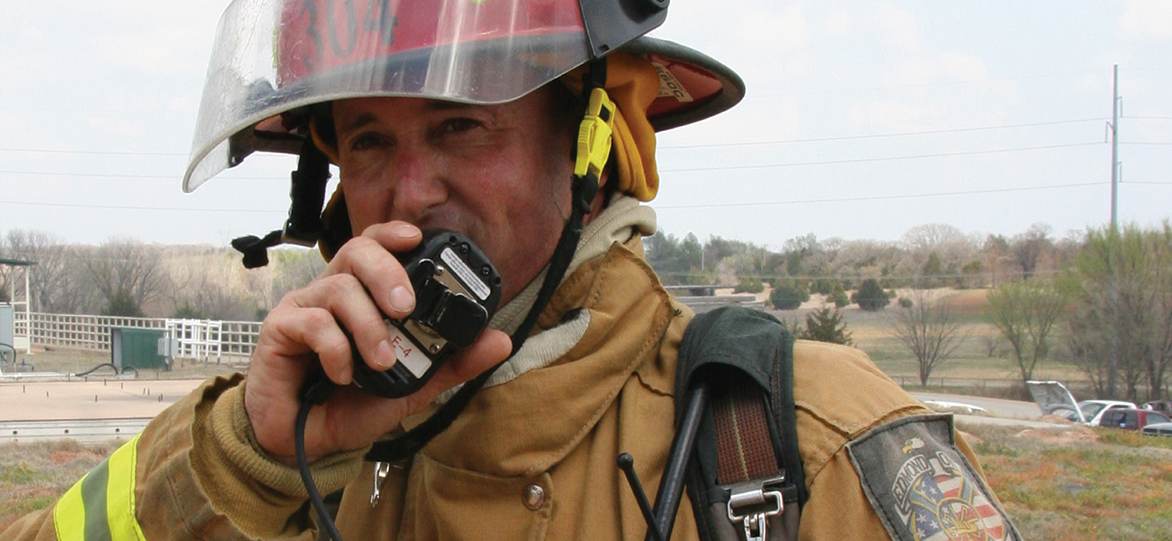
Communications: After completing this lesson, the student shall be able to describe the different types of communication that occur in the fire department; explain the procedures for receiving non-emergency calls; describe the types of communications systems and equipment used to receive and process emergency calls; explain the procedures for receiving and dispatching emergency calls; describe radio equipment and procedures used for internal fire department communications; handle emergency and non-emergency phone calls; use a portable radio for routine and emergency traffic.
Building Construction: After completing this lesson, the student shall be able to understand how building construction features and materials will contribute to fire spread as well as how heat affects structural components and materials; differentiate among types of building construction; describe the construction of floors, ceilings, and walls; explain how basements and stairs may impact firefighting operations; describe the construction and operation methods of different types of doors; describe the construction and operation methods of different types of windows.
Building Materials, Structural Collapse & Effects of Fire Suppression: After completing this lesson, the student shall be able to identify the effects of fire on building materials, describe structural collapse considerations, and explain the effects of fire suppression activities on building materials; explain considerations to be taken when establishing collapse zones; describe actions that should be taken when structural collapse is imminent; describe building conditions and fire suppression activities that can impact fire spread and structural stability.
Fire Dynamics: After completing this lesson, the student shall be able to explain the basic principles of fire science, describe the stages of fire development, and the reaction of building construction to fire; describe how thermal energy impacts fire behavior; explain the function of fuel within the combustion process; explain the function of oxygen within the combustion process; explain the self-sustained chemical reaction involved in flaming combustion.
Firefighter Personal Protective Equipment: After completing this lesson, the student shall be able to distinguish between types of personal protective clothing and equipment and explain how to safely use various types of protective clothing and equipment; describe the inspection, cleaning, and maintenance of PPE; describe conditions that require the use of respiratory protection equipment; identify SCBA components; describe the procedures for donning and doffing SCBA; describe methods of refilling, replacing, and storing SCBA cylinders; describe safety considerations for working in and exiting a hazardous atmosphere while wearing SCBA. Practical: Introduction to gear: coats, pants, helmet, gloves, hood, self-contained breathing apparatus (SCBA). Work with gear on; crawling, climbing, breathing on SCBA with mask, in non-air-conditioned areas. Gear weight is approximately 40-50 lbs.
Extinguishers: After completing this lesson, the student shall be able to recognize different classifications and types of portable fire extinguishers and select the appropriate fire extinguisher for the situation at hand.
Ropes & Knots: After completing this lesson, the student shall be able to describe various uses for life safety and utility rope and differentiate between types of knots. The student shall also be able to describe the procedures for cleaning, inspecting, and maintaining rope; identify types of knots; describe the procedure for hoisting various tools and equipment; explain how ropes and knots are used during rescues and in other emergencies.
Ground Ladders: After completing this lesson, the student shall be able to identify types of ladders and the parts of a ladder. They shall also describe safe practices for using, carrying, and placing a ground ladder. Students shall be able to describe methods for raising and lowering a ladder, working from a ladder, and assisting victims down a ladder; describe the process of cleaning, inspecting, and maintaining a ladder. Practical: Lifting, carrying, raising, and climbing ladders as a team. Outdoor activity. Ladders of different weights and sizes. 100’ climb of aerial apparatus.
Forcible Entry: After completing this lesson, the student shall be able to recognize different types of forcible entry tools and describe methods for forcing entry through doors, windows, and walls; explain considerations for forcible entry tool safety; explain how to carry forcible entry tools; describe how to clean and maintain forcible entry tools. Practical: Tools used for forcing a door. Prying and swinging forcible entry type tools.
Ventilation: After completing this lesson, the student shall be able to describe the purpose of ventilation and explain the process for ventilating flat or pitched roofs; describe safety considerations related to tactical ventilation; describe ventilation tools and equipment; describe considerations related to the ventilation of basements and other special compartments. Practical: Use a chainsaw to cut plywood on a roof simulator. Carrying or lifting a chainsaw to the roof of a three-story building. Climbing ladders.
Fire Hose: After completing this lesson, the student shall be able to describe the characteristics of hoses, and understand how to inspect, care for, and maintain fire hose. They should also be able to differentiate between different types of hose rolls and loads. Practical: Lifting, draining, rolling, and carrying of fire hose.
Hose Operations & Hose Streams: After completing this lesson, the student shall be able to describe water supply, methods used to deploy hose, and methods used to advance hose. Students shall also be able to explain how to operate types of hose lines, nozzles, and master stream devices. Practical: Flow water with hose lines as a team and individually.
Maintenance & Testing Responsibilities (with Forcible Entry & Fire Hose): After completing this lesson, the student shall be able to describe procedures for maintaining equipment and service testing fire hose. Practical: Lifting, moving, and carrying light generator and light stand. Rolling and carrying hose.
Structural Search & Rescue: After completing this lesson, the student shall be able to explain practices for firefighter survival during interior operations and describe search and rescue operations. Students shall also be able to describe MAYDAY protocols, evacuation, and rapid intervention operations; describe air-monitoring operations; describe rapid intervention crew equipment and duties. Practical: Crawling with 45 lbs. of gear on. Outdoor and inside (air-conditioned area) activity. Dragging of up to 200 lbs. with teammate and as an individual. Carrying and lifting manikins in gear. Gear on for all activities.
Fire Suppression: After completing this lesson, the student shall be able to explain fire suppression methods for structure fires, vehicle fires, exterior fires, and ground cover fires; Explain the science behind fire suppression; Explain the role of firefighters in supporting fire protection systems during fire suppression; Explain the duties of firefighters related to building utilities. Practical: Full gear with SCBA. Advance hose lines flowing water. Extinguish vehicle fires.
Overhaul, Property Conservation & Scene Preservation: After completing this lesson, the student shall be able to describe firefighters’ roles during overhaul, salvage, and scene preservation; Describe the duties that firefighters must perform to protect and preserve a fire scene. Practical: Lifting and folding tarps, removal of drywall with tool overhead in gear.
Technical Rescue Support & Vehicle Extrication Operations: After completing this lesson, the student shall be able to describe different types of rescue situations, the hazards involved in those situations, and the firefighter’s responsibility in vehicle extrication and rescue incidents; identify tools used at technical rescues; identify vehicle construction methods and components; describe vehicle stabilization operations; describe techniques used to access victims at a vehicle extrication incident. Practical: Outdoor activity. Full gear. Lifting a tool up to 60 lbs. Working with tools to open and remove parts of cars.
Foam Fire Fighting, Liquid Fires & Gas Fires: After completing this lesson, the student shall be able to describe firefighting foam production and operations. They will also be able to describe operations involving liquid and gas fuel fires.
Incident Scene Operations: After completing this lesson, the student shall be able to describe the process for initiating incident operations and transferring Command. Students will also be able to explain how unit operations are coordinated and how post-incident reports are used.
Fire Origin & Cause Determination: After completing this lesson, the student shall be able to describe the roles and responsibilities of firefighters and fire investigators regarding fire origin and cause determination, and evidence preservation.
Fire Prevention/Community Risk Reduction: After completing this lesson, the student shall be able to explain the importance of fire and life safety programs, fire and life safety surveys, fire and life safety presentations, and pre-incident planning.
Electrical Emergencies: Class on electrical hazards associated with dealing with high voltage wires and how to deal with emergencies associated with the first responder.
Wildland & Ground Fires: After students complete this chapter and the related course work, they will know the various methods of combating wildland fires, as well as the tools and personal protective equipment (PPE) needed to safely operate at the scene of such incidents. They will learn how to suppress a ground fire and deploy a fire shelter.
Fire Suppression & Auto Fires (Fire Control): After students complete this chapter and the related course work, they will be able to distinguish between offensive and defensive strategies, and they will understand the special considerations for fires in large buildings, basements, concealed spaces, above ground level, lumberyards, energized equipment, and flammable gases and liquids. Students will also have the skills to operate hose lines; use fire streams; conduct indirect, direct, and combination fire attacks, operate master stream devices; and extinguish vehicle fires.
NFPA states that vehicle fires are one of the most common fires in the United States. With the advent of airbags, side impact protection, hybrids, and other alternative fueled vehicles, these “common” fires have become anything but routine. Fire recruits learn both basic and advanced skills to mitigate these common, yet highly hazardous and potentially deadly events. Skills such as forcible entry, hose and nozzle streams, and fire control are reinforced while students learn to safely extinguish a passenger vehicle fire emergency using live fire training.
E.M.S.: emergency medical care performance capabilities to include infection control, CPR, bleeding control, and shock management.
Report Writing: Focuses on proper reports for state and local levels. Also helps students learn how to be more effective in relaying information using the pen and their thoughts.
Emergency Control of Natural Gas/Natural Gas burn: Studies the hazards of natural gas, explosive ranges, and properties of same. Also explores the dos and don’ts of dealing with natural gas. Focuses on firefighting duties of first-in engine company to a scene. Consists of classrooms and of natural gas live fire training.
Flammable Liquids & Foam: This class deals with the chemistry of foam for fire suppression. Topics include concentrated foams, mixing, eductors, limitations, understanding fog nozzles, aspirating nozzles, and foam tubes. Includes hands-on live fire training field exercise.
Liquified Propane Gas: Focuses on useful handling of hazardous materials incidents involving flammable gases. Students will learn about tank construction, the properties of liquid propane gas, proper tactics for dealing with liquid propane gas, and will receive live fire training with liquid propane gas on site. Consists of live fire training.
Hazardous Materials Awareness & Operations: Recognition and identification of hazardous materials, labeling, placarding, scene control, and use of D.O.T. Response book.
High Rise: Covers construction, fireground management, tactical considerations, elevators, life safety, ventilation, and water supply.
Structure burns: Live fire training evolutions. Class incorporates all skills taught for firefighting: suppression, safety, rescue, ICS, hose handling, PPV, water supply, etc. All hands-on live fire training. Full gear with SCBA. Extinguish fires in the burn building. Climbing ladders, moving hose lines, flowing water, crawling, and building searches.
Fire Detection, Protection & Suppression Systems: After students complete this chapter and the related course work, they will be able to describe the components and functions of a fire alarm and the basic types of fire alarm initiation devices. Students will also be able to identify various sprinkler heads and indicating valves. They will also be able to describe and identify automatic sprinkler systems, standpipe systems, and specialized extinguishing systems.
Fire Ground Survival: The purpose of the Fire Ground Survival program is to ensure that training for Mayday prevention operations is consistent between all firefighters, company officers, and chief officers. Firefighters must be trained to perform potentially life-saving actions if they become lost, disoriented, injured, low on air, or trapped. These training exercises must be consistent throughout the fire service. Practical: Crawling, climbing, and searching through the building.
Incident Command System: This class combines command strategy with organizational procedures and is designed to be used for structural firefighting incidents and other related emergency incidents. It is also used for other types of emergency incidents.
NIMS: National Incident Management System class: ICS 100, 200 & 700. This is a self-study requirement.
Commonly used Acronyms in EMS/Fire Operations:
BLS- Basic Life Support
ALS- Advanced Life Support
CPR- Cardiopulmonary Resuscitation
AED- Automatic External Defibrillator
BVM- Bag Valve Mask
MCI- Mass Casualty Incident
IFSTA- International Fire Service Training Association
IFSAC- International Fire Service Accreditation Congress
SFRT- State Fire Rescue Training
ICS- Incident Command System
PAR- Personal Accountability Report
PPV- Positive Pressure Ventilation
LDH- Large Diameter Hose
TIC- Thermal Imaging Camera
IDLH- Immediately Dangerous to Life or Health
PPM- Parts Per Million
NIMS- National Incident Management System
PPE- Personal Protective Equipment
SCBA- Self-Contained Breathing Apparatus
RIT- Rapid Intervention Team
MVA- Motor Vehicle Accident
EMT Classes will be held every Monday, Wednesday, and Fridays from February 3 thru April 7, 2025, 0800-1400
|
Week
|
Topic |
Reference |
Study Materials |
|
Week 1 January 27-31 |
Administration & Organization, CPR, Gear & Fit testing, Fire Chapter 1 & 2, NIMS 100, Family evening Tuesday at 1900 |
FCFD Resources, AHA, FEMA, IFSTA FF I |
New Employee Package American Heart Association, FEMA, IFSTA Essentials FF I book |
|
Week 2 February 3-7 |
EMT |
AAOS Manual, IFSTA FF I |
EMT Chapters 1-6, Fire Chapter 3 |
|
Week 3 February 10-14 |
EMT. Intro to Fire Service/Safety, Gear & SCBA fitting, NIMS 200 |
AAOS Manual, IFSTA FF I, FCFD Resources, FEMA |
EMT Chapters 7-9, FEMA
|
|
Week 4 February 17-21 |
EMT, Gear/SCBA donning |
AAOS, FCFD Resources |
EMT Chapters 10-11 Fire Chapter 2 |
|
Week 5 February 24-28 |
EMT, Communications, Ride Time, Ladders |
AAOS Manual, IFSTA FF I |
EMT Chapters 12-17 Fire Chapter 3 |
|
Week 6 March 3-7 |
EMT, Ride time, Ladders, Small tools |
AAOS Manual, FCFD Resources |
EMT Chapters 18-24 Ladder skills |
|
Week 7 March 10-14 |
EMT, Ride time,
|
AAOS Manual |
EMT Chapters 24-28
|
|
Week 8 March 17-21 |
EMT, PPE Skills, Building Construction, NIMS 700 |
AAOS Manual, IFSTA FF I, FEMA |
EMT Chapters 29-33 Fire Chapter 4, FEMA |
|
Week 9 March 24-28 |
EMT, Fire Dynamics, PPE/SCBA, NIMS 800 |
AAOS Manual, IFSTA FF I, FEMA |
EMT Chapters 34-36 Fire Chapter 5, FEMA |
|
Week 10 March 31- Apr 4 |
EMT Skills, Ladders |
AAOS Manual |
EMT Chapters 37-41 Fire Chapter 6 |
|
Week 11 April 7-11 |
EMT Finals, Ladders, Forcible Entry, Search & Rescue Ventilation, RIT, MAYDAY, Live fire view |
AAOS Manual, EMT Final Exam & Practical’s, IFSTA FF I |
Fire Chapters 9, 10, 11 & 12 RIT PAK, SOP’s |
|
Week 12 April 14-18 |
Water Supply, Hose, Nozzles, and Appliances, Hose, Ladder, SCBA, IFSAC Skills |
IFSTA, FCFD Resources |
IFSAC Skill sheets Fire Chapter 13 |
|
Week 13 April 21-25 |
Gear/Uniform Fitting, Fire Suppression, Reading Smoke, Overhaul/Property Conservation |
PPE Manufacturer, IFSTA FF I, FCFD Resources |
Fire Chapters 14 & 15 |
|
Week 14 April 28- May 2 |
Extinguishers/Burns, Ropes & Knots |
IFSTA FF I & II, FCFD Resources, SFRT props |
Essentials FF II book FF II Chapters 1 & FF I Chapter 7 IFSAC Skill Sheets, Burn Props |
|
Week 15 May 5-9 |
Building Materials, Collapse, Tech Rescue Support, ICS & NIMS |
Essentials FF II, FCFD Resources |
Essentials FF II Fire Chapter 2 & 3, ICS & NIMS, IFSAC skill sheets |
|
Week 16 May 12-16 |
KY FF Rescue Couse/Skills Survival Course/Skills, KY Flashover Course/Skills, KY Wildland FF Course |
Fire Commission, FCFD Resources, IFSAC Skill Sheets |
NFPA 1403, IFSAC skill sheets, Fire Commission materials |
|
Week 17 May 19-23 |
Foam, Liquid/Gas Fires, S&R, Removal, E/T OPS, Live burns |
FCFD Resources |
Fire Chapter 4, IFSAC skill sheets, Training facility |
|
Week 18 5/26 Holiday May 27-30 |
IFSAC Skills, Engine/Truck OPS, Live burns |
FCFD Resources |
IFSAC skill sheets, Training facility |
|
Week 19 June 2-6 |
Extinguishers, Fire Origin, Fire Suppression & Alarm Systems |
IFSTA FF II, LFD Arson |
Fire Chapter 5 & 6 IFSAC skill sheets |
|
Week 20 June 9-13 |
Auto Extrication, Air Bags, Cribbing, Rescue Jacks, Auto Fires, Live burns |
FCFD Resources |
IFSAC Skill sheets |
|
Week 21 June 16-20 June 19 Holiday |
MetroSafe Communications, Disaster & Emergency Management, Hazardous Materials Awareness & Operations, Air Monitoring, IFSAC skills, Live burns |
MetroSafe staff, Metro EMA, DOT Guide Book, |
DOT Guidebook, MultiRAE meters HazMat unit |
|
Week 22 June 23-27 |
Hazardous Materials Technician |
TBA |
TBA |
|
Week 23 June 30- July 3 7/4 Holiday |
Engine/Truck OPS, Aircraft Crash Firefighting, KY Wildland Firefighting, Aerial Ops, Community Risk Reduction |
IFSTA FF II, Fire Commission, SDF Resources, FCFD Resources |
Fire Chapter 7, Fire Commission Materials, SDF Fire & Rescue Materials |
|
Week 24 July 7-11 |
FLAG live fire, Thermal Imaging, Electric Cars, Intervention, FF Rescue, Live burns |
KY FLAG Props & Resources, National Highway Safety, FCFD Resources |
Fire Commission, TIC Camera, RIT Kit, National Highway Safety Council |
|
Week 25 July 14-18 |
High Rise Firefighting, Construction, High Rise Tools & Equipment, Engine/Truck OPS for High Rise, Live fire High Rise |
FCFD Resources, LFD Tower |
High Rise Materials |
|
Week 26 July 21-25 |
LG&E Emergencies, CO Responses, IFSAC Skills review, Live burns |
IFSTA, LG&E Materials, FCFD Resources & SOP’s, IFSAC |
LG&E Materials, IFSAC skill sheets, Training facility |
|
Week 27 July 28-August 1 |
IFSAC Written & Practical Skills Testing, Ropes & Knots review, Live burns |
KY Fire Commission Evaluators, FCFD and SFRT Training props |
IFSAC skill sheets, Ky Fire Commission materials |
|
Week 28 August 4-8 |
Aerial Ops, Engine/Truck Ops, Live burns, Special Operations Awareness |
Quint 61/66, FCFD Resources |
FCFD |
|
Week 29 August 11-15 |
Firehouse familiarizations, Skills review, Engine/Truck OPS, Clean-up training grounds, Family Day, Assignments, GRADUATION ! |
FCFD Resources |
Course overview |
Exam Schedule EMT test highlighted in Blue, Firefighters Red
|
Week
|
Topic |
Reference |
Study Materials |
|
Week 1 January 27-31 |
Orientation, CPR/AED, Family Day at 1900 |
FCFD, AHA |
American Heart Association materials |
|
Week 2 February 3-7 |
EMT |
AAOS |
AAOS Manual |
|
Week 3 February 10-14 |
EMT test #1 |
AAOS |
AAOS Manual |
|
Week 4 February 17-21 |
EMT test #2 Fire chapter 1 test |
AAOS & IFSTA FF I |
AAOS & IFSTA FF I manual |
|
Week 5 February 24-28 |
Ride time, EMT test #3, Fire chapter 2 & 3 test & skills test |
Med unit, AAOS, IFSTA FF I, PPE |
Med unit, AAOS & IFSTA manual, PPE |
|
Week 6 March 3-7 |
Ride time, PPE/SCBA |
Med unit, PPE |
Med unit, PPE |
|
Week 7 March 10-14 |
Ride time, EMT test #4 |
Med unit, AAOS |
AAOS manual, FDSOA |
|
Week 8 March 17-21 |
Fire chapter 4 test PPE/SCBA skills |
IFSTA FF I, PPE/SCBA |
IFSTA manual, PPE/SCBA |
|
Week 9 Mar 24-28 |
EMT test #5, Fire chapter 5 test |
AAOS & IFSTA FF I |
AAOS & IFSTA FF I manual |
|
Week 10 March 31-Apr 4 |
EMT Finals review, ladder/IFSAC skills |
IFSTA, AAOS, IFSAC FF I, skill sheets |
AAOS & IFSTA FF I, manual, IFSAC skill sheets |
|
Week 11 April 7-11 |
EMT test #6 final exam, Fire chapter 10 test |
AAOS, IFSTA FFI |
AAOS & IFSTA FF I manual |
|
Week 12 April 14-18 |
Fire chapter 12 test, IFSAC skills |
IFSTA FFI, IFSAC |
IFSTA FF I, IFSAC skill sheets |
|
Week 13 April 21-25 |
Fire chapter 14 test |
IFSTA FFI |
IFSTA FF I |
|
Week 14 April 28- May 2 |
Fire chapters 15 & 8 test |
IFSTA FF I |
IFSTA FFI |
|
Week 15 May 5-9 |
Rope skills test, FF II Fire chapters 1, 2, & 3 test, ICS test |
IFSTA FF II, ICS, NIMS |
IFSTA FF II, Ropes, ICS, NIMS |
|
Week 16 May 12-16 |
FF Rescue, Survival Flashover & Wildland |
IFSTA FF II |
IFSTA FF II |
|
Week 17 May 19-23 |
IFSAC skills, FF II Chapter 4 test |
IFSAC |
IFSAC skill sheets |
|
Week 18 May 27-30 |
IFSAC skills |
IFSAC |
IFSAC skill sheets |
|
Week 19 June 2-6 |
FF II Fire chapters 5 & 6 test |
IFSTA FF II |
IFSTA FF II |
|
Week 20 June 9-13 |
Auto extrication skills |
FCFD resources |
Rescue tools |
|
Week 21 June 16-20 |
Hazardous Materials Awareness/Operations test and skills |
DOT Guidebook, IFSAC |
DOT guidebook, IFSAC skill sheets |
|
Week 22 June 23-27 |
Hazardous Materials Technician
|
OAI |
OAI, HazMat unit |
|
Week 23 June 30-July 3 |
Crash rescue |
Airport CFR |
Airport CFR |
|
Week 24 July 7-11 |
FF II Fire chapter 7 test |
IFSTA FF II |
IFSTA FF II |
|
Week 25 July 14-18 |
High Rise OPS |
LFA, IFSTA |
LFA tower, IFSTA |
|
Week 26 July 21-25 |
IFSAC skills |
IFSTA FF I & II, IFSAC |
IFSTA FF I & II, IFSAC skill sheets |
|
Week 27 July 28- August 1 |
IFSAC written & practical skills testing |
IFSAC evaluators |
IFSAC skills sheets, IFSTA |
|
Week 28 August 4-8 |
Practical skills assessment |
FCFD resources |
FCFD equipment |
|
Week 29 August 11-15 |
Skills review, Family Day GRADUATION |
Skills review |
FCFD resources |
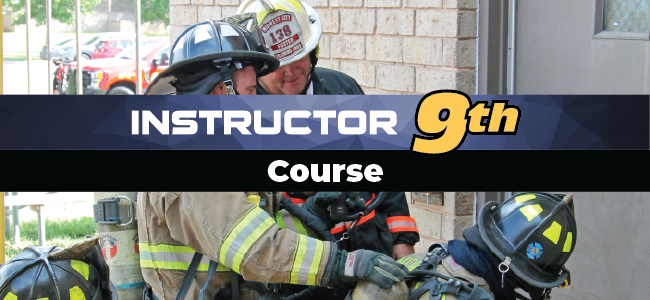
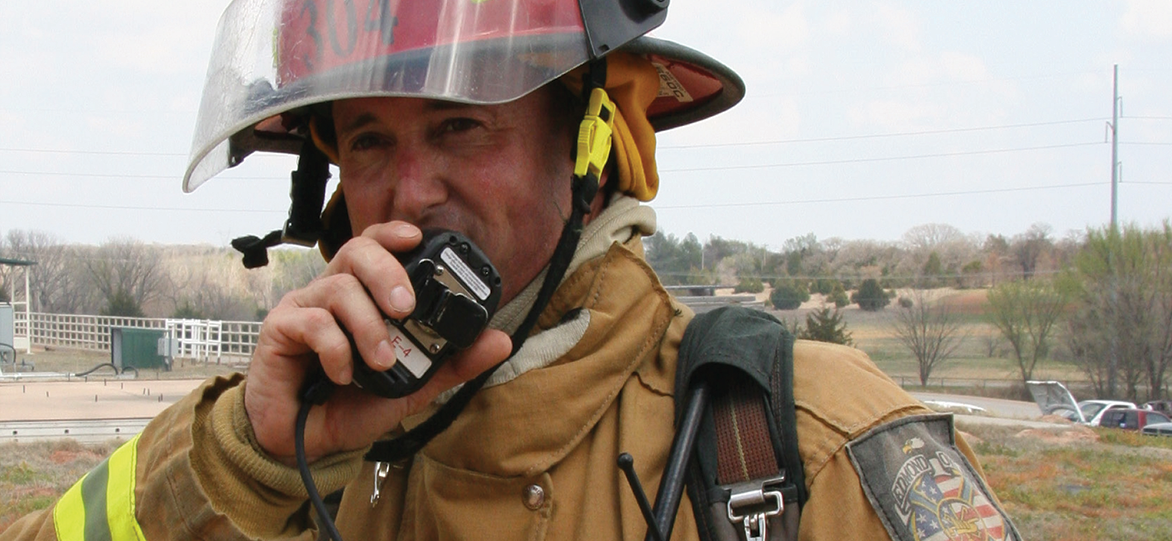
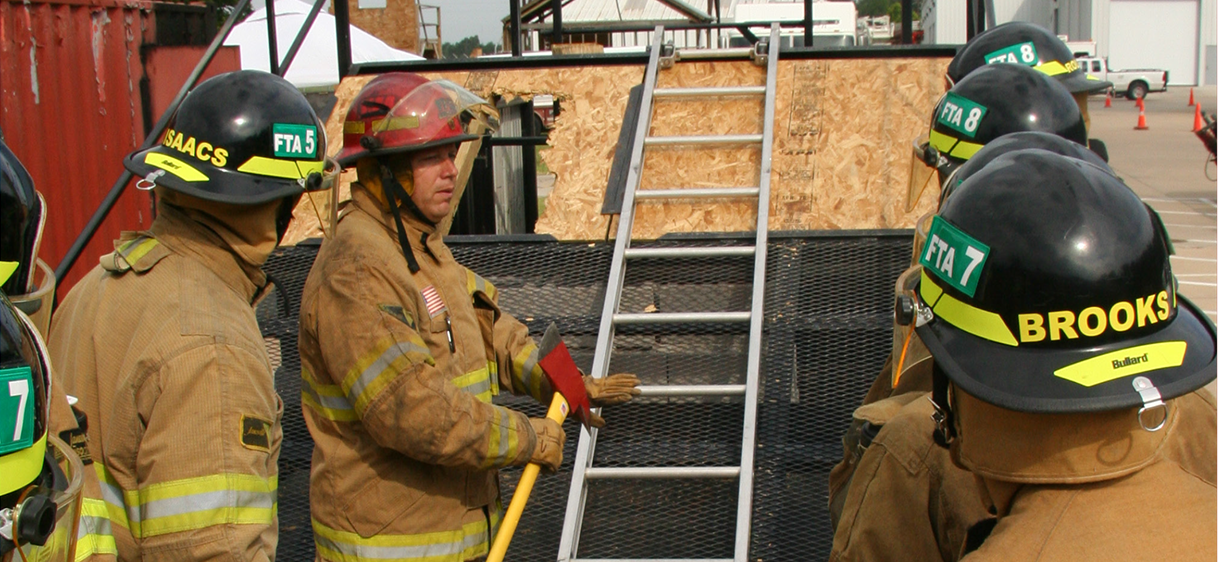

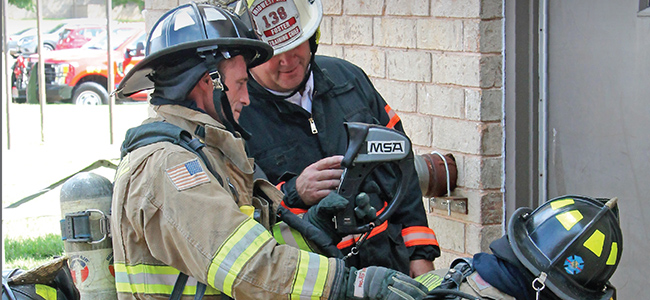
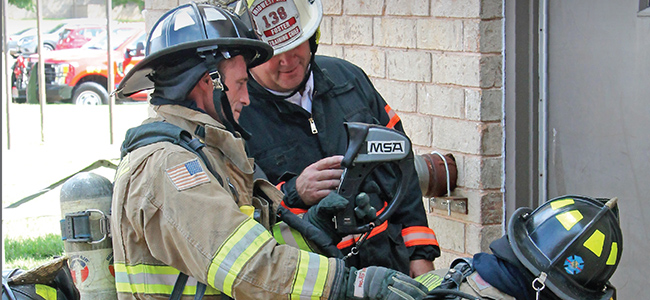
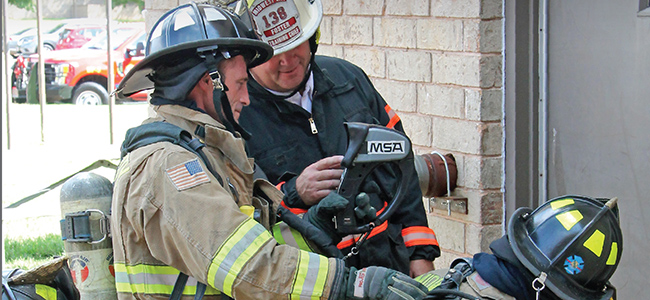
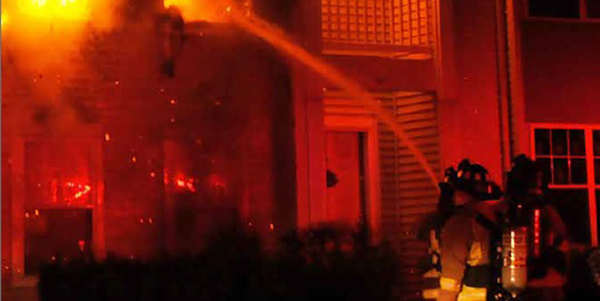

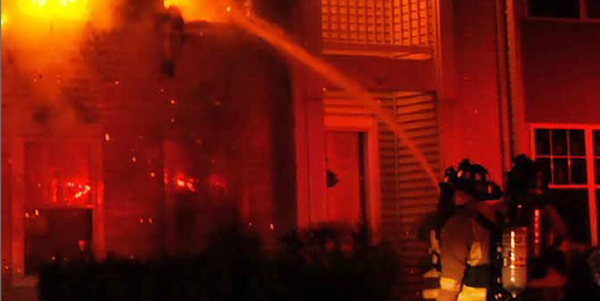

This course is designed for the entry level fire officer, and is taught in consultation with the NFPA 1021 Fire Officer I standards and methods. This course's target audience is firefighters and officers that are tasked with leading other fireman during emergency situations.
This course curriculum integrates insights from leading authorities to explore effective instructional methods and the principles of adult learning. Emphasis is placed on teaching techniques that apply across diverse training environments, as well as specialized approaches for specific instructional settings. The course also highlights strategies for assessing instructional effectiveness and the purposeful use of media and visual aids to enhance learning outcomes.
Student performance is evaluated in accordance with the Job Performance Requirements (JPRs) outlined in NFPA 1041: Standard for Fire and Emergency Services Instructor Professional Qualifications (2019 edition), Sections 4.1 through 4.5. These benchmarks assess competencies in lesson plan preparation, instructional delivery, student evaluation, and recordkeeping.
 Designed to prepare fire department training staff to conduct emergency escape system training in compliance with the requirements of 12 NYCRR 800.7 Emergency Escape Ropes and System Components for Firefighters. Individuals attending this program will be trained to conduct initial and in-service training for exiting a window at elevation with the use of an emergency escape system. The course will focus on the requirements for conducting this training. Completion of this course does not authorize individuals to issue NYS OFPC training certificates. The authority and responsibility for conducting emergency escape system training remains with the Authority Having Jurisdiction (AHJ).
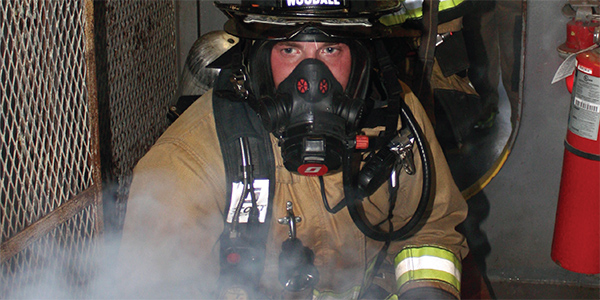
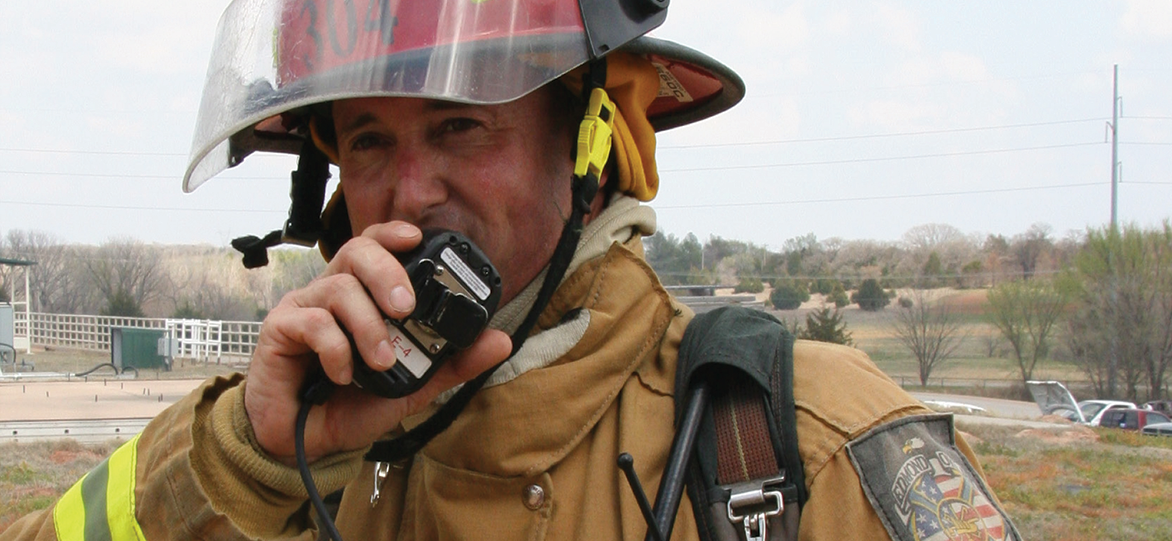
FWFD Fire Officer 1 Course
The
courses will open on January 8, 2024, with all skills due by February 9, 2024. Written IDHS testing will be completed
on-duty February 12, 13, 14.
Course description and prerequisites are as follows:
This course will provide entry level fire officers knowledge and skills to meet the min. requirements in NFPA 1021
Full Description:
This course is designed to give entry level fire officers the knowledge and skills to meet the minimum job performance requirements as outlined in and based on NFPA 1021: Standard for Fire Officer Professional Qualifications. The course identifies the requirements necessary to perform the duties of a first line supervisor or a supervisor who oversees a single fire company or station, with information and skills required for success. This course introduces the student to the basic concepts of management and supervision by concentration on such topics as Organizational Structure, Communication Skills, Human Resource Management, Community and Government Relations, Administration, Inspections and Investigations, Emergency Service Delivery, along with Health and Safety.
IDHS Prerequisites Fire Officer I:
• Must have be an ACTIVE Instructor 1
• Fire Officer Strategy & Tactics

ODPS Curriculum Course
Fire and Emergency Services Instructor Level 1 + 2
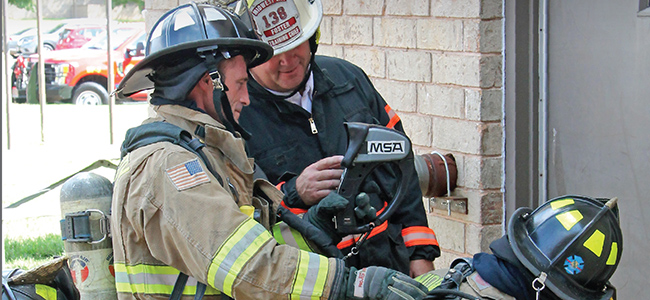
Fire and Emergency Services Instructor Level I
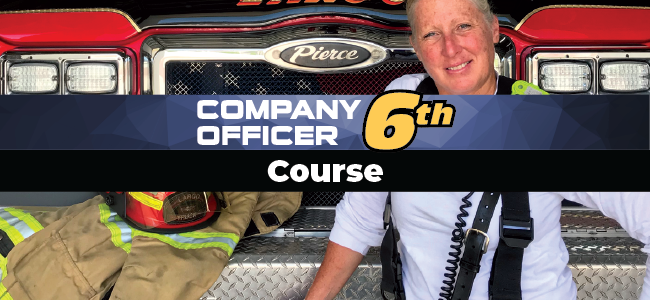


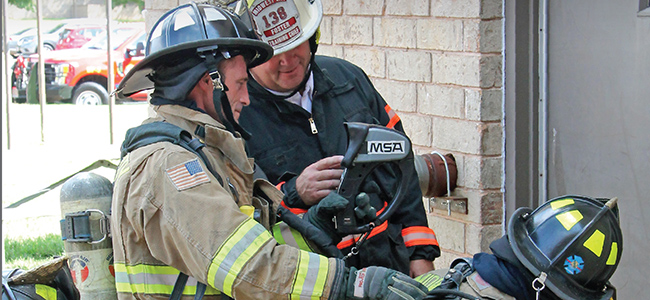
Overview
This is a thirty-five day course. The course prepares the student to become certified as a Fire Instructor I.
The fee for the course is $0 (GTFD covered cost of required text).
Course Prerequisites
Firefighter 2 for one year prior to application date.
Outcome Objectives
After completing the course, the student will have met the sections required for a Fire Instructor I in the NFPA 1041, 2018 edition, Standard for Fire Service Instructor Professional Qualifications. Students who successfully complete the certification process will be certified as a Fire Instructor I.
Text
The required text for the course is IFSTA’s Fire and Emergency Services Instructor, Ninth edition.
While not required, the Fire and Emergency Services Instructor Exam Prep is a valuable tool to help prepare for each lesson in the course and for the certification exam.
Course Evaluation Strategy
The course will be evaluated by Rick Schnautz (Skills) and Courtney Farrand (Written Exam).
Homework Assignment
Open book quizzes are due according to the schedule set.
Pre-Course Reading Assignment
Reading is the responsibility of the student. In class will review material based from the reading material, students will need to be prepared prior to their arrival to make the classroom interactive.
Required Materials
Textbook, notebook, pencil or pen, highlighter, computer or tablet for exam.
Instructor Information
Contact information for the instructor will be provided at the first class session. The goal of the instructor is to help you be successful during the course. You should immediately contact the instructor if you have any questions about the course or course work.
Academic Dishonesty Policy
Academic misconduct includes cheating, plagiarism, falsification of records, unauthorized possession of examinations, intimidation, and any and all other actions that may improperly affect the evaluation of a student’s academic performance or achievement; assisting others in any such act; or attempts to engage in such acts. Any incident of academic misconduct will result in the student being dropped from the course and the student’s sponsoring agency being notified of the incident.
Course Participation
The course utilizes lecture, open discussions, and skills practice to achieve the learning objectives. Every student is expected to:
· come to course prepared to actively participate in discussions,
· read the text prior to the next class session,
· complete all homework assignments,
· respect the beliefs, opinions, and values of other students,
· and have an open mind about the issues being discussed.
|
|
|
|
|||||||||||||||||||||||||||||||||||||||||||||||||||||||||||||||||||||||||||||||||||||||||||
Fire Officer I is the entry-level supervisory course designed to prepare firefighters to step into the role of company officer. The course focuses on leadership, crew management, administrative responsibilities, and the foundational skills needed to supervise emergency and non‑emergency operations.
Transitioning from firefighter to supervisor
Ethical decision-making and professional conduct
Understanding authority, responsibility, and delegation
Representing the department to the public and within the chain of command
Leadership styles and when to use them
Motivating personnel and building team cohesion
Managing conflict within the crew
Conducting coaching, counseling, and performance evaluations
Diversity, equity, and inclusion in the fire service
Effective verbal and written communication
Conducting briefings and delivering orders
Report writing and documentation
Interpersonal communication with crew, command staff, and the public
Promoting a safety culture
Understanding NFPA 1500 principles
Accident, injury, and near‑miss reporting
Scene safety and risk‑benefit analysis
Behavioral health awareness for firefighters
Initial incident size‑up
Implementing the Incident Command System (ICS) at the company level
Developing and communicating an incident action plan (IAP)
Crew accountability and resource management
Coordinating tactical operations (fire attack, ventilation, search, etc.)
Post‑incident analysis and critique
Scheduling, staffing, and daily station management
Policy enforcement and standard operating procedures (SOPs)
Budget basics and resource requests
Records management and documentation requirements
Conducting company‑level training
Evaluating skills and identifying training needs
Understanding adult learning principles
Maintaining certifications and promoting continuous improvement
Public education and community risk reduction
Conducting basic fire inspections
Identifying common hazards and code violations
Pre‑incident planning and building familiarization
Legal considerations for company officers
Liability, negligence, and due diligence
Ethical decision-making models
Ensuring compliance with laws, regulations, and departmental policies
Managing stress and maintaining situational awareness
Making decisions under pressure
Coordinating with other agencies
Ensuring firefighter safety during operations
The course is designed to meet the Job Performance Requirements (JPRs) for Fire Officer I and to qualify students for Texas Commission on Fire Protection (TCFP) certification. It emphasizes leadership, communication, safety, and the ability to manage both emergency and non‑emergency activities at the company level.
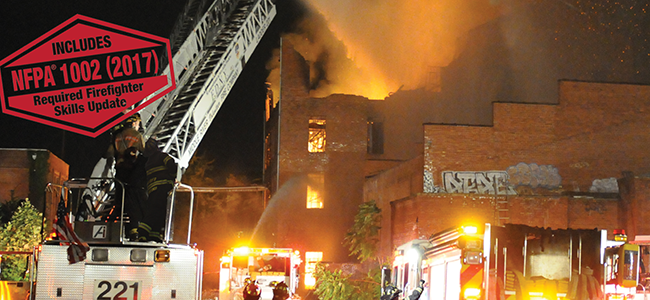


Holton Fire Department – Hazardous Materials Awareness & Operations Course
The Holton Fire Department Hazardous Materials Awareness & Operations Course is a comprehensive training program designed to prepare emergency responders to recognize, evaluate, and safely respond to hazardous materials incidents. This course meets the requirements of NFPA 472/1072 and is aligned with OSHA 1910.120 (HAZWOPER) standards.
Participants will learn to identify hazardous substances, understand risk assessment principles, and implement defensive response actions to protect themselves, the public, and the environment. The course includes both Awareness- and Operations-level instruction, with practical, scenario-based training.
Course Topics Include:
Hazard identification using the Emergency Response Guidebook (ERG)
Recognition and classification of chemical, biological, radiological, and nuclear (CBRN) threats
Use of DOT placards and container identification
Scene safety and isolation procedures
Personal Protective Equipment (PPE) overview
Decontamination procedures and responder safety
Evidence preservation and criminal/terrorist activity awareness
Incident command and communication roles
Course Features:
Fulfills Kansas Fire & Rescue Training Institute (KFRTI) certification requirements
Delivered by certified instructors with hazardous materials response experience
Combines classroom instruction with hands-on skill stations and simulated scenarios
Ideal for fire, EMS, law enforcement, and emergency management personnel
Eligibility:
Open to individuals sponsored by a fire or emergency response agency. Participants should be physically capable of performing required skills and be 18 years or older at the time of testing.
Course Duration:
Approximately 24–32 hours of instruction, typically delivered over several evenings and/or weekends.
Location:
Holton Fire Department, Holton, Kansas
This course provides foundational knowledge and practical skills for safe and effective response to hazardous materials incidents and is a required component for Firefighter I certification.

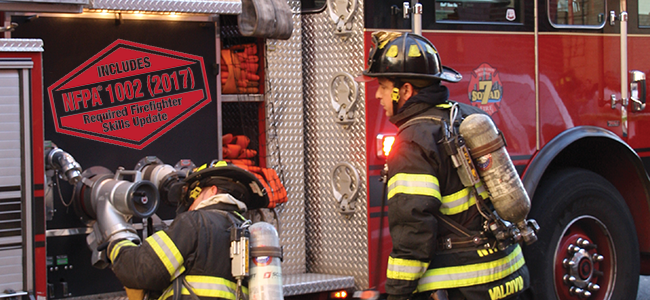
IN Firefighter Driver Operator General and Pumper
May 2024 at Rensselaer FD
Course Description
Indiana Driver Operator General and Pumper: This class is designed prepare the firefighter for certification testing through classroom learning and hands on training. The student will be expected to read the assigned material before class. We will be handing out quizzes to be completed before class or using IFSTA Moodle. Although there will be classroom presentation, it will focus on information that can’t be covered out in the field. If you don’t understand something you read, the class will begin with a questions and answers session to try and answer those questions. Then there will be an opportunity to go over the quiz that was assigned. We will then discuss certain topics from the book as to how they may apply. The bulk of the time will concentrate on the skills, understanding what is expected, how to obtain the information, applying knowledge learned from the book and evaluating your work. You must attend all classes to be eligible to take the test. If you must miss a day, it is up to you to make up the material. It will be your responsibility to schedule time between you and an instructor to catch up.
Course Logistics
This class is based on the recently updated curriculum for Indiana Driver Operator certification. The book we will use is IFSTA Pumping and Aerial Apparatus Driver/Operator Handbook 3rd ed. You should be able to access an E book from your IFSTA account, so there will not be any hard copies available. Individuals or Fire Departments now may apply for free IFSTA eLibrary subscriptions via https://on.in.gov/ifsta-library-request. Each user must have an IFSTA ResourceOne account to access these publications. ResourceOne accounts can be created via https://moodle.ifsta.org/. Questions regarding the IFSTA eLibrary should be directed to Shelly Elliott.
We will be doing all the driving and such in and around Rensselaer. If several members attend from one department, you will be expected to provide a fire engine from your department. This will allow you to familiarize yourself with your own equipment and give us more than one piece of apparatus to use. Everyone will need to show a valid driver’s license prior to being allowed to participate in the hands-on portion.
Prerequisites
Driver’s licensee and Driver Operator General (for Driver Operator Pumper)
Dates All Times CST
May 1, 8, 15 - 6:00 pm to 10:00 pm
May 4, 5, 11, 12, 18, 19 - 9:00 am to 6:00 pm
Written test TBD
Instructors Evaluator
Fabian Martinez (219) 689-7118 Rob Grady (219) 644-9331
Will Sonntag (219) 712-0803
Matt Kodicek (219) 808-4230
Driver Operator General
Weekday | 18:00-22:00 | Ch. 1- Types of Apparatus equipped with a pump | IFSTA Pumping and Aerial Apparatus Driver Operator pgs 10-25, 26-75 |
Weekday | 18:00-22:00 | Ch. 3- Apparatus Safety and Operating Emergency Vehicles | IFSTA Pumping and Aerial Apparatus Driver Operator pgs 76-131, 512-536 |
Weekend | 08:00-16:00 | Driving Course Skills/Written Test | Hands on Skills Days |
Driver Operator Pumper
Weeknight | 1800-2200 | Ch. 4- Positioning Apparatus |
Weeknight | 1800-2200 | Ch. 7- Theoretical Pressure |
Weekend | 800-1600 | Ch. 9- Fire Pump Theory |
Weeknight | 1800-2200 | Ch. 12- Relay Pumping Operations |
IN FF DOG SKILLS
Skill # 2-1 | NFPA JPR# & Edition: 2014/2017 | Task: Clean the interior and wash and wax the exterior of a fire department apparatus |
Skill # 2-2 | NFPA JPR# & Edition: 2014/2017 4.2.1,4.2.2 | Task: Perform a routine walk-around maintenance inspection |
Skill # 2-3 | NFPA JPR# & Edition: 2014/2017 4.2.1,4.2.2, 4.3.7 | Task: Perform an in-cab operational inspection |
Skill # 2-4 | NFPA JPR# & Edition: 2014/2017 4.2.1 | Task: Test apparatus road and parking brakes |
Skill # 2-5 | NFPA JPR# & Edition: 2014/2017 4.2.1, 4.2.2 | Task: Perform engine compartment inspection and routine preventive maintenance |
Skill # 2-6 | NFPA JPR# & Edition: 2014/2017 4.2.1 | Task: Charge an apparatus battery. |
Skill # 2-7 | NFPA JPR# & Edition: 1002 2014/2017 4.2.1, 4.2.2, 5.1.1, 5.1.2 | Task: Perform daily inspections for apparatus equipped with a fire pump. |
Skill # 2-8 | NFPA JPR# & Edition: NFPA 1002, 2014 — 4.2.1, 4.2.2, 5.1.1; NFPA 1002, 2017 — 4.2.1, 4.2.2, 5.1.2 | Task: Perform weekly inspections for apparatus equipped with a fire pump. |
Skill # 2-9 | NFPA JPR# & Edition: NFPA 1002, 2014 — 4.2.2, 5.1.1; NFPA 1002, 2017 — 4.2.2, 5.1.2] | Task: Perform a hard intake hose service test. |
Skill # 3-1 | NFPA JPR# & Edition: NFPA 1002, 2014 and 2017 — 4.3.1 | Task: Start, idle, and shut down a fire service apparatus |
Skill # 3-2 | NFPA JPR# & Edition: NFPA 1002, 2014 and 2017 — 4.3.1, 4.3.6, 6.2.1, 7.2.2, 7.2.3 | Task: Drive a fire service apparatus |
Skill # 3-3 | NFPA JPR# & Edition: NFPA 1002, 2014 and 2017 — 4.3.2, 4.3.3, 4.3.4, 4.3.5, 6.2.1, 7.2.1, 7.2.3 | Task: Back apparatus using mirrors |
Skill # 3-4 | NFPA JPR# & Edition: NFPA 1002, 2014 and 2017 — 4.3.2, 4.3.3, 4.3.4, 4.3.5, 4.3.6, 6.2.1, 7.2.1, 7.2.3 | Task: Perform various driving exercises |
Skill # 3-5 | NFPA JPR# & Edition: NFPA 1002, 2014 and 2017 — 4.3.1, 7.2.2 | Task: Perform various road tests in a fire service apparatus |
Skill # 15-1 | NFPA JPR# & Edition: NFPA 1002, 2014 — 4.2.2, 5.1.1; NFPA 1002, 2017 — 4.2.2, 5.1.2 | Task: Perform an engine speed test |
Skill # 15-2 | NFPA JPR# & Edition: NFPA 1002, 2014 — 4.2.2, 5.1.1; NFPA 1002, 2017 — 4.2.2, 5.1.2 | Task: Perform a vacuum test |
Skill # 15-3 | NFPA JPR# & Edition: NFPA 1002, 2014 — 4.2.2, 5.1.1; NFPA 1002, 2017 — 4.2.2, 5.1.2 | Task Prepare the pumper and complete a performance test of a fire pump including the priming system, pumping overload, and pressure control tests |
Skill # 15-4 | NFPA JPR# & Edition: NFPA 1002, 2014 — 4.2.2, 5.1.1; NFPA 1002, 2017 — 4.2.2, 5.1.2 | Task Perform discharge gauge and flowmeter operational tests. |
Skill # 15-5 | NFPA JPR# & Edition: NFPA 1002, 2014 — 4.2.2, 5.1.1; NFPA 1002, 2017 — 4.2.2, 5.1.2 | Task Perform a tank-to-pump flow test |
IN DOP SKILLS
Skill # 4-1 | NFPA JPR# & Edition: NFPA 1002, 2014 — 5.2.1, 5.2.2, 5.2.4; NFPA 1002, 2017 — 5.2.4, 5.2.5, 5.2.7 | Task: Position pumper and make large diameter intake hose connections |
Skill # 4-2 | NFPA JPR# & Edition: NFPA 1002, 2014 — 5.2.1, 5.2.2, 5.2.4; NFPA 1002, 2017 — 5.2.4, 5.2.5, 5.2.7 | Task: Position pumper and connect to 2½-inch (65 mm) hydrant outlets. |
Skill # 4-3 | NFPA JPR# & Edition: NFPA 1002, 2014 — 5.2.1, 5.2.2, 5.2.4; NFPA 1002, 2017 — 5.2.4, 5.2.5, 5.2.7 | Task: Position pumper and make multiple intake connections from a hydrant. |
Skill # 4-4 | NFPA JPR# & Edition: NFPA 1002, 2014 — 5.2.1, 5.2.2, 5.2.4; NFPA 1002, 2017 — 5.2.4, 5.2.5, 5.2.7 | Task: Position pumper and make connections for a dual pumping operation. |
Skill # 4-5 | NFPA JPR# & Edition: NFPA 1002, 2014 — 5.2.1, 5.2.2, 5.2.4; NFPA 1002, 2017 — 5.2.4, 5.2.5, 5.2.7 | Task: Position pumper and make connections for a tandem pumping operation. |
Skill # 7-1 | NFPA JPR# & Edition: NFPA 1002, 2014 — 5.1.1, 5.2.1, 5.2.2; NFPA 1002, 2017 — 5.1.2, 5.2.4, 5.2.5 | Task: Test hose carried on fire department apparatus to determine friction loss. |
Skill # 10-1 | NFPA JPR# & Edition: NFPA 1002, 2014 — 5.2.1, 5.2.2, 5.2.4; NFPA 1002, 2017 — 5.2.4, 5.2.5, 5.2.7 | Task: Engage and disengage a power take-off (PTO).. |
Skill # 10-2 | NFPA JPR# & Edition: NFPA 1002, 2014 — 5.2.1, 5.2.2, 5.2.4; NFPA 1002, 2017 — 5.2.4, 5.2.5, 5.2.7 | Task: Engage and disengage a pump |
Skill # 10-3 | NFPA JPR# & Edition: NFPA 1002, 2014 — 5.2.1,; NFPA 1002, 2017 — 5.2.4 | Task: Perform pump operations from the apparatus water tank |
Skill # 10-4 | NFPA JPR# & Edition: NFPA 1002, 2014 — 5.2.1; NFPA 1002, 2017 — 5.2.4 | Task: Make the transition from the apparatus water tank to an external pressurized water supply |
Skill # 10-5 | NFPA JPR# & Edition: NFPA 1002, 2014 — 5.2.1; NFPA 1002, 2017 — 5.2.4 | Task: Operate from a pressurized water source |
Skill # 10-6 | NFPA JPR# & Edition: [NFPA 1002, 2014 — 5.2.1, 5.2.2, 5.2.4; NFPA 1002, 2017 — 5.2.3, 5.2.4, 5.2.5, 5.2.7] | Task: Draft from a static water supply |
Skill # 10-7 | NFPA JPR# & Edition: [NFPA 1002, 2014 — 5.2.4; NFPA 1002, 2017 — 5.2.7]
| Task: Supply water to a sprinkler/standpipe system |

This course is designed to meet the needs of entry-level fire and emergency service instructors by meeting or exceeding the job performance requirements of National Fire Protection Association (NFPA) 1041, Standard for Fire Service Instructor Professional Qualifications, Chapter 4 “Fire Instructor I”.
The course, provided by INLFD, is completely on-line and at your own pace. This course will be available to access June 10th through August 5th, 2024. To complete this course and be eligible to sit for the state written and practical exam you are required to obtain an 80% or greater on all quizzes and chapter tests. Should you have to re-take a quiz or test, your highest score will be recorded. Although you can take multiple chapter quizzes and tests per day, it is recommended that you spread the chapters out over the length of the course.
Listed below are the skill sheets and requirements for the written and manipulative test.
IFSAC Certification Testing
Written test – 100 questions
Manipulative Skills test – Three (3) Skill Sheets
Candidate will present a prepared lesson on a topic of their choice utilizing skill sheet #5
Proctor will choose two additional skill sheets to test candidate.
100% competency of critical fail points identified on the skill sheets.
Click link below to access state Instructor I skill sheets
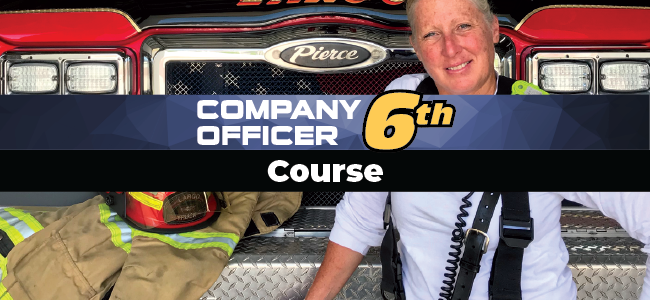
The Fire Officer I Certification Course is a hybrid program designed to prepare aspiring fire officers to meet all NFPA 1021 (2020) Job Performance Requirements, combining online modules and in-person sessions over a three-month period. Students will develop essential leadership, communication, and administrative skills, complete a comprehensive certification portfolio, and engage in weekly lessons covering topics such as organizational structure, supervision, human resource management, safety and wellness, company-level training, fire inspection, and emergency service delivery. Successful completion requires active participation, adherence to academic integrity, timely homework, and a minimum score of 80% on all online assignments, culminating in a final review and portfolio submission for certification.
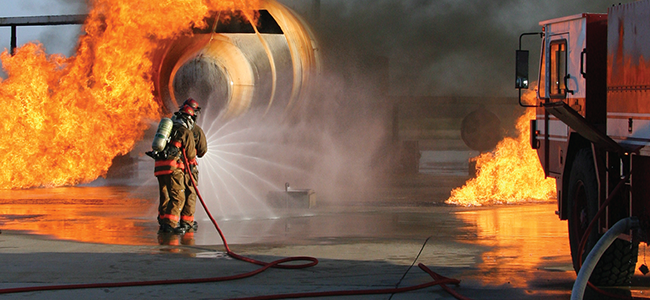
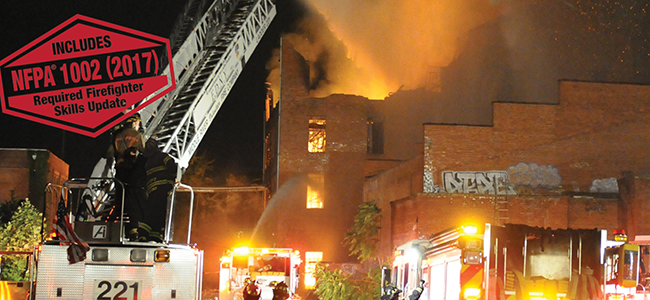

The class focus is on basic safety consideration and essential information required before a member of a fire department responds to an incident and provides an understanding of the roles and responsibilities of the fire service at the basic level.
The purpose of this course is to prepare entry-level fire service personnel with an understanding of the dangers associated with emergency operations and method used for scene management and safety.

Instructor 1 hosted by Lake Jackson Fire Department. The class opens up on 24 March and closes on 22 Apirl. This course uses IFSTA's Fire and Emergency Services Instructor, 9th ed. You are strongly encouraged to use the reading assignments in this manual to supplement your learning. You will have to have a passing score of 70% or higher on your final and completion of the hands on skill, and completion of the discussion board to receive passing credit for the overall course.
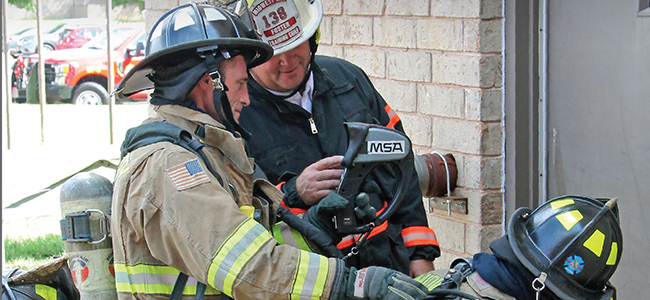
This course provides fire & emergency services instructors basic knowledge & methodologies for training preparation & delivery. Students will receive detailed performance test information for evaluation, as well as performance standards.
PRE-COURSE WORK:
A copy of the IFSTA Fire & Emergency Services Instructor (9th edition) book will need to be purchased by the student or your agency.
PREQUISITES TO ATTEND:
All applicants must submit on Department letterhead, a letter of endorsement showing that the applicant holds a minimum of three (3) years of experience from any of the following: Fire service, emergency medical, emergency response, or wildland fire service.
Note:
Colorado applicants only! If something changes and you are no longer to attend that is ok, but please notify us so we can open that seat for another student. Thank You.


Fire Officer 1 hosted by Lake Jackson Fire Department. The class opens up on 1 September and closes on 8 October. This course uses IFSTA's Fire and Emergency Services Company Officer, 6th ed. You are strongly encouraged to use the reading assignments in this manual to supplement your learning. You will have to have a passing score of 70% or higher on your final and completion of the hands on skill, and completion of the discussion board as well completing the chapter quizzes and test to receive passing credit for the overall course. The Tests and Quizzes will close at 2359 on the 6th of October. The skill testing and final will be done in person on 8 October at Lake Jackson Fire department station 1.
Additional study materials are available for purchase on our website www.ifsta.org to help ensure your success when taking the certification exam.
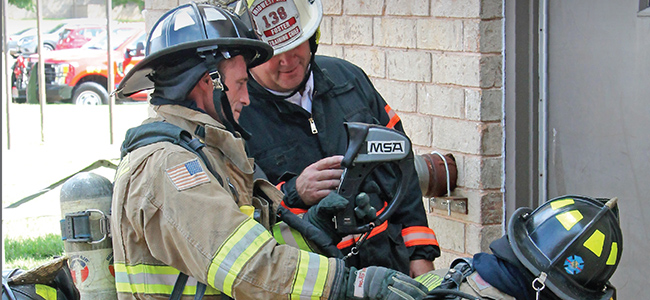
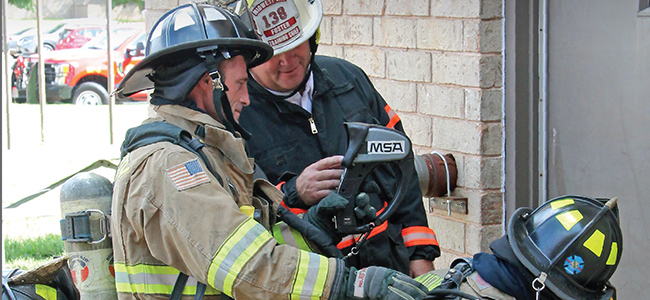
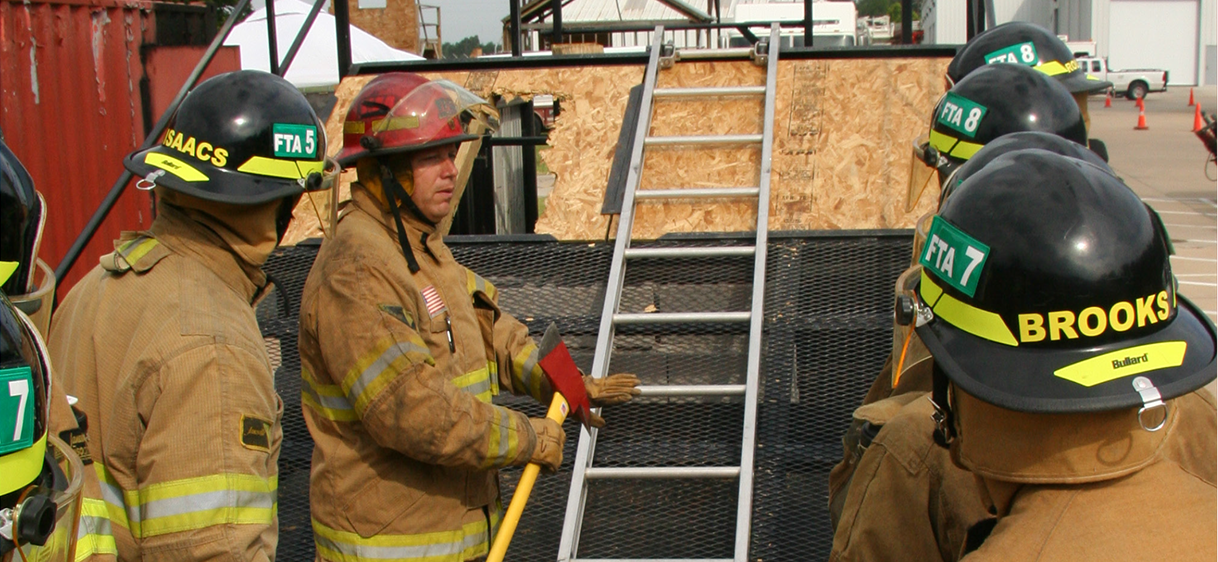
NFPA 1041 Instructor 1 Blended Program
Required text: Fire and Emergency Services Instructor, 8th Ed. Chapter 1-9
Theory: Online Accessed through:
Link: https://moodle.ifsta.org/course/view.php?id=15965
Enrollment key: MFD15965
PowerPoints and notes included for reference. Chapter quizzes are available for study purposes but not required to be completed. Chapter tests are required to be completed.
Practical: 3 practical skills to be completed.
1) The candidate shall present a 10 to 12 minute presentation, given a prepared lesson plan from the Office of the Fire Marshal and Emergency Management Fire Fighter I and II curriculum, so that the stated objectives or learning outcomes are achieved. Students may give a presentation on a Hazardous Materials or EMS topic with prior approval of the instructor; an alternative topic must be in the form of a prepared lesson plan, media, and test. Lesson will need to be provided to 5 students and video taped for OFMEM review.
2) The candidate will complete the training record form provided for the 10-12-minute prepared presentation given during the course.
3) The candidate, given a provided scenario and information, will prepare the memorandum to a supervisor on the page provided requesting the necessary resources and needed facilities for the selected training session. Establishing the schedule for the training session will also be performed so the specified session can be delivered in an appropriate time frame.
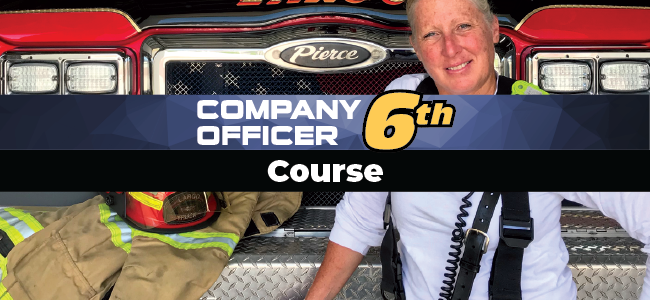
LEARNING MODULES
This course is based on the content in the IFSTA manual Fire and Emergency Services Company Officer, 5th Edition and guidance documentations from Miramichi Fire.
The course meets or exceeds the requirements of the National Fire Protection Association® (NFPA®) professional qualifications standard 1021 Standard for Fire Officer Professional Qualifications, 2014 Edition for Fire Officer I and Fire Officer II certification. By completing all of the lessons members should be prepared for the Fire Officer I certification process.
Northern Monroe Fire Territory
5081 N. Old State Road 37, Bloomington, IN 47408
Phone 812.339.1115 Fax 812.339.1120
Fire Officer I
Lead Instructor: David Calvin
Course Manager: Ryan Fipps
Lead Evaluator: Rusty Clark
Proctor: Rusty Clark
Course Prerequisites: Firefighter I and Fire Instructor I certified for a period of 1 year by the Board of Firefighting Personnel Standards and Education.
Course Description & Purpose: After completing the course the student will have met the sections required for Standard for Fire Officer Professional Qualifications in the National Fire Protection Association® (NFPA®) 1021, 2014 edition, professional qualifications standard. Students who successfully complete the certification process including demonstration of all practical skills and achieving a written examination score of 70% or more will be certified as Fire Officer I by the Board of Firefighting Personnel Standards and Education.
Required Text: The required text for the course is IFSTA’s Fire and Emergency Services Company Officer, 5th edition. While not required, the IFSTA’s Fire and Emergency Services Company Officer Study Guide is a valuable tool to help prepare for each lesson in the course and for the certification exam. The manual and study guide are available from Source for purchasing the materials.
Goal: The goal of this class is to provide firefighters with the knowledge and practical skills needed to be obtain the State of Indiana Fire Officer I certification.
Objectives: Objectives are printed on the first page of each chapter within the IFSTA Fire and Emergency Services Company Officer manual and knowledge of the objectives is the key component of obtaining goal competency and passing Indiana Fire Officer I written and practical exam.
Preparation for IFSTA Moodle Website: Firefighters are expected to be prepared for each week’s lessons, quizzes, tests, and skill sheets. Reading the manual is expected and scores above 70% are required for quizzes and 75% for tests before progressing to the next chapter.
Assignments: There will be assigned reading from the course handbook each class period. You are expected to read class material.
Quizzes and Tests: Quizzes and tests on the IFSTA Moodle website will use multiple-choice, true-false, short answer, and essay questions, and possibly case studies.
Class Schedule is as follows:
January 7-13 Chapter 1 The Company Officer
Chapter 2 Organizational Structure Skill Sheet 16
Chapter 3 Leadership and Supervision Skill Sheet 2
January 14-20 Chapter 4 Human Resource Management Skill Sheets 1 and 4
Chapter 5 Communications
Chapter 6 Administrative Functions Skill Sheets 8 and 9
January 21-27 Chapter 7 Health and Safety Skill Sheets 10, 11, and 12
Chapter 8 Company Level Training Skill Sheet 3
January 28 - Chapter 9 Community Relations and Skill Sheets 5, 6, and 7
February 7 Company Level Inspections
Chapter 10 Pre-Incident Surveys Skill Sheet 13
Chapter 11 Delivery of Emergency Services Skill Sheet 14 and 15
February 12 Practical’s Due and Presentations
February 15 State Written Exam
Written Exam: State of Indiana
exams are multiple-choice and a limited number of true-false questions. Occasionally there will be review sessions
offered to help in preparation for exam.


The course is designed to provide the Fire Officer I knowledge that will help them as they advance into the middle management level of their departments. Candidates will receive information that will help them perform both supervisory and first‐line managerial functions.
This is a four‐day course that will give participants an opportunity to complete the State Fire Marshal Division’s Fire Officer II JPR packet during the course and IFSAC certification testing will be provided on the last day of the course.
The course is based on the NFPA 1021 Standard for Fire Officer Professional Qualifications, 2020 Edition and utilizes the IFSTA Fire and Emergency Services Company Officer 6th Edition which participants will be provided at no cost.
The SFFMA Minimum requirements for Fire Officer I certification are as follows:
The certification Program offers four (4) levels of Fire Officer Certification:
Fire Officer I
Applicants must complete one (1) of the following:
a) TCFP Fire Officer I curriculum; or
b) All required objectives from the SFFMA Fire Officer I curriculum
Applicants must hold, or apply concurrently for, the following SFFMA certifications:
a) Firefighter II; and
b) Instructor I
Applicants must be a first‐line supervisory officer, and must meet all the job performance and certification requirements of Fire Officer I as defined in NFPA 1021, as follows:
a) Uses human resources to accomplish assignments in accordance with safety plans in an efficient manner and evaluates member task performance and supervises personnel during emergency and non‐emergency work periods
b) Deals with inquiries from the community and projects the role of the department to the public and delivers safety, injury, and fire prevention education programs
c) Performs general administrative functions and implements departmental policies and procedures at the unit/company level
d) Performs a fire investigation to determine preliminary cause, secures the incident scene, and preserves evidence
e) Supervises emergency operations, conducts pre‐incident planning, and deploys assigned resources in accordance with the local emergency plan
f) Integrates safety plans, policies, and procedures into the daily activities as well as on the emergency scene, including the donning of appropriate levels of personal protective equipment to ensure a work environment, in accordance with health and safety plans, for all assigned members

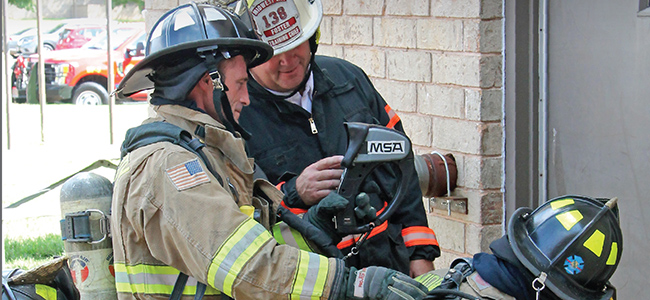
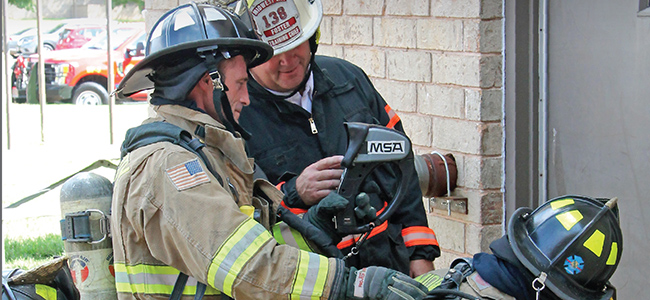

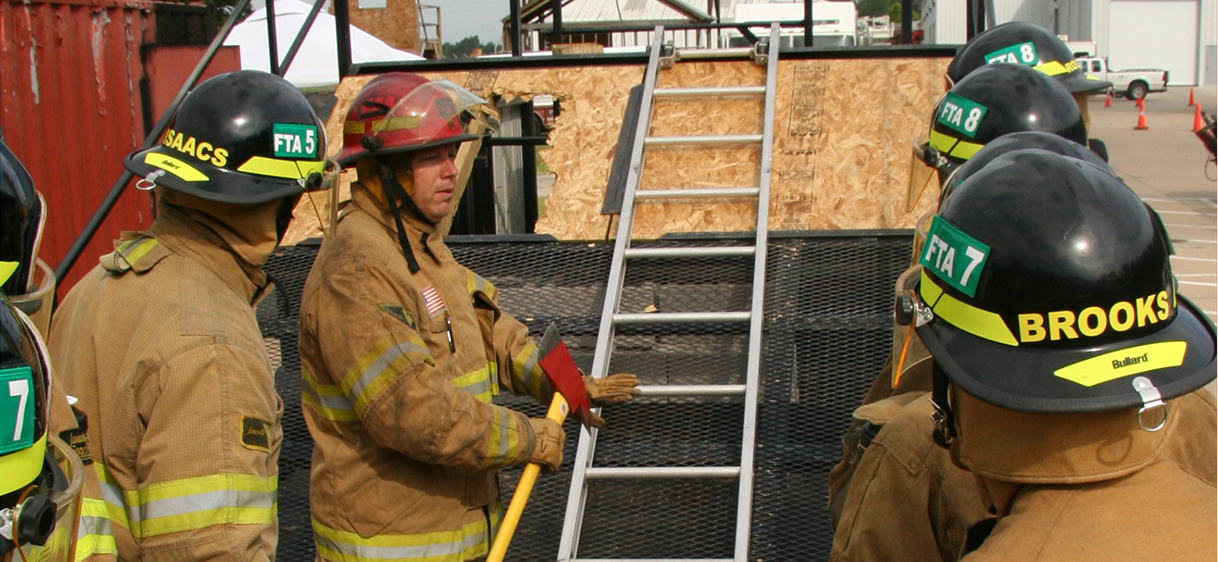

This class encompasses decision making during emergency responses, especially initial decisions upon arrival and incident planning. The purpose of this course is to provide the initial incident commander with the strategic and tactical concepts that can be applied to various situations using available resources.
https://online.vitalsource.com/reader/books/9780879397692/pageid/360
Fire Instructor II
This course uses the IFSTA textbook Fire and Emergency Services Instructor, 2nd Edition. You are strongly encouraged to use the reading assignments in this manual to supplement your learning.
This course is based on NFPA 1041 Standard for Fire Service Instructors (Chapter ), and may lead to Pro Board certifications. This course is specialized for the Fire Instructor I who is ready to advance to the next level of instructor certification for his/her department. This course consists of subjects designed to give the fire instructor more knowledge of preparing training so that he/she can develop lesson plans and present longer instruction sessions in his/her department.
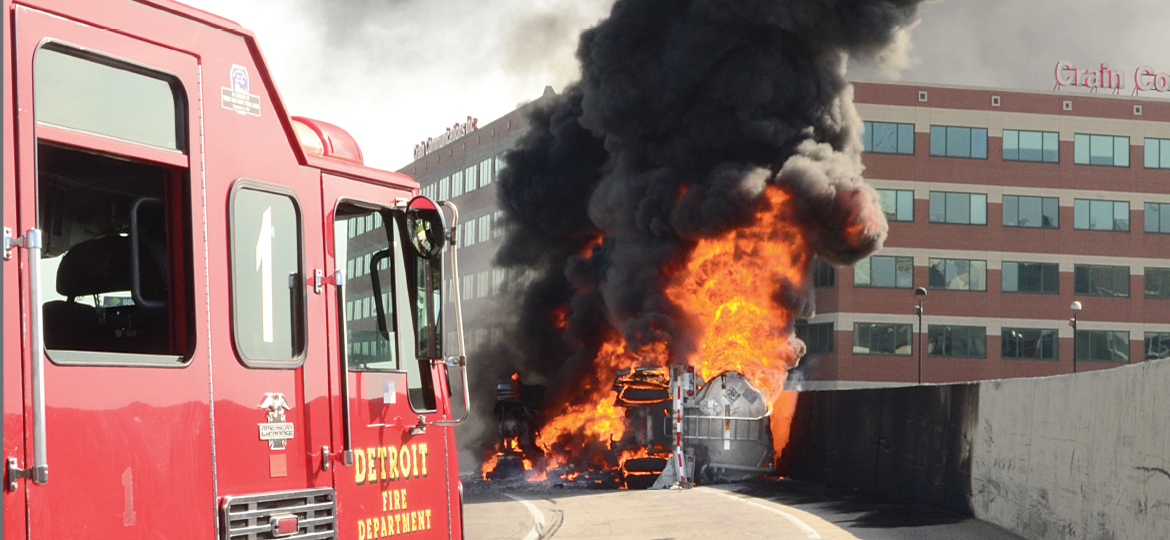
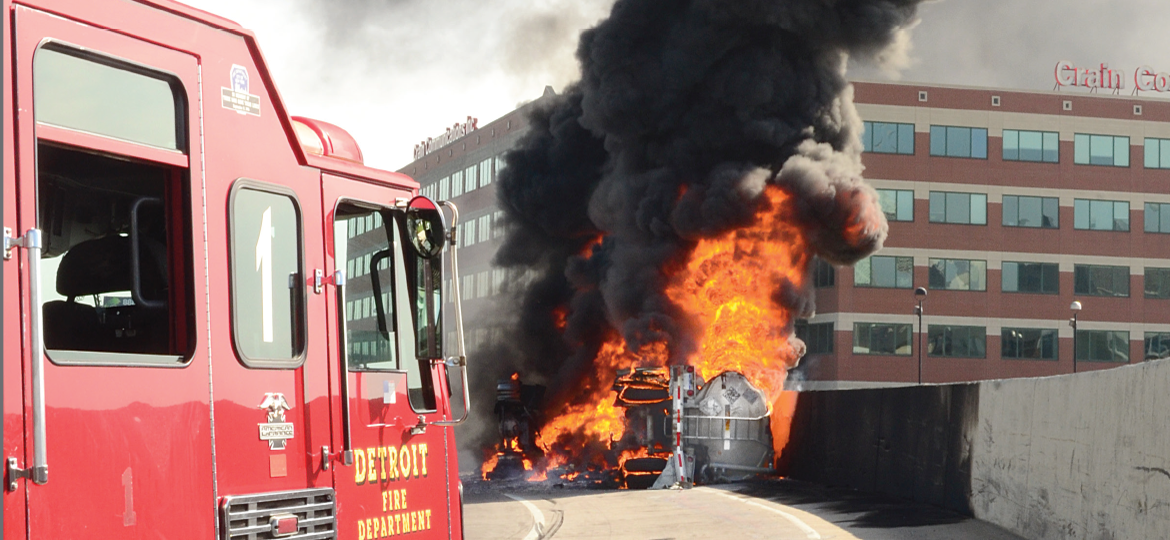
Port Hope Fire Department - Firefighter I & II

The Driver Operator Pumper and Core Class Fire Service course is an intensive and comprehensive training program designed to equip fire service personnel with the essential skills and knowledge required to operate and manage fire apparatus pumpers effectively. This course covers the core competencies necessary for safe and efficient pump operation, emphasizing both theoretical understanding and practical application.
Course Objectives:


(Based on NFPA 1021 – Standard for Fire Officer Professional Qualifications)
The NFPA Fire Officer II course prepares fire service personnel for mid-level supervisory and management roles. Building on the competencies of Fire Officer I, this course emphasizes leadership, administration, human resource management, and advanced emergency operations. The curriculum aligns with NFPA 1021, Fire Officer Level II Job Performance Requirements (JPRs).
The purpose of Fire Officer II is to develop officers who can effectively manage personnel, resources, and operations while supporting organizational goals and public safety initiatives. Graduates are expected to perform both administrative and operational leadership functions within a fire department.
Upon successful completion of the Fire Officer II course, students will be able to:
Apply advanced leadership and supervisory principles
Manage human resources, including performance evaluations and corrective actions
Develop and administer departmental policies and procedures
Prepare and manage budgets and fiscal resources
Conduct fire and life safety inspections
Perform preliminary fire cause and origin investigations
Develop and implement multi-unit incident action plans
Supervise emergency operations using an incident management system
Conduct post-incident analyses
Review accident, injury, and exposure reports to improve safety
RMES Firefighter Class V
1.1. This manual applies to all Probationary Fire Fighter Class V candidates in Redwood Meadows Emergency Services (RMES).
1.2. This manual addresses the training objectives and demonstrable skill requirements for Fire Fighter Class V candidate entry into RMES, and includes introduction to general knowledge requirements outlined in NFPA 1001 Standard for Fire Fighter Professional Qualifications, 2013 Edition, and RMES Operating Guidelines.
The duties of an Emergency Vehicle Operator are extremely dangerous, as well as mentally and physically exhausting, when responding to, returning from, or operating at an emergency scene. In order to render proper service to his/her department, and in keeping with this concept, an Emergency Vehicle Operator must be physically sound and free from any defect which may adversely affect his/her performance of duty. An Emergency Vehicle Operator’s personal safety and the lives of others will be endangered without appropriate training and driving skills. If these skills and training are not applied at regular intervals, competency decreases, hence the need for continual driver re‐certification. Driver re‐certification is a vital element in maintaining a valid and professional emergency vehicle driver program.
Reference Materials
The jurisdictional entity in which the Driver/Operator Personnel serves must have access to the most current editions of following training manuals:
NFPA
NFPA 1002: Standard for Fire Apparatus Driver/Operator Professional Qualifications NFPA 1451: Standard for a Fire Service Vehicle Operations Training Program
NFPA 1500: Standard on Fire Department Occupational Safety and Health Program
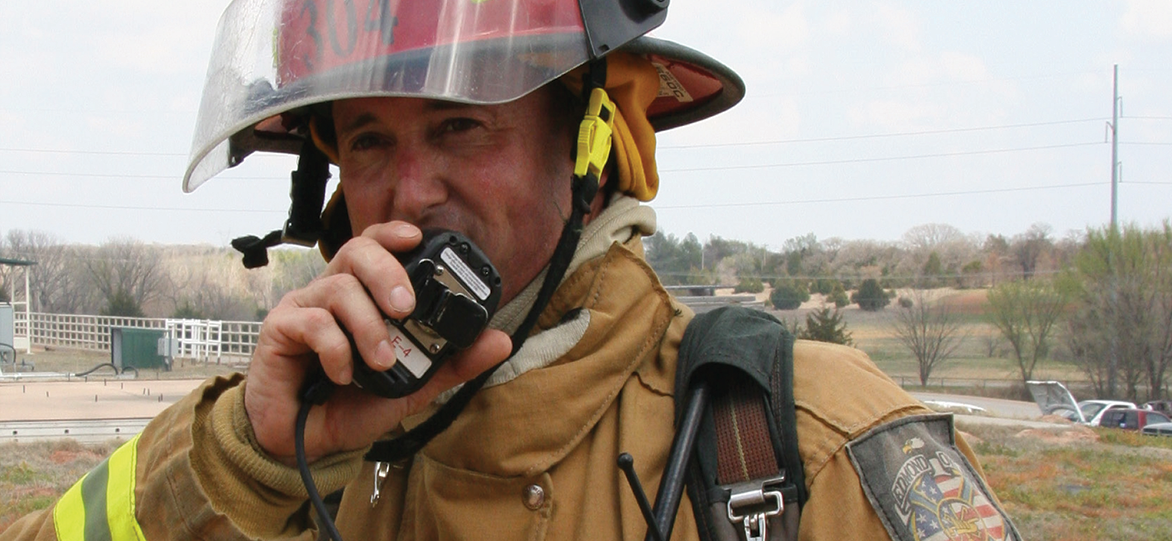
Fire Officer I Hybrid Syllabus
Instructor Information
Name: Donald Richardson
Email: drichardson@d7fr.org
Expected response: Instructors will respond to student emails within 2 business days.
Phone: 210-688-0665
The best method to reach your instructor is email. The goal of the instructor is to help you be successful during the course. You should immediately contact the instructor if you have any questions about the course or course work.
Communication Procedures
Email will be the primary way students can contact their instructor. As such, it is important to following these guidelines:
• Be respectful of one another’s time. Students can expect Instructors to respond to communication within 2 business days.
• Be clear in your message. Students are expected to include the course Title and Section first in your subject line. For example, your subject line will be “FOI.001 Questions about assignment” or “FOI.001 Missing assignment deadline due to emergency.”
Course Overview
This is a hybrid course including both online and face-to-face components. Online modules will run from [JUNE 17] to [AUGUST 12] for 8 weeks. Students will have an opportunity to ask questions online before posting assignments each week by midnight on any given day. Students must remember that instructors will respond to emails within 2 business days.
This is an 8-week course: 92 hours of instruction will be delivered through 8 weeks of online instruction including online activities, quizzes, discussion, and other assessments. The course prepares the student for the Fire Officer I certification process.
The fee for the course is $0
Course Prerequisites
Course Goals and Objectives
After completing the course, the student will have met the sections required for a Fire Officer I in the NFPA® 1021, 2014 edition, Standard for Fire O Professional Qualifications. Students who successfully complete the certification process will be certified as a Fire Officer I.Learning objectives are identified on a chapter-by-chapter basis and can be found in detail in the text required for the course.
Text
REQUIRED
The required text for the course is IFSTA’s Fire and Emergency Services Company Officer, 5th edition.
 Every student must have a copy of the text in order to prepare for
class, study for the certification process, and complete the assignments and
learning activities.
Every student must have a copy of the text in order to prepare for
class, study for the certification process, and complete the assignments and
learning activities.
Students will be provided with online access through ResourceOne to daily activities to be completed as assigned.
OPTIONAL
While not required, the Fire and Emergency Services Company Officer, 5th edition Exam Prep is a valuable tool to help a student or candidate to successfully pass a written exam based on the content of this course. This exam prep is available in print and electronic versions.
The manual and exam prep are available from ResourceOne
Course Schedule
This course is organized into 8 weekly modules. Modules are accessed online through IFSTA’s ResourceOne. Each module follows a similar format that includes: a weekly reading, assignment, quizzes, and tests. Modules are completed in preparation for face-to-face meetings held the last two scheduled skills day. New modules open every week.
Week 1 (June 17 – 24): Chapter 01 - The Company Officer I
Chapter 02 - Organizational Structure
Week 2 (June 24 – July 1): Chapter 03 - Leadership and Supervision
Week 3 (July 1 – 08): Chapter 04 - Human Resources Management
Week 4 (July 8 – 15): Chapter 05 – Communications
Chapter 06 - Administrative Functions
Week 5 (July 15 – 22): Chapter 07 - Health and Safety Issues
Week 6 (July 22 – 29): Chapter 08 – Company-Level Training
Chapter 09 - Community Relations and Company Fire Inspect
Week 7 (July 29 – Aug. 5): Chapter 10 – Pre-incident Surveys
Chapter 11 - Delivery of Emergency Services I
Week 8 (August 5 – 12): Course Final Exam and TCFP Skills Exam
Homework Assignment
Course Evaluation Strategy
Course Participation
The course utilizes lecture, open discussions, and group activities to achieve the learning objectives. Every student is expected to:
· come to course prepared to actively participate in discussions,
· read the text prior to the next class session,
· complete all homework assignments,
· respect the beliefs, opinions, and values of other students,
· and have an open mind about the issues being discussed.
Technical Support
Please note this tech support is staffed from 8-5 CST
Academic Dishonesty Policy
Academic misconduct includes cheating, plagiarism, falsification of records, unauthorized possession of examinations, intimidation, and any and all other actions that may improperly affect the evaluation of a student’s academic performance or achievement; assisting others in any such act; or attempts to engage in such acts. Any incident of academic misconduct will result in the student being dropped from the course and the student’s sponsoring agency being notified of the incident.
The TCFP written test will be scheduled by the student at a TCFP regional test site.
|
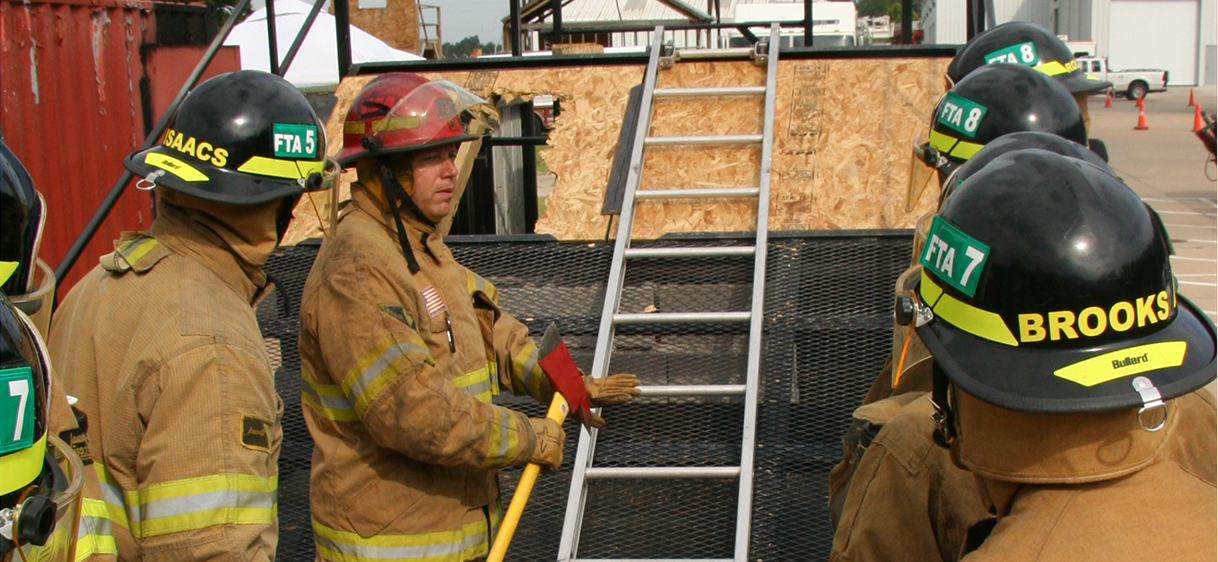
The duties of an Emergency Vehicle Operator are extremely dangerous, as well as mentally and physically exhausting, when responding to, returning from, or operating at an emergency scene. In order to render proper service to his/her department, and in keeping with this concept, an Emergency Vehicle Operator must be physically sound and free from any defect which may adversely affect his/her performance of duty. An Emergency Vehicle Operator’s personal safety and the lives of others will be endangered without appropriate training and driving skills. If these skills and training are not applied at regular intervals, competency decreases, hence the need for continual driver re‐certification. Driver re‐certification is a vital element in maintaining a valid and professional emergency vehicle driver program.
Reference Materials
The jurisdictional entity in which the Driver/Operator Personnel serves must have access to the most current editions of following training manuals:
NFPA
NFPA 1002: Standard for Fire Apparatus Driver/Operator Professional Qualifications NFPA 1451: Standard for a Fire Service Vehicle Operations Training Program
NFPA 1500: Standard on Fire Department Occupational Safety and Health Program
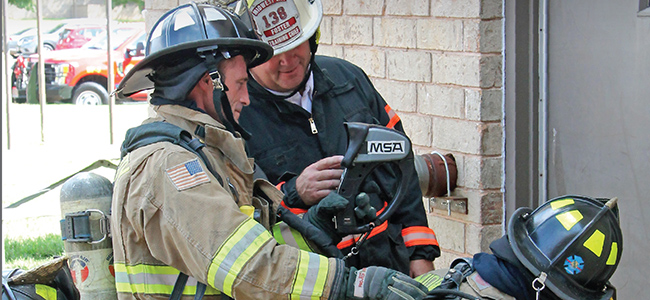
SFRT District #11 IFSAC Instructor I Course Fall of 2023.
This is a 6 day course: 36 hours of instruction and 8 hours of certification evaluation. The course prepares the student to become certified as a Fire Instructor I.
The required text for the course is IFSTA’s Fire and Emergency Services Instructor, Ninth edition.
While not required, the Fire and Emergency Services Instructor Exam Prep is a valuable tool to help prepare for each lesson in the course and for the certification exam. The manual and exam prep are available from Fire Protection Publications (IFSTA).
Friday August 11th 2023: Introductions and Chapter #1.
Saturday August 12th 2023: Chapters #2 and #3.
Sunday August 13th 2023: Chapters #4 and #5.
Saturday August 19th 2023: Chapters # 6, #7, and #8
Sunday August 20th 2023: Chapters #9 and #10.
Saturday August 26th 2023: FINAL SKILL EVALUATION AND WRITTEN TESTING.
IFSTA Fire and Emergency Services Instructor 9th Edition (ISBN 978-0-87939-696-1)(NFPA 1041-2019 Edition). Laptop Computer w/Microsoft Word and Internet Capabilities, and a USB jump drive.

Over the coming months you will be challenged to complete a series of theory and practical training skills that will take you through all of the modules required to complete your 1001 Level 1 course. Upon completion of the course each of you will be required to write the provincial exam for your IFSAC & ProBoard certification.
This will be a challenging course with a large time commitment but at the end, it will give you the basic tools to ensure you operate safely at an emergency scene.
You must complete all activities, quiz's, skills, assignments and participate on all discussion forums before you can complete the course.
If you have any questions along your journey through this course please contact one of our lead instructors.
Practical Skills Days: February 10th 8am-4pm
March 16th 8am-4pm
April 6th 8am-4pm
May 11th 8am-4pm
May 14th 6:30pm - 9pm
May 26th 8am - 4pm Live Fire Day
May 28th 6:30pm - 9pm
June 1st 8am-4pm Live Fire Day
Provincial written exam June 13th 2024
Provincial evaluation June 15th 2024
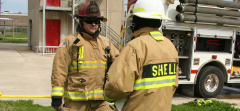
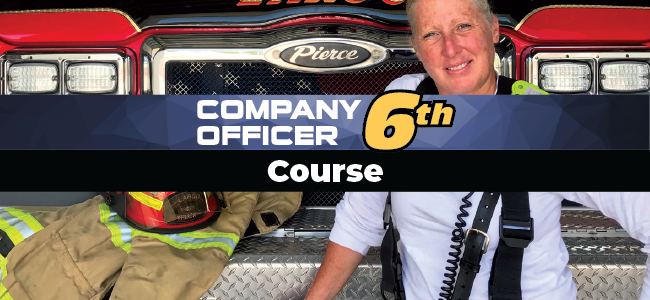
This on-line course covers the principles of effective curriculum design. It stresses the principles of adult learning and student-centered learning. Designing courses and units that address learning, performance, and behavioral objectives is the program goal.
Fire Service Course Design covers IFSTA: Fire and Emergency Services Instructor, 9th Edition Chapters 11-15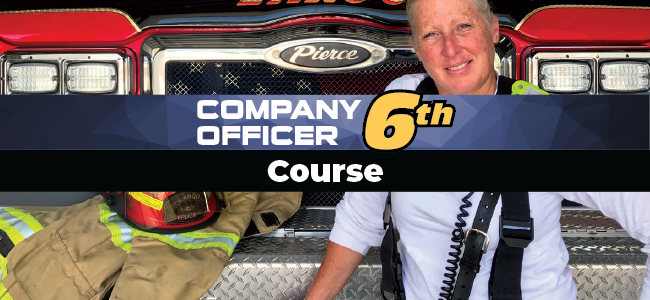


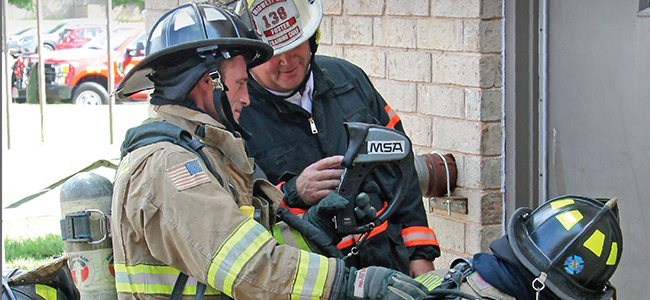

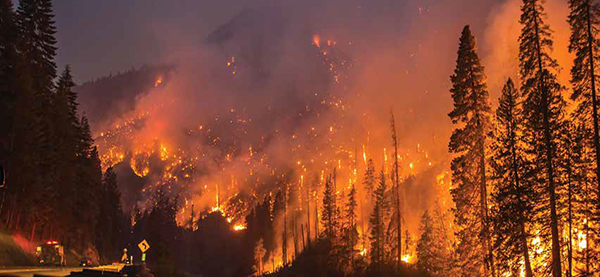
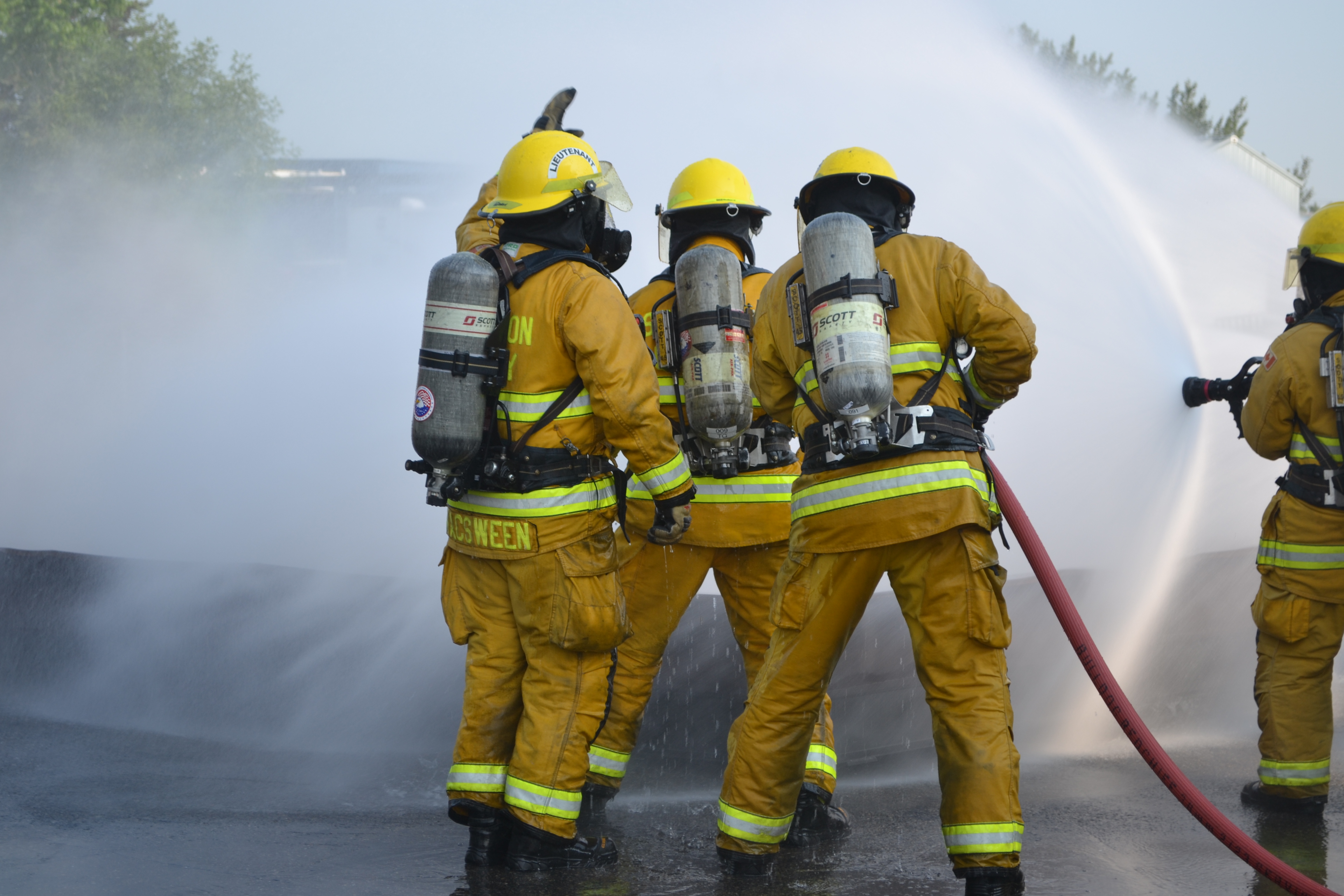
Welcome to Sturgeon County Emergency Services' NFPA 1001 Firefighter 1 course. This course is designed to provide you with the basic skills and knowledge required to be an effective and safe firefighter. Sturgeon County Emergency Services responses to a variety of incidents types. In order for you to be an effective member of the team, your efforts in this course will determine your success as a firefighter. The course will challenge you both physically and mentally, so be sure to work together and support each other throughout the next few months of your learning experience.
In order to successfully complete this course, you will be required to dedicate a large amount of time to studying the course material and performing the practical skills. A career as a firefighter, whether part-time, full-time, or casual requires you to constantly learn and refine your skills. I highly recommend you reach-out to each other, and members from your stations, to practice and refine the skills you will be learning.
The safety of everyone both in the classroom and on the fire ground will always be our first priority. Horse play, inattention, or dangerous actions will not be tolerated. Students who fail to follow safety procedures may be released from the course.
Here are some brief words from your Lead Instructor of this course:
Hello and welcome to Sturgeon County Emergency Services. I'm excited for each of you taking the first step in your career as a firefighter with SCES. Whether you intend to make this a full-time career or are just looking for a way to get involved with the community, I'm happy you have joined our family and hope you enjoy your journey.
By now, all of you may have noticed a motto on the side of our trucks "Committed to Community". During the next few months, I would ask you to think about what that motto means to you and how you can live it out as a SCES Firefighter. We are going to ask a lot from you in this course, on the fireground, and both directly and indirectly from your personally lives. If you are able to fully understand and appreciate what it means to be "Committed to Community", I believe you will fully understand what it means to be a great Firefighter.
I look forward to meeting you all and working together. I truly believe we can offer you a great learning experience, due to the unique background and experiences of your instructors.
I want to see everyone be successful. If you have any questions about the course, need help with material, or just need to chat, I am available at 780-984-5806.
Good luck and take care!
Firefighter Spencer Zee


The Sugar Grove Fire Protection District Cadet Program was formed to make a positive lasting impact on the firefighters and emergency medical providers of tomorrow by giving them the ability to achieve their highest potential by instilling within them the discipline, respect, honor, excellence, and higher level of education of the fire service that will leave an overall everlasting impression on our community today and in the future.
New York Office of Fire Prevention & Control - Fire Officer I

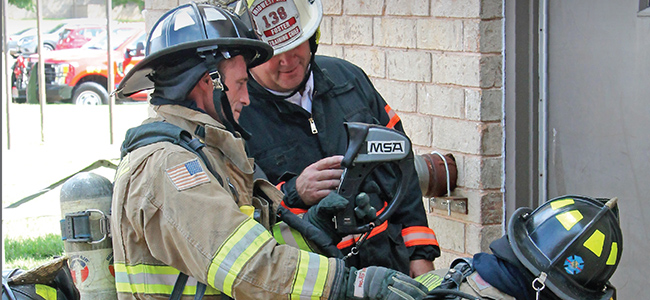
This course is designed to meet the needs of entry-level fire and emergency service instructors by meeting or exceeding the job performance requirements in National Fire Protection Association (NFPA) 1041, Standard for Fire Service Instructor Professional Qualifications, Chapter 4 “Fire Instructor I”.
The required textbook is IFSTA Fire and Emergency Services Instructor, 9th edition (ISBN: 978-0-87939-696-1)
To become certified in Instructor Level I you must:
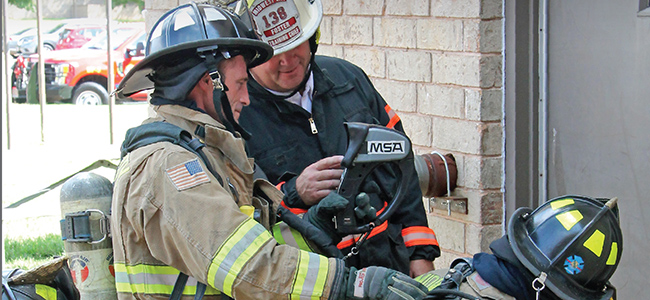
This course is designed to meet the needs of entry-level fire and emergency service instructors by meeting or exceeding the job performance requirements in National Fire Protection Association (NFPA) 1041, Standard for Fire Service Instructor Professional Qualifications, Chapter 4 “Fire Instructor I”.
The required textbook is IFSTA Fire and Emergency Services Instructor, 9th edition (ISBN: 978-0-87939-696-1)
To become certified in Instructor Level I you must:

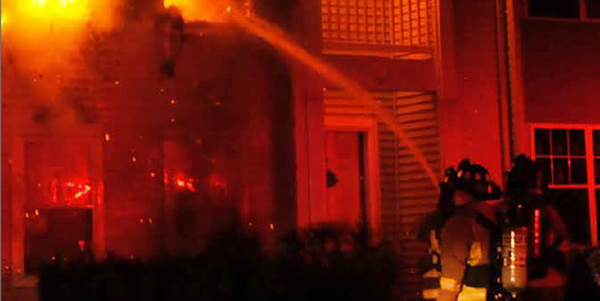


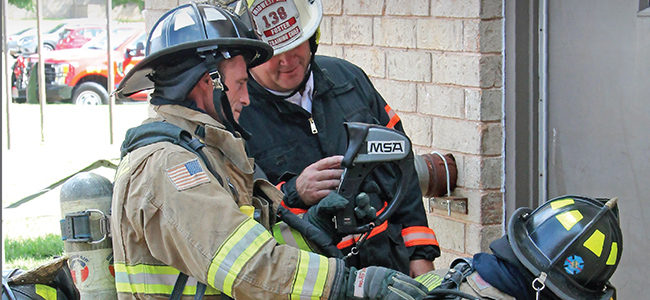
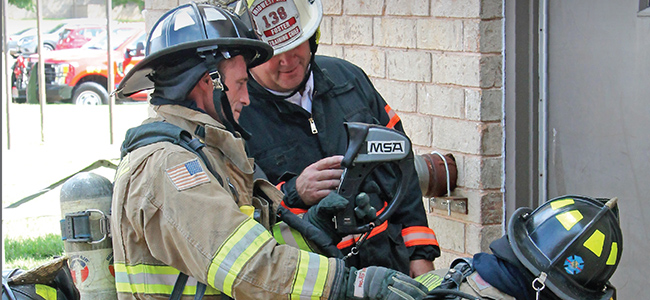
Textbook: Fire and Emergency Services Instructor. Ninth Edition (2019). IFSTA. ISBN: 978-0-87939-696-1
Course Overview:
This is a five-day course: 32 hours of instruction and 8 hours of evaluation. It addresses NFPA 1041-2019, Standard for Fire Instructor Professional Qualifications, Chapter 4, 2019 edition competencies at the fire service instructor I level. The course prepares fire and emergency service instructor for planning instruction, using a variety of instructional methods, teaching diverse learners, and evaluating course outcomes. The target audience is emergency services personnel who have, or may have, a responsibility to teach training classes. This course focuses on the presentation skills needed by new instructors delivering prepared lesson plans.
Course Competencies and Assessment:
As an entity that provides pre‐certification coursework, it is necessary that we maintain competencies for Fire Service Instructor 1 as enumerated below:
• Completion of chapter quizzes with a minimum score of 70%
• Completion of end of course exam with a minimum score of 70%
Course Requirements:
Overall, this course is graded on a pass/fail basis, based upon quality and quantity of participation, submissions, and chapter quizzes. Assignments are expected to be completed by the due date. Reading assignments cover the Fire Service Instructor I portions of the textbook only.
Course Participation:
The course utilizes open discussions, individual activities, and small group activities to achieve the outcome objectives. Every student is expected to come to course prepared to actively participate in discussions, read the text prior to the class day, complete all homework assignments, respectful of the beliefs, opinions, and values of other students, and have an open mind about the issues being discussed. Each student must bring a laptop with some form of presentation software. (i.e.- PowerPoint, Keynote, Google Slides, etc.)
Missouri Division of Fire Safety’s Fire Service Instructor I Practical Skills:
Once the course completion information is submitted to DFS they will send you your FSI I practical skills booklet. Your course instructor will not be able to help you with the practical skills booklet. All correspondence pertaining to the practical skills must be through MDFS. The practical skills booklet must be completed, submitted, and successfully approved to complete the certification process. You will also be notified of when you are eligible to take the cognitive certification exam.
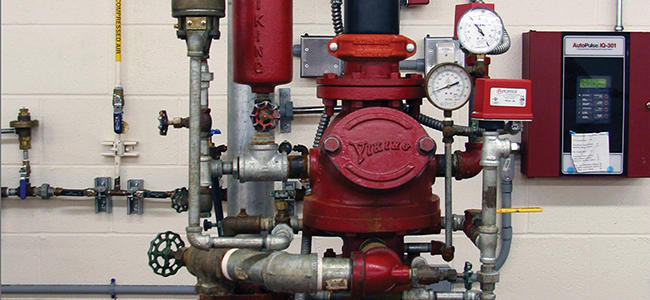

The Fire and Emergency Services Instructor (FESI) Training Program is designed to have students learn theories of modern adult education and practice teaching skills with in-class presentations, speeches, demonstrations and teaching from their own lesson plans. Curriculum includes lectures, case studies and class discussion. Students must attend all classes and pass both written and practical exams to complete the course.

This is a hybrid course including both online and face-to-face components. Online modules will run from [day] to [day]. Face-to-face meetings will be held every other Saturday Starting on August 9th, 2020. Students will have an opportunity to ask questions both in-class and online before posting assignments each week.
This is a 2-week course: 16 hours of instruction will be delivered through 2 face-to-face meetings combined with online activities, quizzes, tests, and other assessments. 8 hours of certification evaluation will be performed through face-to-face sessions scheduled on the 30th of August, 2020. The course prepares the student for the Firefighter and Emergency Services Instructor I IFSAC certification process.
Class participation is expected from all students. All students must complete 100% of the course work and skill practices to be eligible for the IFSAC Certification Exams.


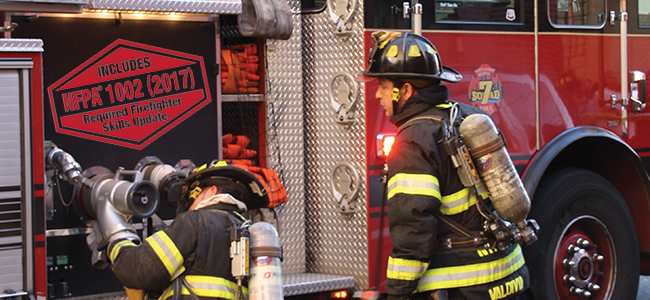
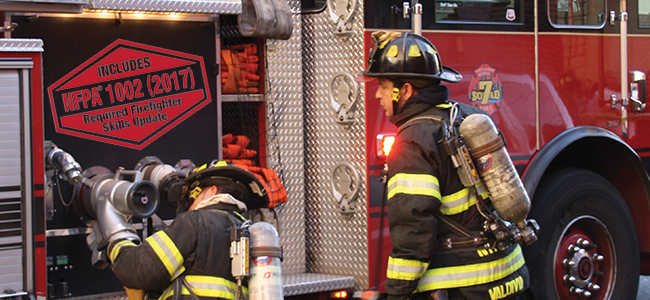

This course is designed to provide the student with an understanding of the roles and responsibilities of a company officer who performs both supervisory and first-line managerial functions. The Fire Officer 2 course is compliant with NFPA 1021 Standard for Fire Officer Professional Qualifications (2020 ed.) as it provides training and education in the requisite areas of roles and responsibilities of the Fire Officer 2, Human Resources and Administrative Responsibilities, Budget and Finance, Fire Origin and Cause Determination, Delivery of Emergency Services, and Accident Investigations to include Safety Analyses.
Students registered in advance and certified by the International Fire Service Accreditation Congress or ProBoard at the Fire Officer 1 level will be allowed to test for IFSAC Fire Officer 2.
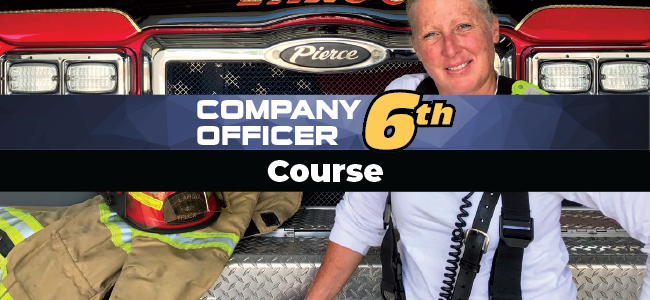
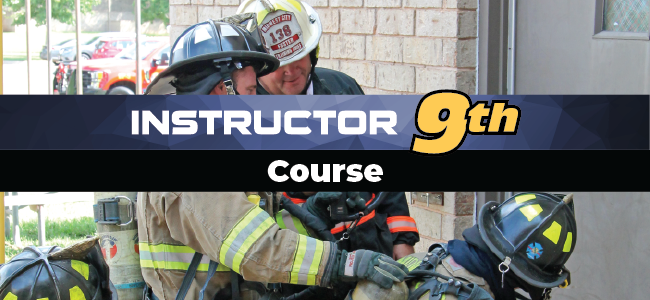
Class Dates: April 30, May 14, May 21, and May 22
Class Hours: 0830-1630 with a one hour lunch period
Text: IFSTA Fire and Emergency Services Instructor 9th ed
To obtain IFSAC certification, each student will need to successfully pass a written certification exam as well as 12 practical skill sheets.
This class is a self-directed/flipped classroom format. To ensure a successful outcome, students should read and take the chapter tests on chapters 11-15 prior to the first day of class. There will be a pre-course examination on chapters 11-15 on the first day of class to measure each students preparedness.
The class will consist of in-class lectures and practical skill instructions. Each student will be required to submit a professional level portfolio to comply with 9 of the skill sheets. The portfolios will be evaluated as will the 3 in person, instructional delivery and program management skill sheets. Students will need to bring a laptop to each class session. The laptop will need to have Microsoft Word and Excel software. Development of a professional level portfolio can be a time consuming activity requiring significant effort both in class and between classes.

This is the Western Taney County Fire Protection District Hazardous Materials Emergency Response Awareness Course. This course is part of the probationary training requirements for all new firefighters. Course completion is only achieved once all portions of the course have been completed and sufficient scores on the quizzes and tests has been achieved.
If you are not permitted to advance to a section of the course, it is likely because you have not completed the requirements of the chapter section or subsection you are working on. These include:
1. Pressing the submit button once you have reviewed the video review of each chapter
2. Achieving at least an 80% score on each chapter quiz
3. Achieving at least a 70% score on each chapter test.
To complete the course, you must also successfully pass the end-of-course test and score a minimum of 70%, review the Missouri Division of Fire Safety practical skills sheets, and complete the course evaluation activity. If you have questions or are having difficulty navigating the course, please contact Chief Siemans for assistance.
Course Description – Firefighter I/II with Hazardous Materials Awareness (HMA) and Hazardous Materials Operations (HMO)
This Firefighter I/II program provides comprehensive classroom instruction and hands-on skills training designed to prepare students to meet the job performance requirements of NFPA 1001 (Firefighter I and II) and NFPA 1072 (Hazardous Materials Awareness and Operations). The course integrates theory, applied practice, and scenario-based learning to develop safe, competent, and effective entry-level firefighters.
Classroom Instruction focuses on fire behavior, building construction, firefighter safety and wellness, incident command system (ICS), communications, fire prevention, portable extinguishers, ropes and knots, ladders, ventilation, water supply, fire hose and streams, salvage and overhaul, search and rescue, emergency medical care, and firefighter survival. The hazardous materials component addresses recognition and identification of hazardous materials, use of the Emergency Response Guidebook (ERG), risk assessment, defensive control strategies, personal protective equipment, decontamination concepts, and compliance with federal and state regulations.
Skills and Practical Training emphasizes supervised, hands-on evolutions conducted in accordance with applicable safety standards. Students perform and are evaluated on essential Firefighter I/II skills, including PPE and SCBA operations, hose deployment and advancement, ladder carries and raises, forcible entry, ventilation techniques, search and victim removal, fire control, water supply operations, and basic vehicle and fireground operations. Hazardous materials skills include scene size-up, isolation and protective actions, product control at the awareness and operations levels, and coordination with specialized response resources. The course culminates in integrated scenarios and live fire training evolutions that reinforce teamwork, safety, and decision-making.
Successful completion prepares students for state certification testing in Firefighter I, Firefighter II, Hazardous Materials Awareness, and Hazardous Materials Operations, and for entry-level service in the fire and emergency services profession.