- Manager: Dennis Walling
- Manager: Thomas Walling
Category: Toyota Fire Department (KY)
Once you make access to the course, begin with the chapter 1 power point/lesson and quiz and then the chapter test. Continue on through the course/chapters. Note that some chapters will have skill sheets after the lesson. Use those for reviews and practice for the state skills. There 2 days scheduled for Instructional days on June 12 &13th. The final exam is scheduled for June 19th at 10 a.m. If you are unable to attend any dates, please let me know ASAP. If you have any questions, please reach out to me via email or phone.
Chapter 4 (INSP) (PDF) is the link to TCFP Curriculum Manual for Inspector
Chapter 4 (INSP) (PDF) is the link to TCFP Skills Manual for Inspector
Inspector Syllabus.docx is the link to the course syllabus.
Welcome to the Educational Methodologies for Local Level Instructors Program. This program is designed to assist new fire instructors with the challenges of presenting programs to the fire service. At the end of the program there will be the written and practical exams for Fire Service I Pro-Board through he Butler County Community College.

This online firefighter education program provides students with the knowledge needed to become certified exterior firefighters in the province of British Columbia. The course features interactive learning material that helps students understand content better and it can be completed at the students pace. Students are permitted to take up to one year to complete the online learning program, however the program can usually be completed within approximately 70 dedicated hours of course work. Experienced Fire Service Instructors are available through the Moodle learning platform to assist students regularly.
The online program consists of the following 18 topics in an interactive learning format:
Upon successful completion of the program, students will receive a certificate of completion from the Canadian Fire Rescue College.
This course is designed for the first-line company officer/supervisor and satisfies the requirements of the National Fire Protection Association (NFPA) 1021 Standard for Fire Officer Professional Qualifications, Chapter four "Fire Officer I". This portion of the program has been designed to improve your abilities to manage a single fire company. This course will cover the following chapters of the Fire and Emergency Services Company Officer, 6th Edition Textbook:
The CFRC splits this program into two parts, the online portion which you are currently enrolled in, and the practical portion which is to be taken after the completion of the online program. Once both portions have been successfully completed, the student will be eligible to take the Pro-Board Certification exam and practical evaluation.
Students are reminded to thoroughly read through all relevant textbook materials and complete chapter questions before attempting chapter quizzes and tests. There are limited attempts for these quizzes and tests.
Feel free to post any questions about the program or its contents on the course questions forum, or contact your instructor directly.
This course is designed for the first-line company officer/supervisor and satisfies the requirements of the National Fire Protection Association (NFPA) 1021 Standard for Fire Officer Professional Qualifications, Chapter five "Fire Officer II". This portion of the program has been designed to improve your abilities to manage multiple fire companies. This course will cover the following chapters of the Fire and Emergency Services Company Officer, 6th Edition Textbook:
12. The Company Officer II
13. Human Resources Management and Administrative Responsibilities II
14. Origin and Cause Determination
15. Delivery of Emergency Services II
16. Safety Investigations and Analyses
The CFRC splits this program into two parts, the online portion which you are currently enrolled in, and the practical portion which is to be taken after the completion of the online program. Once both portions have been successfully completed, the student will be eligible to take the Pro-Board Certification exam and practical evaluation.
Students are reminded to thoroughly read through all relevant textbook materials and complete chapter questions before attempting chapter quizzes and tests. There are limited attempts for these quizzes and tests.
Feel free to post any questions about the program or its contents on the course questions forum, or contact your instructor directly.
This online firefighter education program provides students with the knowledge needed to become professional firefighters. The course features interactive learning material that helps students understand content better and it can be completed at the students pace. Students are permitted to take up to one year to complete the online learning program, however the program can usually be completed within three to six months. Experienced Fire Service Instructors are available through the Moodle learning platform to assist students regularly. There are four National Fire Protection Association (NFPA) levels covered in this content, they are:
The online program consists of the following 27 chapters in an interactive learning format:
In order to receive the opportunity to be tested by the Pro Board® students must complete the practical learning component on site in addition to the successful completion of the online learning program. The on-site training required for accreditation is not included in this course and students must register for it separately.
For further information regarding the Pro Board®, visit www.theproboard.org
This course is designed to meet the needs of entry-level fire and emergency service instructors by meeting or exceeding the job performance requirements in National Fire Protection Association (NFPA) 1041, Standard for Fire Service Instructor Professional Qualifications, Chapter 4 "Fire Instructor I". This course will cover the following chapters of the Fire and Emergency Services Instructor, 9th Edition Textbook:
The CFRC splits this program into two parts, the online portion which you are currently enrolled in, and the practical portion which is to be taken after the completion of the online program. Once both portions have been successfully completed, the student will be eligible to take the Pro-Board Certification exam and practical evaluation.
Students are reminded to thoroughly read through all relevant textbook materials and complete chapter questions before attempting chapter quizzes and tests. There are limited attempts for these quizzes and tests.
Feel free to post any questions about the program or its contents on the course questions forum, or contact your instructor directly.
Welcome to the online portion of the recruit class.
This class will satisfy the State of WY class requirement for obtaining a Fire Officer II Certification. It will cover Chapters 12 - 16 in the IFSTA Fire and Emergency Services Company Officer textbook and prepare you to take the State Of Wyo Fire Officer II written test. The class will start on on December 29th and complete Feb 8th.
The Live Fire Instructor shall meet the requirements of Firefighter II as defined in NFPA 1010 and the requirements of Fire and Emergency Services Instructor I as defined in Chapter 4 and the job requirements defined in 7.2 through 7.3
A Live Fire Instructor shall demonstrate competency in knowledge and skills in applicable subjects, methods, and equipment being taught and the objectives contained in NFPA 1403
A Fire and Emergency Services Instructor I is someone who,
As a Fire and Emergency Services Instructor, you will train personnel on the skills they need to perform safely and effectively while completing job related tasks. You will be partly responsible for their classroom success and fully responsible for their safety during training.
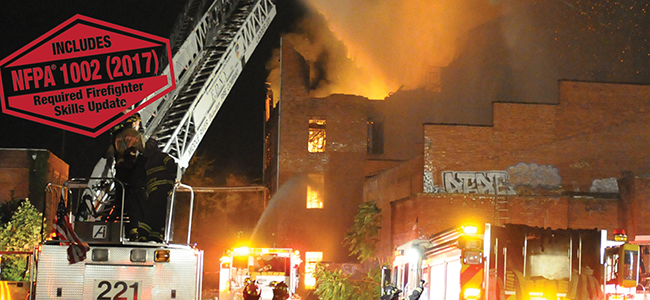
Welcome to the Central Oregon Aerial Class. This is the first time that we have had every department participate!
My name is Jason Ellison and I will be your lead instructor. I have been in the fire service for over 25 years. Most of my paid time was on a ladder truck in Clackamas County. Throughout my time I have picked up tips and tricks to make successful aerial operators. I hope you enjoy the class and are able to come away from the class as a competent aerial operator.
Class will be mostly hands on. You will need to fully complete the ResourceOne online assignments before June 24th.
Welcome to the Central Oregon Aerial Class. This is the first time that we have had every department participate!
My name is Jason Ellison and I will be your lead instructor. I have been in the fire service for over 25 years. Most of my paid time was on a ladder truck in Clackamas County. Throughout my time I have picked up tips and tricks to make successful aerial operators. I hope you enjoy the class and are able to come away from the class as a competent aerial operator.
Class will be mostly hands on. You will need to fully complete the ResourceOne online assignments before June 24th.
Fire Fighter 1 provides entry-level firefighter candidates with the basic information necessary to meet the job performance requirements of NFPA 1001 Standard. Upon successful course completion qualifies student(s) to take Fire Fighter I certification exam and Live Burn class.
Day 1- 1/8/25: Registration
Day 2- 1/18/25: Skills 1,2,3,4,5,7,12 (chapters 1,2,5 due)
Day 3- 2/1/25: Skills 9,10,LF6,8 (chapters 1,6,7,14,22 due)
Day 4: 2/15/25: Skills 24,25,28 (chapters 8,15 due)
Day 5: 3/1/25: MID-TERM EXAM, Skills 23,6,18 (chapters 5,10 due)
Day 6: 3/15/25: Skills 26,11,LF7 (chapters 11,14 due)
Day 7: 3/29/25: Skills: 16,17,19,20,21,22 (chapter 12,13 due)
Day 8: 4/12/25: FINAL EXAM, Skills 13,14,15,27 (chapters 9,27 due)
Day 9: 4/13/25: Make-Up Day (chapters 3,4, due)
Day 10: 3/3/25: IFSAC Testing at Stillwater
Day 11: 5/4/25: Live Burn Day at Stillwater
Class starts at 8am unless otherwise noted.
Please refer to course syllabus for more details.
Red Team: Mefford, Bowen, Bazille, Lake
Green Team: Morris, Jones, Siddiki, Rossmann, Kimbrough
Blue Team: Wren, Davis, Wilson, Redwine, Munoz
Orange Team: Alvarado, Eddy, Miles, Doyle, Riley

The International Public Safety Leadership and Ethics Institute (IPSLEI) is a 501(c)(3) nonprofit corporation organized to support the development of excellence in public safety leadership and organizations. IPSLEI was formed in the spring of 2006 to continue the public safety industry collaborative in leadership and ethics that the California Community College Chancellor’s Office Public Safety Education Advisory Committee initiated with a Carl D. Perkins VETA Grant for the development of a comprehensive program for public safety leadership development.
The original program, known as The California Public Safety Leadership and Ethics Program, originated in 2001. Through the leadership and vision of the California Community College Chancellor’s Office Public Safety Education Advisory Committee, the program gained national attention. This national interest led to the formation of IPSLEI and the expansion of the program beyond California. The United States National Fire Academy endorsed the IPSLEI program, and the United States Fire Administration recognized IPSLEI with a Lifetime Achievement Award in 2010.
In the spirit of the original design work, IPSLEI promotes a dynamic blend of unique, humanities-oriented leadership development with a case-study approach to explore the reality of the leadership challenges that public safety professionals face at every level.
IPSLEI continuously seeks the input of public safety and academic professionals throughout the world to maintain an energetic, visionary, and realistic approach to facilitating the growth of excellence in public safety leadership.
It is the desire of IPSLEI that through effective, realistic, and purposeful leadership dialogue and interaction among public safety personnel from all disciplines and at every level, we learn the true meaning of interoperability and create the safest environments for our organizations and our communities. IPSLEI is dedicated to conducting research and analysis in public safety leadership development, creating effective leadership and ethics curricula, and providing facilitator training and excellent support for IPSLEI Facilitators.
The International Public Safety Leadership and Ethics Institute (IPSLEI) would like to thank the following organizations for dedicating time and expertise to the development of this curriculum. The input, testing, and feedback from everyone involved have added immeasurable value.
Sacramento Fire Department, Division of Training
Sacramento, CA
Los Angeles Fire Department
Los Angeles, CA
Eastside Fire Department
Belleville, WA
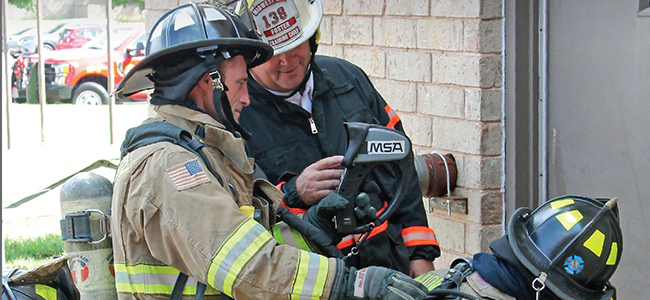
This course focuses on skills necessary to become a Fire Instructor for the fire service. It is designed to provide emergency responders with an understanding of the instructional process. This course addresses the job performance requirements of the National Fire Protection Agency, 1041 Standard for Fire & Emergency Services Instructor Professional Qualifications at the Fire Instructor I level.
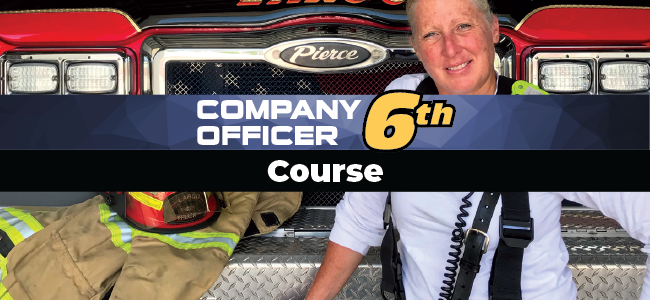
This course opens on Tuesday, October 15th and covers chapters 1 through 11 in the IFSTA Fire and Emergency Services Company Officer, 6th Edition textbook. All chapter tests must be successfully completed with a 70 percent or higher grade before 10pm on Sunday, December 15th. Each participant has up to 2 chances on each test to achieve the 70 percent.
On Monday, December 16th, class participants will meet at 08:30 to begin work on the practical skills required of this course. The group will meet on December 16th, December 17th, and December 18th from 08:30 to 16:00. (Depending on practical skill work progress, class sessions may be shortened)
This course provides the skills and knowledge needed for the entry-level firefighter, career or volunteer, to perform his/her duties safely, effectively, and competently. The curriculum is based on the NFPA 1001 Standard for Fire Fighter Professional Qualifications, the NFPA 1051 Standard for Wildland Fire Fighter Professional Qualifications, and the NFPA 472 Standard for Competence of Responders to Hazardous Materials/Weapons of Mass Destruction Incidents. The seven overarching themes of the California State Fire Fighter I curriculum are: general knowledge germane to the profession, fire department communications, fireground operations, rescue operations, preparedness and maintenance, wildland suppression activities, and hazardous materials/WMD. The course emphasizes the requirements of the California State Board of Fire Services Certified Firefighter I training, International Fire Service Accreditation Congress (IFSAC) standards, Professional Qualifications (ProBoard) requirements, and Cal Fire Wildland Firefighter-Basic training. This course, combined with Firefighter I Academy Skills Review and Certification, satisfies all training requirements for the IFSAC Firefighter I certification. Certificates of Completion for Fire Fire Fighter I Academy and Cal Fire Basic Firefighter issued with a grade of "C" or better.
Prerequisite: FT 89 (completed with a grade of "P" or higher), and FT 50, FT 51W, and FT 88A (completed with a grade of "C" or higher). Emergency Medical Responder (EMS 1) is the minimum medical training requirement, but EMT or Paramedic is the preferred emergency medical training for local area employment.

This course meets the training requirements for NFPA 1003: Standard for Airport Fire Fighter Professional Qualifications. The course will provide students with the proper knowledge and skills to effectively respond and mitigate to an aircraft emergency such as airport familiarization, PPE, tactics, incident command, airfield communications, safety planning, operation of apparatus and equipment, and much more. Additionally, students will become efficient in extinguishing wheel, engine, interior cabin, and compartment fires.
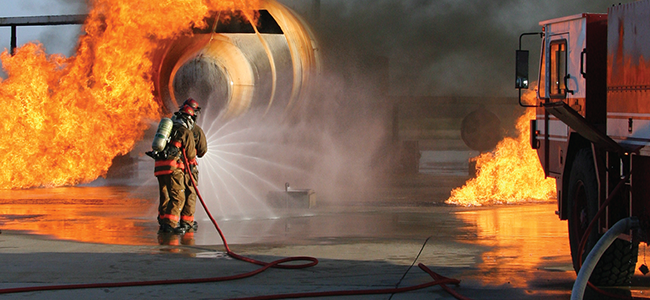
This course meets the training requirements for NFPA 1003: Standard for Airport Fire Fighter Professional Qualifications. The course will provide students with the proper knowledge and skills to effectively respond and mitigate to an aircraft emergency such as airport familiarization, PPE, tactics, incident command, airfield communications, safety planning, operation of apparatus and equipment, and much more. Additionally, students will become familiar in extinguishing wheel, engine, interior cabin, and compartment fires.
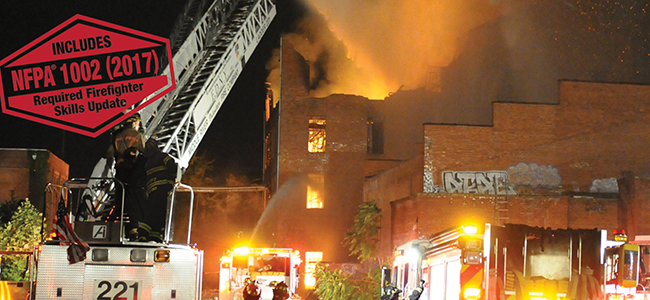
This program will take you through the chapters associated with Aerial Apparatus Driver/Operator. This class by itself is not a State certification, rather an educational component with quizzes, tests, forums and additional resources that with make you better prepared for the State of Wyoming ProBoard testing process. Upon successful completion you will obtain a completion certificate and the requisite knowledge associated with the program.
Cisco Fire Department - Inspector I & II - 2021
Link: https://moodle.ifsta.org/course/view.php?id=19068
Enrollment key: CFD19068
Students, in order to access your course please complete the following steps:
1.) Click the above link to your course.
2.) Login or create a new ResourceOne account.
NOTE: If you have previously purchased items from the IFSTA website you already have an account.
3.) At this point you will be prompted to enter the enrollment key for your course. If you do not see where to enter the enrollment key, click the above link to your course again and ensure you are logged in.
4.) You are now enrolled in your course. You can return to this course by using the "My Courses" link at the top right of page.
If you have questions or problems, please feel free to contact us.
w.fairbanks@cityofcisco.com
Walter Fairbanks
Fire Chief
The Missouri Division of Fire Safety (DFS) has authorized this course as an online delivery of the Instructor 1 certification course. After successful completion of the online portion of this course, you will be eligible to schedule the DFS written certification examination. You will also be required to submit a significant task book assignment. Upon successful completion of both the written certification exam and the task book, you will receive DFS certification as Instructor 1.
This course is offered entirely online, you are responsible to read and understand each chapter before attempting the chapter quizzes. You are responsible to complete and submit the DFS Task Book. You are responsible to schedule and take the DFS certification written exam. I will be here to assist you as a resource, but successful completion of this course and certification is entirely up to you.
Please reach out to me if you have any questions about the content of this online course or the DFS certification process.