
- Manager: James Klich
Category: Massachusetts Firefighting Academy (MA)
Northern Monroe Fire Territory
5081 N. Old State Road 37, Bloomington, IN 47408
Phone 812.339.1115 Fax 812.339.1120
Fire Officer I
Lead Instructor: David Calvin
Course Manager: Ryan Fipps
Lead Evaluator: Rusty Clark
Proctor: Rusty Clark
Course Prerequisites: Firefighter I and Fire Instructor I certified for a period of 1 year by the Board of Firefighting Personnel Standards and Education.
Course Description & Purpose: After completing the course the student will have met the sections required for Standard for Fire Officer Professional Qualifications in the National Fire Protection Association® (NFPA®) 1021, 2014 edition, professional qualifications standard. Students who successfully complete the certification process including demonstration of all practical skills and achieving a written examination score of 70% or more will be certified as Fire Officer I by the Board of Firefighting Personnel Standards and Education.
Required Text: The required text for the course is IFSTA’s Fire and Emergency Services Company Officer, 5th edition. While not required, the IFSTA’s Fire and Emergency Services Company Officer Study Guide is a valuable tool to help prepare for each lesson in the course and for the certification exam. The manual and study guide are available from Source for purchasing the materials.
Goal: The goal of this class is to provide firefighters with the knowledge and practical skills needed to be obtain the State of Indiana Fire Officer I certification.
Objectives: Objectives are printed on the first page of each chapter within the IFSTA Fire and Emergency Services Company Officer manual and knowledge of the objectives is the key component of obtaining goal competency and passing Indiana Fire Officer I written and practical exam.
Preparation for IFSTA Moodle Website: Firefighters are expected to be prepared for each week’s lessons, quizzes, tests, and skill sheets. Reading the manual is expected and scores above 70% are required for quizzes and 75% for tests before progressing to the next chapter.
Assignments: There will be assigned reading from the course handbook each class period. You are expected to read class material.
Quizzes and Tests: Quizzes and tests on the IFSTA Moodle website will use multiple-choice, true-false, short answer, and essay questions, and possibly case studies.
Class Schedule is as follows:
January 7-13 Chapter 1 The Company Officer
Chapter 2 Organizational Structure Skill Sheet 16
Chapter 3 Leadership and Supervision Skill Sheet 2
January 14-20 Chapter 4 Human Resource Management Skill Sheets 1 and 4
Chapter 5 Communications
Chapter 6 Administrative Functions Skill Sheets 8 and 9
January 21-27 Chapter 7 Health and Safety Skill Sheets 10, 11, and 12
Chapter 8 Company Level Training Skill Sheet 3
January 28 - Chapter 9 Community Relations and Skill Sheets 5, 6, and 7
February 7 Company Level Inspections
Chapter 10 Pre-Incident Surveys Skill Sheet 13
Chapter 11 Delivery of Emergency Services Skill Sheet 14 and 15
February 12 Practical’s Due and Presentations
February 15 State Written Exam
Written Exam: State of Indiana
exams are multiple-choice and a limited number of true-false questions. Occasionally there will be review sessions
offered to help in preparation for exam.
The course is designed to provide the Fire Officer I knowledge that will help them as they advance into the middle management level of their departments. Candidates will receive information that will help them perform both supervisory and first‐line managerial functions.
This is a four‐day course that will give participants an opportunity to complete the State Fire Marshal Division’s Fire Officer II JPR packet during the course and IFSAC certification testing will be provided on the last day of the course.
The course is based on the NFPA 1021 Standard for Fire Officer Professional Qualifications, 2020 Edition and utilizes the IFSTA Fire and Emergency Services Company Officer 6th Edition which participants will be provided at no cost.
The SFFMA Minimum requirements for Fire Officer I certification are as follows:
The certification Program offers four (4) levels of Fire Officer Certification:
Fire Officer I
Applicants must complete one (1) of the following:
a) TCFP Fire Officer I curriculum; or
b) All required objectives from the SFFMA Fire Officer I curriculum
Applicants must hold, or apply concurrently for, the following SFFMA certifications:
a) Firefighter II; and
b) Instructor I
Applicants must be a first‐line supervisory officer, and must meet all the job performance and certification requirements of Fire Officer I as defined in NFPA 1021, as follows:
a) Uses human resources to accomplish assignments in accordance with safety plans in an efficient manner and evaluates member task performance and supervises personnel during emergency and non‐emergency work periods
b) Deals with inquiries from the community and projects the role of the department to the public and delivers safety, injury, and fire prevention education programs
c) Performs general administrative functions and implements departmental policies and procedures at the unit/company level
d) Performs a fire investigation to determine preliminary cause, secures the incident scene, and preserves evidence
e) Supervises emergency operations, conducts pre‐incident planning, and deploys assigned resources in accordance with the local emergency plan
f) Integrates safety plans, policies, and procedures into the daily activities as well as on the emergency scene, including the donning of appropriate levels of personal protective equipment to ensure a work environment, in accordance with health and safety plans, for all assigned members
Oklahoma Executive Fire Officer Leadership Program
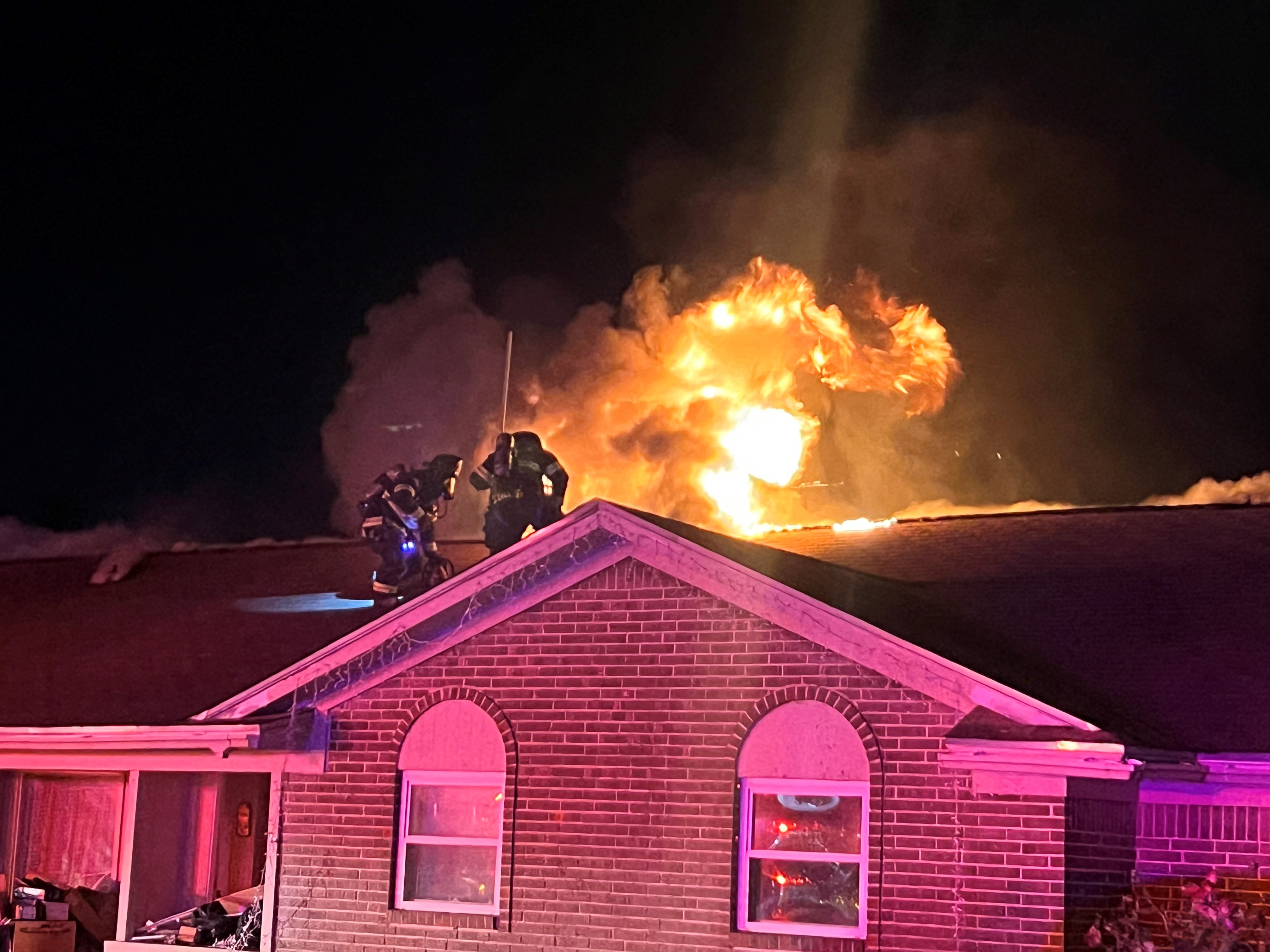
Welcome to the fall 2026 Philomath Fire and Rescue Firefighter I Academy! This fall we have only two new members completing initial entry fire training, so the "academy" will be more along the lines of an apprentice model than a traditional academy with a large cohort, set classroom and training times. You can anticipate some formal instruction, paired with a lot of hands-on and skills-building. You will work with the training officer, your shift, and others to complete your training.
This is your initial entry training for your life as a firefighter, whether you are a volunteer or aiming for a career. The material in academy is foundational, and will stick with you over time and from agency to agency. The goals of the academy are to prepare you to respond to fires effectively and safely, and to provide a solid foundation for your professional development. By the time you are done with academy, you will be well on your way to NFPA Firefighter I certification.
We will be using the IFSTA ResourceOne platform to conduct the "book learning" portion of the course. It is pretty straightforward: Read the chapter, review the slides, complete the review questions and quiz, then take the chapter test. You must complete all tests with a score of 70% or greater. In addition, you will upload copies of your ICS courses.
When you have completed all of the chapters, you will be allowed to download the "notice of completion" form. You must complete every chapter in order to graduate from academy. You must complete the relevant chapters before participating in the related hands-on training. So for instance, before the session where we practice ladder placement, you must have successfully completed Chapter 9, Ground Ladders. Hands-on training will not necessarily be in chapter order, so coordinate closely with your training officer and shift so that you can do the chapters prior to hands-on training. (There is no issue with you doing hands-on training familiarization prior to the chapter, but skills for sign off must be performed after completing the relevant chapter.)
Please ask if you have questions or need assistance with any aspect of the online material for academy. Again, welcome aboard, we are looking forward to working with you.
Viktor