- Manager: Scott Lawson


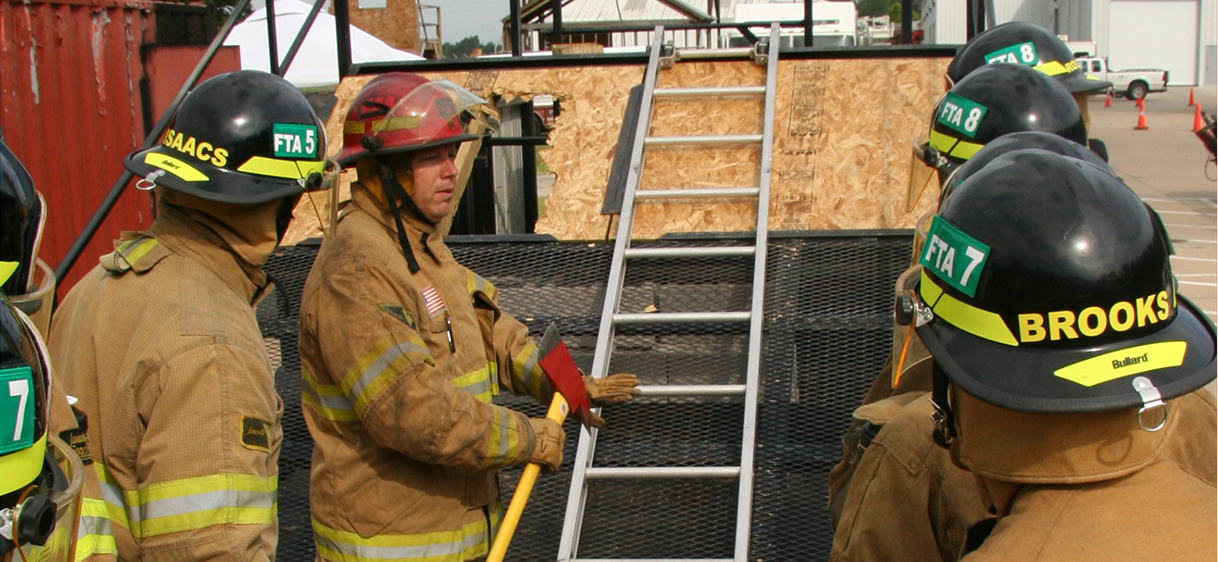
Port Hope Fire Department - Firefighter I & II


The Driver Operator Pumper and Core Class Fire Service course is an intensive and comprehensive training program designed to equip fire service personnel with the essential skills and knowledge required to operate and manage fire apparatus pumpers effectively. This course covers the core competencies necessary for safe and efficient pump operation, emphasizing both theoretical understanding and practical application.
Course Objectives:


RMES Firefighter Class V
1.1. This manual applies to all Probationary Fire Fighter Class V candidates in Redwood Meadows Emergency Services (RMES).
1.2. This manual addresses the training objectives and demonstrable skill requirements for Fire Fighter Class V candidate entry into RMES, and includes introduction to general knowledge requirements outlined in NFPA 1001 Standard for Fire Fighter Professional Qualifications, 2013 Edition, and RMES Operating Guidelines.

The duties of an Emergency Vehicle Operator are extremely dangerous, as well as mentally and physically exhausting, when responding to, returning from, or operating at an emergency scene. In order to render proper service to his/her department, and in keeping with this concept, an Emergency Vehicle Operator must be physically sound and free from any defect which may adversely affect his/her performance of duty. An Emergency Vehicle Operator’s personal safety and the lives of others will be endangered without appropriate training and driving skills. If these skills and training are not applied at regular intervals, competency decreases, hence the need for continual driver re‐certification. Driver re‐certification is a vital element in maintaining a valid and professional emergency vehicle driver program.
Reference Materials
The jurisdictional entity in which the Driver/Operator Personnel serves must have access to the most current editions of following training manuals:
NFPA
NFPA 1002: Standard for Fire Apparatus Driver/Operator Professional Qualifications NFPA 1451: Standard for a Fire Service Vehicle Operations Training Program
NFPA 1500: Standard on Fire Department Occupational Safety and Health Program

Fire Officer I Hybrid Syllabus
Instructor Information
Name: Donald Richardson
Email: drichardson@d7fr.org
Expected response: Instructors will respond to student emails within 2 business days.
Phone: 210-688-0665
The best method to reach your instructor is email. The goal of the instructor is to help you be successful during the course. You should immediately contact the instructor if you have any questions about the course or course work.
Communication Procedures
Email will be the primary way students can contact their instructor. As such, it is important to following these guidelines:
• Be respectful of one another’s time. Students can expect Instructors to respond to communication within 2 business days.
• Be clear in your message. Students are expected to include the course Title and Section first in your subject line. For example, your subject line will be “FOI.001 Questions about assignment” or “FOI.001 Missing assignment deadline due to emergency.”
Course Overview
This is a hybrid course including both online and face-to-face components. Online modules will run from [JUNE 17] to [AUGUST 12] for 8 weeks. Students will have an opportunity to ask questions online before posting assignments each week by midnight on any given day. Students must remember that instructors will respond to emails within 2 business days.
This is an 8-week course: 92 hours of instruction will be delivered through 8 weeks of online instruction including online activities, quizzes, discussion, and other assessments. The course prepares the student for the Fire Officer I certification process.
The fee for the course is $0
Course Prerequisites
Course Goals and Objectives
After completing the course, the student will have met the sections required for a Fire Officer I in the NFPA® 1021, 2014 edition, Standard for Fire O Professional Qualifications. Students who successfully complete the certification process will be certified as a Fire Officer I.Learning objectives are identified on a chapter-by-chapter basis and can be found in detail in the text required for the course.
Text
REQUIRED
The required text for the course is IFSTA’s Fire and Emergency Services Company Officer, 5th edition.
Every student must have a copy of the text in order to prepare for
class, study for the certification process, and complete the assignments and
learning activities.
Students will be provided with online access through ResourceOne to daily activities to be completed as assigned.
OPTIONAL
While not required, the Fire and Emergency Services Company Officer, 5th edition Exam Prep is a valuable tool to help a student or candidate to successfully pass a written exam based on the content of this course. This exam prep is available in print and electronic versions.
The manual and exam prep are available from ResourceOne
Course Schedule
This course is organized into 8 weekly modules. Modules are accessed online through IFSTA’s ResourceOne. Each module follows a similar format that includes: a weekly reading, assignment, quizzes, and tests. Modules are completed in preparation for face-to-face meetings held the last two scheduled skills day. New modules open every week.
Week 1 (June 17 – 24): Chapter 01 - The Company Officer I
Chapter 02 - Organizational Structure
Week 2 (June 24 – July 1): Chapter 03 - Leadership and Supervision
Week 3 (July 1 – 08): Chapter 04 - Human Resources Management
Week 4 (July 8 – 15): Chapter 05 – Communications
Chapter 06 - Administrative Functions
Week 5 (July 15 – 22): Chapter 07 - Health and Safety Issues
Week 6 (July 22 – 29): Chapter 08 – Company-Level Training
Chapter 09 - Community Relations and Company Fire Inspect
Week 7 (July 29 – Aug. 5): Chapter 10 – Pre-incident Surveys
Chapter 11 - Delivery of Emergency Services I
Week 8 (August 5 – 12): Course Final Exam and TCFP Skills Exam
Homework Assignment
Course Evaluation Strategy
Course Participation
The course utilizes lecture, open discussions, and group activities to achieve the learning objectives. Every student is expected to:
· come to course prepared to actively participate in discussions,
· read the text prior to the next class session,
· complete all homework assignments,
· respect the beliefs, opinions, and values of other students,
· and have an open mind about the issues being discussed.
Technical Support
Please note this tech support is staffed from 8-5 CST
Academic Dishonesty Policy
Academic misconduct includes cheating, plagiarism, falsification of records, unauthorized possession of examinations, intimidation, and any and all other actions that may improperly affect the evaluation of a student’s academic performance or achievement; assisting others in any such act; or attempts to engage in such acts. Any incident of academic misconduct will result in the student being dropped from the course and the student’s sponsoring agency being notified of the incident.
The TCFP written test will be scheduled by the student at a TCFP regional test site.
|


The duties of an Emergency Vehicle Operator are extremely dangerous, as well as mentally and physically exhausting, when responding to, returning from, or operating at an emergency scene. In order to render proper service to his/her department, and in keeping with this concept, an Emergency Vehicle Operator must be physically sound and free from any defect which may adversely affect his/her performance of duty. An Emergency Vehicle Operator’s personal safety and the lives of others will be endangered without appropriate training and driving skills. If these skills and training are not applied at regular intervals, competency decreases, hence the need for continual driver re‐certification. Driver re‐certification is a vital element in maintaining a valid and professional emergency vehicle driver program.
Reference Materials
The jurisdictional entity in which the Driver/Operator Personnel serves must have access to the most current editions of following training manuals:
NFPA
NFPA 1002: Standard for Fire Apparatus Driver/Operator Professional Qualifications NFPA 1451: Standard for a Fire Service Vehicle Operations Training Program
NFPA 1500: Standard on Fire Department Occupational Safety and Health Program

SFRT District #11 IFSAC Instructor I Course Fall of 2023.
This is a 6 day course: 36 hours of instruction and 8 hours of certification evaluation. The course prepares the student to become certified as a Fire Instructor I.
The required text for the course is IFSTA’s Fire and Emergency Services Instructor, Ninth edition.
While not required, the Fire and Emergency Services Instructor Exam Prep is a valuable tool to help prepare for each lesson in the course and for the certification exam. The manual and exam prep are available from Fire Protection Publications (IFSTA).
Friday August 11th 2023: Introductions and Chapter #1.
Saturday August 12th 2023: Chapters #2 and #3.
Sunday August 13th 2023: Chapters #4 and #5.
Saturday August 19th 2023: Chapters # 6, #7, and #8
Sunday August 20th 2023: Chapters #9 and #10.
Saturday August 26th 2023: FINAL SKILL EVALUATION AND WRITTEN TESTING.
IFSTA Fire and Emergency Services Instructor 9th Edition (ISBN 978-0-87939-696-1)(NFPA 1041-2019 Edition). Laptop Computer w/Microsoft Word and Internet Capabilities, and a USB jump drive.

Over the coming months you will be challenged to complete a series of theory and practical training skills that will take you through all of the modules required to complete your 1001 Level 1 course. Upon completion of the course each of you will be required to write the provincial exam for your IFSAC & ProBoard certification.
This will be a challenging course with a large time commitment but at the end, it will give you the basic tools to ensure you operate safely at an emergency scene.
You must complete all activities, quiz's, skills, assignments and participate on all discussion forums before you can complete the course.
If you have any questions along your journey through this course please contact one of our lead instructors.
Practical Skills Days: February 10th 8am-4pm
March 16th 8am-4pm
April 6th 8am-4pm
May 11th 8am-4pm
May 14th 6:30pm - 9pm
May 26th 8am - 4pm Live Fire Day
May 28th 6:30pm - 9pm
June 1st 8am-4pm Live Fire Day
Provincial written exam June 13th 2024
Provincial evaluation June 15th 2024


This on-line course covers the principles of effective curriculum design. It stresses the principles of adult learning and student-centered learning. Designing courses and units that address learning, performance, and behavioral objectives is the program goal.
Fire Service Course Design covers IFSTA: Fire and Emergency Services Instructor, 9th Edition Chapters 11-15