
- Manager: Daniel Mikels
- Manager: Douglas Wolfe
Category: St Lucie County Fire Rescue (FL)
 |
Driver Operator - Pumper/Aerial Welcome to your Firefighter I & II online course. This course uses IFSTA's Pumping and Aerial Apparatus Driver/Operator, 3rd ed. This online classroom has the following resources to help you study for your DPO/DAO exam:
The study guides have the exact same questions as the reviews. You are recommended to adopt the following study routine:
Data analysis conducted by the Fairfax County Fire and Rescue Academy suggests that students who score 90% or higher on all Chapter Reviews ultimately pass their final exams! Good luck, and direct any questions to your Driver Training instructors. |
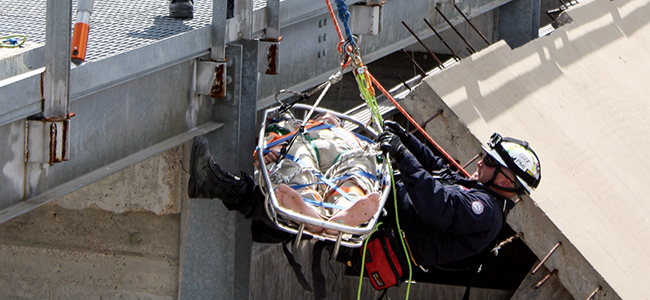
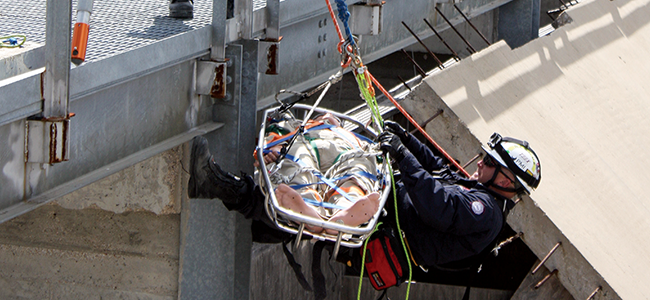
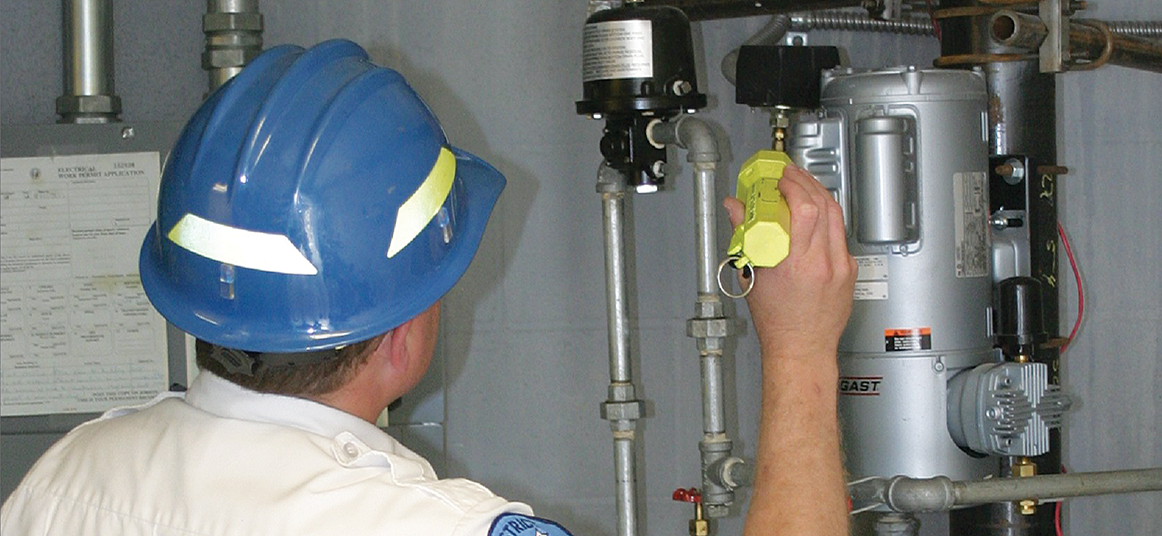
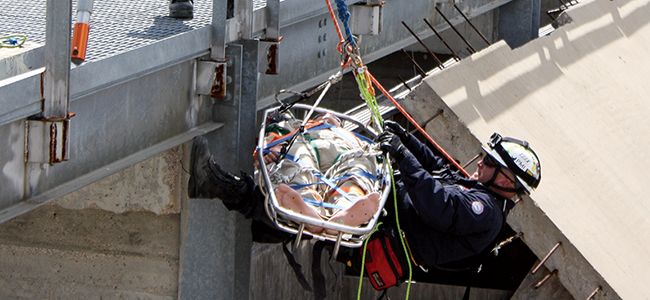
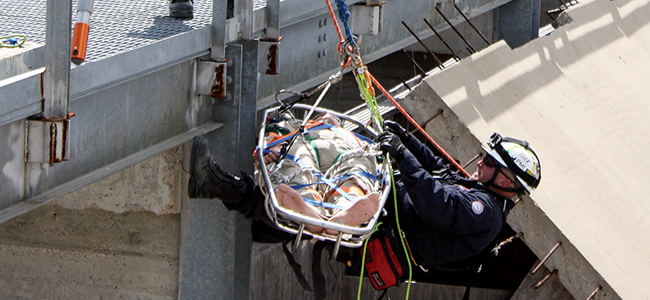
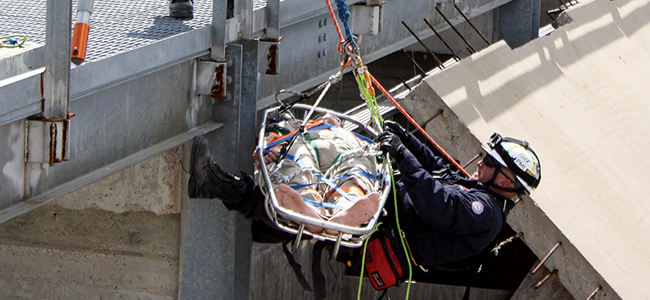
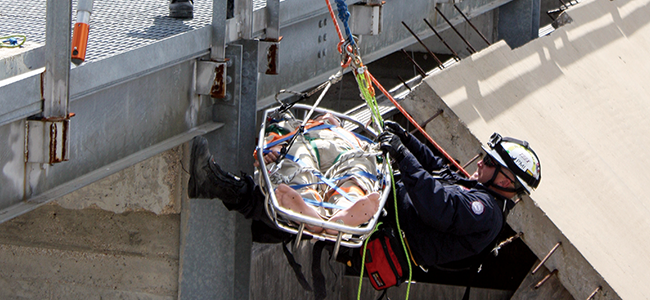
Firefighters will gain initial knowledge of practices and procedures for technical rescue in the following areas: Rope rescue, Swift water rescue, structural collapse. Upon successful completion of this course along with verified skills application firefighters within the West Marshall Fire department will be labeled as "Technician" certified. This certification will, ONLY apply to West Marshall Fire Department in regard to this department being the AHJ issuing the certification.
Course Description – Firefighter I/II with Hazardous Materials Awareness (HMA) and Hazardous Materials Operations (HMO)
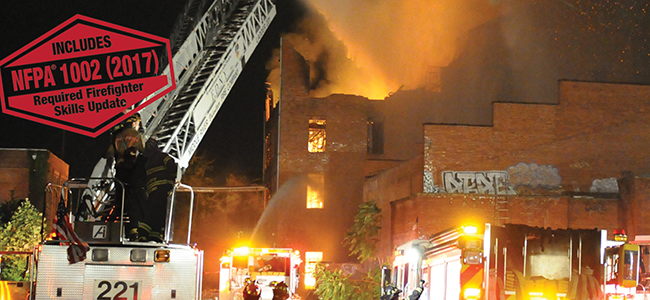
This Firefighter I/II program provides comprehensive classroom instruction and hands-on skills training designed to prepare students to meet the job performance requirements of NFPA 1001 (Firefighter I and II) and NFPA 1072 (Hazardous Materials Awareness and Operations). The course integrates theory, applied practice, and scenario-based learning to develop safe, competent, and effective entry-level firefighters.
Classroom Instruction focuses on fire behavior, building construction, firefighter safety and wellness, incident command system (ICS), communications, fire prevention, portable extinguishers, ropes and knots, ladders, ventilation, water supply, fire hose and streams, salvage and overhaul, search and rescue, emergency medical care, and firefighter survival. The hazardous materials component addresses recognition and identification of hazardous materials, use of the Emergency Response Guidebook (ERG), risk assessment, defensive control strategies, personal protective equipment, decontamination concepts, and compliance with federal and state regulations.
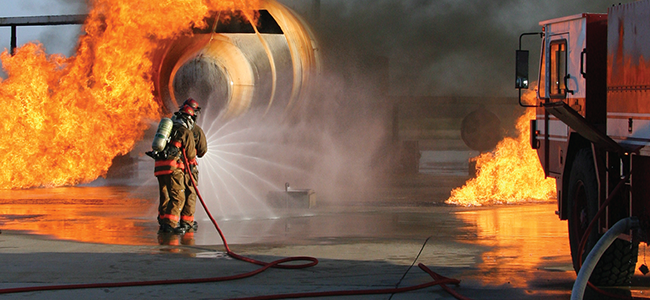
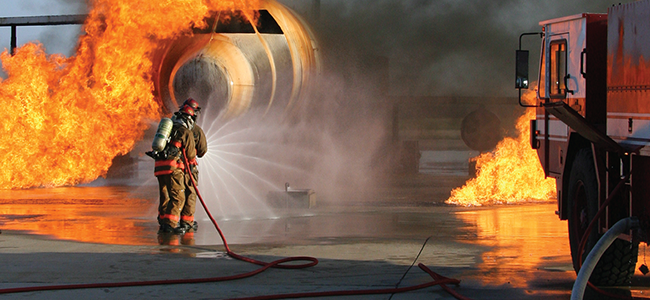
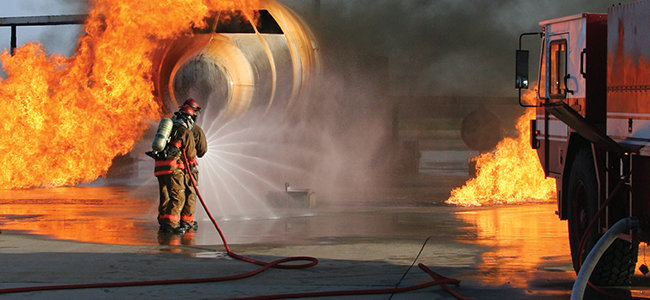
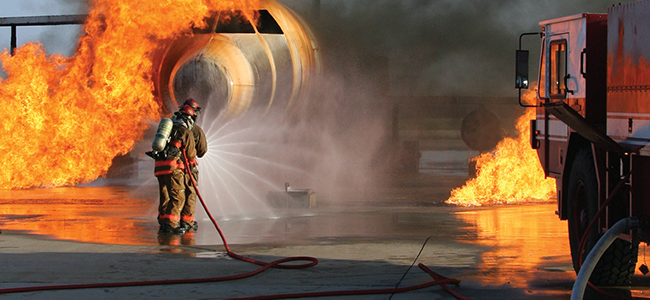
Skills and Practical Training emphasizes supervised, hands-on evolutions conducted in accordance with applicable safety standards. Students perform and are evaluated on essential Firefighter I/II skills, including PPE and SCBA operations, hose deployment and advancement, ladder carries and raises, forcible entry, ventilation techniques, search and victim removal, fire control, water supply operations, and basic vehicle and fireground operations. Hazardous materials skills include scene size-up, isolation and protective actions, product control at the awareness and operations levels, and coordination with specialized response resources. The course culminates in integrated scenarios and live fire training evolutions that reinforce teamwork, safety, and decision-making.
Successful completion prepares students for state certification testing in Firefighter I, Firefighter II, Hazardous Materials Awareness, and Hazardous Materials Operations, and for entry-level service in the fire and emergency services profession.